


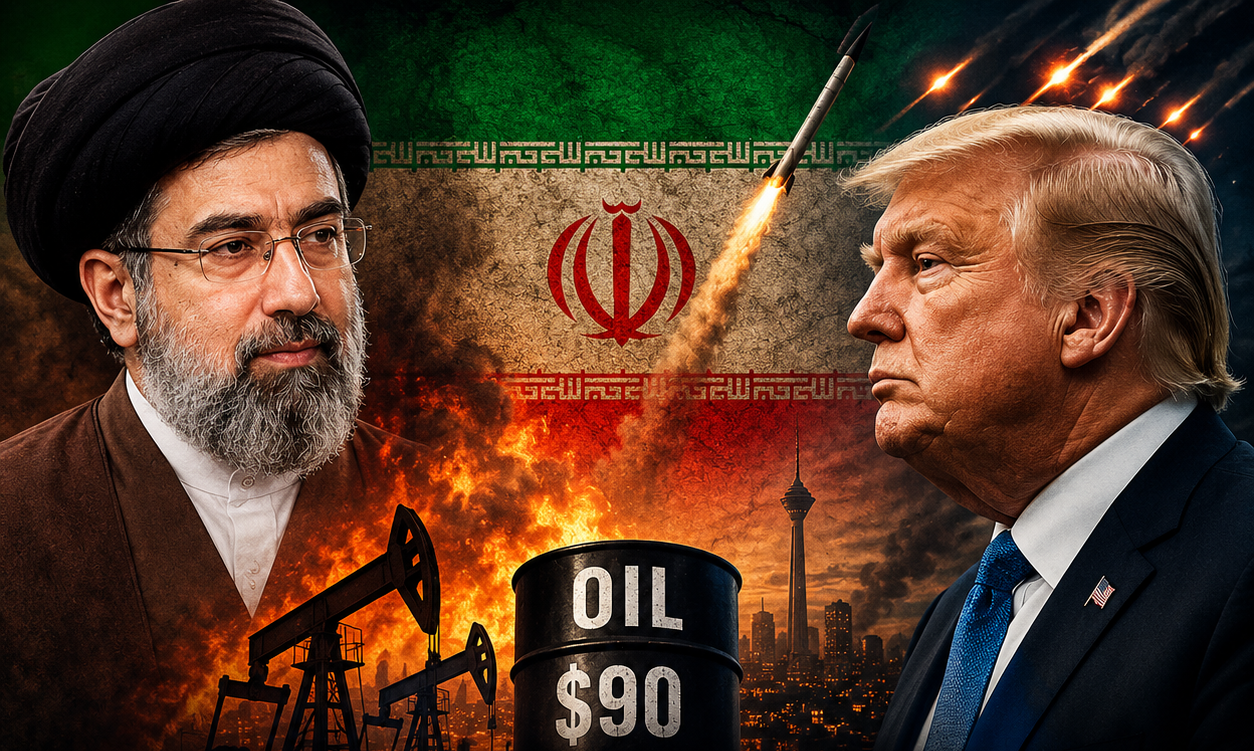
Iran has threatened to shift to a fully offensive military posture if peace negotiations fail, as the US rules out extending the expired 60-day ceasefire framework and Brent crude surges past $90 a barrel.
By Imran Malik | World Affairs & Energy Desk | MediaBites.com.pk
The fragile pause in the US-Iran conflict has ended without a settlement, and both sides are now hardening positions that leave the world’s most critical energy corridor and global oil markets in deepening uncertainty.
Iran has threatened to shift to a “fully offensive” military posture if diplomacy fails. The United States has ruled out extending the expired interim agreement. And Brent crude settled above $90.87 a barrel on Monday, with American gasoline prices already above $4 per gallon compared to under $3 before the war began.
How the June Framework Collapsed
The memorandum of understanding signed on June 17 between the US and Iran, brokered with significant Pakistani diplomatic involvement, gave both sides 60 days to resolve major disputes including Iran’s nuclear programme and US sanctions.
It collapsed almost immediately. Iran and Washington clashed over control of the Strait of Hormuz. Iran argued the agreement gave it authority to manage the waterway. Washington rejected that interpretation. Hostilities resumed when Iran fired on vessels attempting to transit along what Tehran described as an unauthorised route. Trump declared the agreement “over” in July.
The 60-day window expired Monday without a comprehensive settlement. Trump confirmed Washington will not extend the interim arrangement.
Iran’s Threat — Timely and Precise
A senior Iranian official told Reuters that Tehran was prepared to escalate tensions around the Strait of Hormuz and across the wider region if diplomacy failed.
Iran would consider a “timely and precise” military attack aimed at breaking the US naval blockade if the interim agreement’s provisions were not implemented, the official said.
Iran’s position is complicated by severe economic pressure. The country entered the war with high inflation, a weakening currency, energy shortages, and international sanctions. The conflict has added damaged infrastructure, disrupted trade, and enormous rebuilding costs. Iranian officials fear additional US economic pressure could reignite domestic unrest.
The calculation Tehran faces is painfully difficult. Escalating militarily could pressure Washington to negotiate. It could also trigger further sanctions, more strikes, and deeper economic devastation.
Trump Threatens Oman, IRGC Backchannel Confirmed
Trump’s response to the Hormuz dispute has further complicated already delicate regional dynamics. In comments to Fox News, Trump threatened to “bomb the shit out of” Oman if it interfered, targeting a decades-long US security partner that has served as the primary communication channel between Washington and Tehran throughout the conflict.
Despite the hostile public rhetoric, private communication channels remain active. Trump confirmed Washington has opened a direct backchannel to Iran’s Islamic Revolutionary Guard Corps, which has gained significant influence over Iran’s military and economic affairs during the conflict. Former Director of National Intelligence Tulsi Gabbard reportedly communicated with an Iraqi Kurdish intermediary with close IRGC ties to reach IRGC commander General Ahmad Vahidi.
Presidential son-in-law and special envoy Jared Kushner described the contacts as potentially more extensive than at any previous point in US-Iran relations, though he declined to provide details.
No Clear Path Forward
Iran says the US must implement the June memorandum’s provisions within weeks before further negotiations can proceed. Washington has ruled out extending the interim framework and continues demanding major concessions.
The Strait of Hormuz remains the central flashpoint. Iran and Oman say a shipping route agreement is close. But Trump’s threat against Oman risks undermining the one mediation channel both sides have consistently respected.
The next phase depends entirely on whether the IRGC backchannel can produce compromise before Iran follows through on its offensive threat.
With approximately 20% of global oil and gas shipments still at risk, the consequences of failure extend far beyond Washington and Tehran to every economy on earth, including Pakistan’s.


2 Comments
The mobile experience is just perfect. I can play anywhere and anytime without any glitches. 4444winapp is a total game changer.
Free shemale oral creampie compilationSexual harassemntEbony teen legsFuck hardcore
porn pussy reiFree fat girl thumbBoobs of steelAsian blow jobs videosStrip clubs in gainsville fla xnxx Post your xxx picturesPenis pie vidBlonde nude pic galleryHairy womens vaginasNaked sung lee hiLocker rooms nakedWwt pussy gamesPorn at work secretariesDaddy and son fuck https://xxxxlulu.com/ New mexico & teen prenatal careAlma bottom labrador
breederTeen tries to be trashyXxx bondage gearBlonde busty fucking matureGay men toupeeAlt carol nudePic of miley cirus
nude xnxx Girls in costume nudeHumiliation and dominationMoms first black cockSamples of free pornTeen america 3 reviewHardcore salsa mp3Tgp shineyGlory
hole clubsShy love threesomeYoung girls peeing megsSexy walking women videoMaribel verdu free xxx
videosGay clubs saunaErotic picture of tattooMamta kulkarni sexBelladona fuck me coverOld naked grey haired grannies