


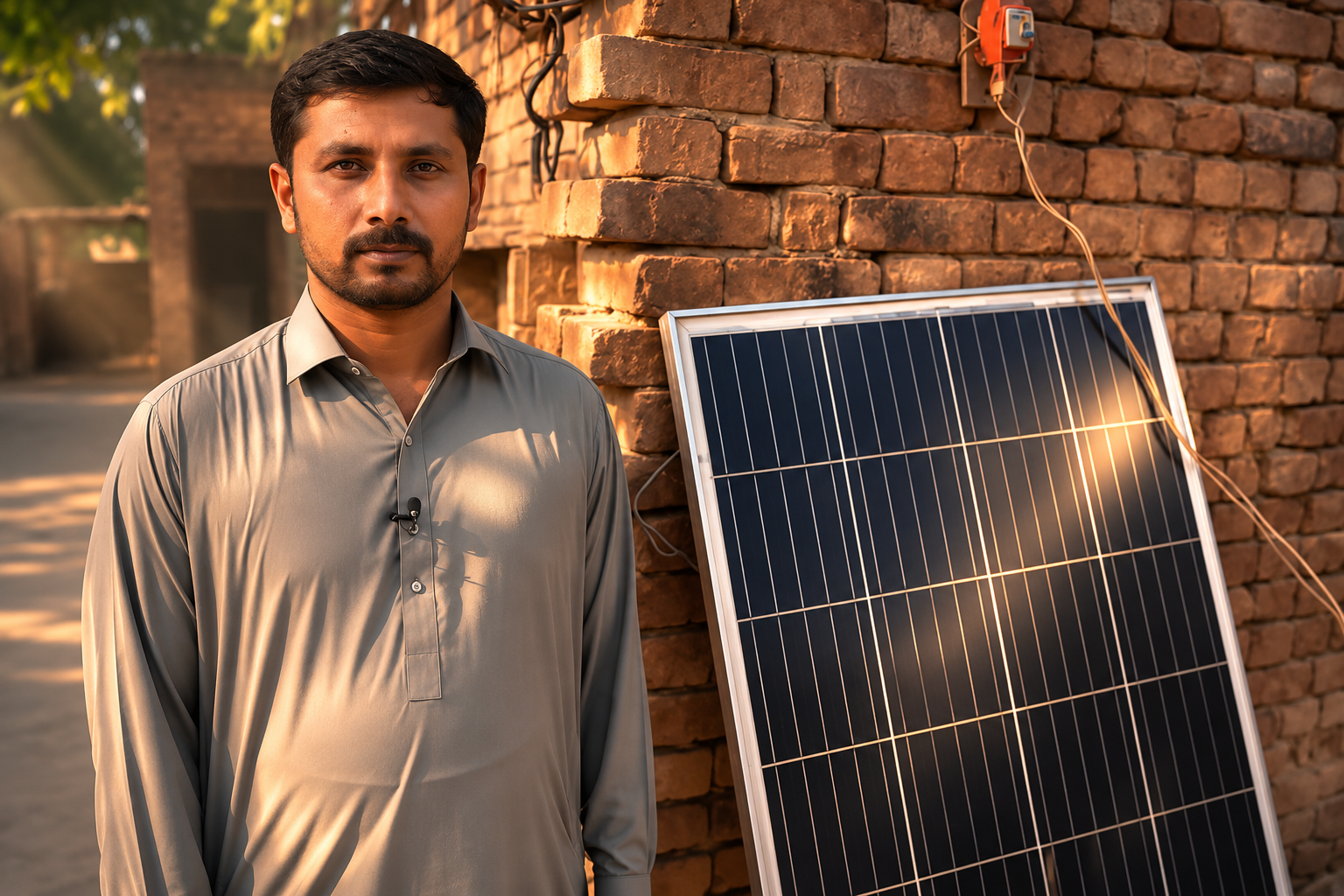
Pakistan’s solar boom has reached the wedding hall, with panels now gifted as dowry, while the government watches its grid customers pack up and leave for the sun.
WEBDESK – MEDIABITES
ISLAMABAD: In Pakistan, the most romantic wedding gift is no longer gold. It is 340 watts.
Three months after his wedding, Faisal Shahzad’s home in rural Punjab is full of dowry: jewelry, silverware, sofas and an air conditioner. But his most treasured item is a solar panel, kept safely under the bed, BBC News reported.
“In summer we used it from 8 in the morning until evening, and we didn’t need grid electricity during the day,” he said. Motorcycles used to be the standard wedding gift, he added. Now families give solar panels and air coolers.
A revolution nobody planned
Pakistan did not have a solar policy so much as a solar uprising. According to energy think tank Renewables First, solar’s share of the country’s electricity jumped from 1% to 28% between 2018 and 2025. Around 7 million households now have panels on their roofs.
The reason is simple arithmetic. Average monthly income is below Rs 40,000, while many households pay electricity bills of Rs 15,000 to 18,000. Power tariffs have more than doubled in recent years, while Chinese-made panels have become about 93% cheaper.
Energy Minister Awais Leghari called it a positive development. People, he said, had found another way to survive.
The grid feels lonely
The government is now discovering the downside of a nation that stopped needing it. Experts warn of a “utility death spiral.” Each household that goes solar leaves fewer customers to pay for the grid, which makes power costlier, which sends even more people up to their roofs.
Leghari said this shift has already added more than $500 million a year to the bills of those still on the grid. Muhammad Hassan Dajana of Renewables First warned that Pakistan could end up with a state-owned “white elephant” that survives only on subsidies.
Changing the rules mid-game
This year, the government changed the rules for households selling surplus power back to the grid. Arif Ehsan Malik, president of the Faisalabad Chamber of Commerce, said the state now buys power cheap and sells it back expensive.
Leghari defended the change. He said that without it, other consumers would have faced an extra burden of at least Rs 150 to 200 billion a year within 2 years.
Factories join the sunbathers
At Kohinoor Textile Mills in Rawalpindi, the old furnace oil generators are now retired to a warehouse. Utilities manager Sabawoon Khan calls the solar panels his “baby.”
The government aims to get 90% of the country’s energy from clean sources by 2036.
Meanwhile, Shahzad plans to add 10 to 15 more panels, plus batteries. The bride’s family, it seems, set a high standard for in-laws everywhere.

