


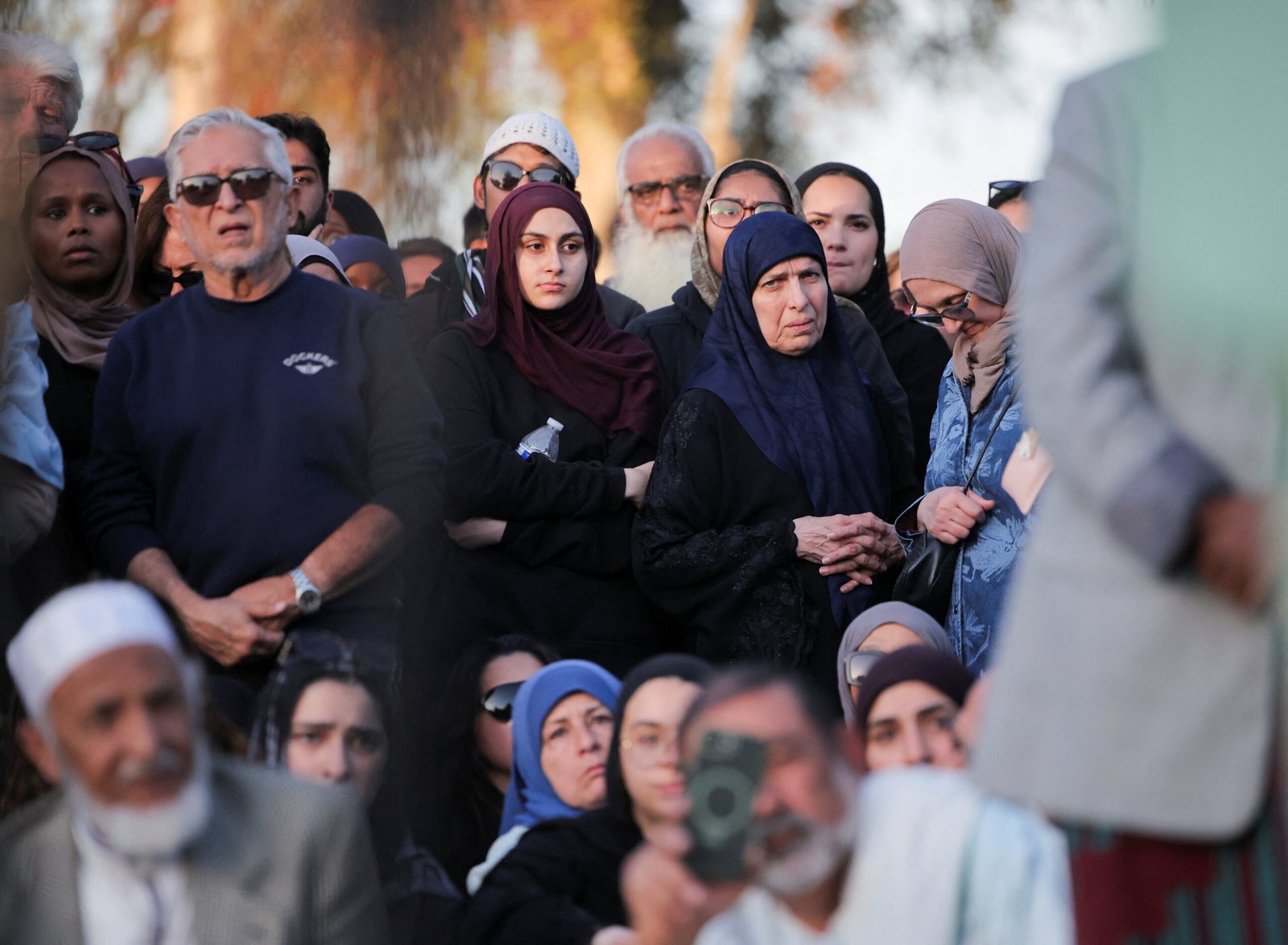
Investigators say two teenage gunmen behind the deadly San Diego mosque attack met online, embraced white supremacist ideology, and left behind hate-filled writings targeting multiple communities.
WEBDESK – MediaBites News
Federal investigators say the two teenagers responsible for the deadly shooting at the Islamic Center of San Diego were radicalized online, shared extremist beliefs, and authored writings expressing hatred toward Muslims, Jewish people, Black communities, LGBTQ+ individuals, and others.
The suspects were identified as 18-year-old Caleb Vasquez and 17-year-old Cain Clark, according to U.S. Justice Department officials. Both were later found dead inside a nearby vehicle after Monday’s attack, which killed three men at the mosque.
Mark Remily said investigators discovered writings revealing what he described as a “broad hatred” toward multiple religions, races, and political groups.
“They didn’t discriminate on who they hated,” Remily said during a press conference.
The documents reportedly included racist and anti-Muslim rhetoric, white supremacist references, and Nazi-linked symbols. One of the writings called for Muslims to be “exterminated,” while both suspects referred to themselves as “Sons of Tarrant,” an apparent reference to the Christchurch mosque attacker who killed 51 worshippers in New Zealand in 2019.
Authorities also recovered approximately 30 firearms, ammunition, and a crossbow during searches conducted at two residences connected to the suspects.
Investigators are continuing to examine whether the pair had broader plans beyond the mosque attack.
Officials said the suspects first connected online before discovering they both lived in the San Diego area. Authorities are still investigating how the radicalization process unfolded and whether others may have influenced them.
The attack targeted the Islamic Center of San Diego, the city’s largest mosque, which also houses a school with children present during the shooting.
Among the victims was longtime security guard Amin Abdullah, whom authorities credited with preventing a far larger massacre.
San Diego Police Chief Scott Wahl said Abdullah confronted the gunmen after they attempted to force their way inside the mosque.
Despite being wounded, Abdullah continued exchanging gunfire with the attackers and transmitted a radio alert that triggered the mosque’s lockdown procedures.
Police said his actions delayed and distracted the gunmen long enough for approximately 140 children inside the building to reach safety behind locked doors.
“His actions, without a doubt, delayed, distracted, and ultimately deterred those two individuals,” Wahl said.
The other two victims were identified by Imam Taha Hassane as Mansour Kaziha and Nader Awad, both respected members of the mosque community.
Hassane described Kaziha, known locally as Abu Ezz, as a beloved caretaker who served as the mosque’s handyman, cook, and community supporter.
The attack has intensified fears over rising anti-Muslim hatred in the United States, particularly amid growing tensions connected to conflicts in the Middle East.
Muslim advocacy organizations warned that increasingly hostile rhetoric toward Muslim communities online and in public discourse continues contributing to extremist violence.
Authorities revealed that police had already been searching for the teenagers hours before the attack after Clark’s mother reported her son missing, suicidal, and armed.
Police said she informed officers that several weapons and her vehicle had disappeared from the family home and that the teen was dressed in camouflage alongside another individual.
Officers were still tracking the suspects when emergency calls about the mosque shooting began arriving from just blocks away.
The investigation remains ongoing as federal and local authorities continue reviewing digital evidence, writings, and recovered weapons linked to the attack.

