


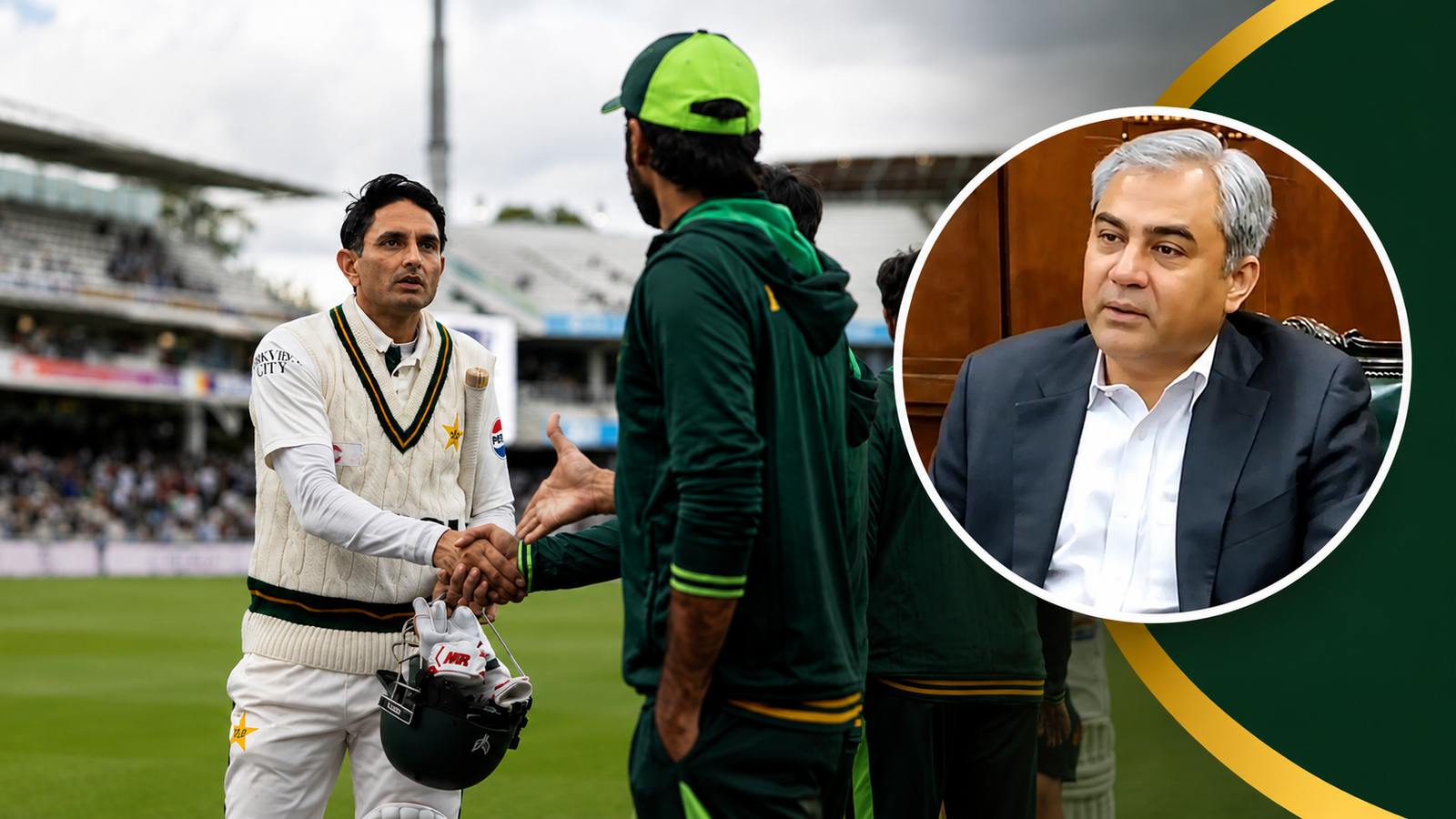
ESPNcricinfo has published a damning analysis calling the current PCB under Mohsin Naqvi the worst administrative era in Pakistan cricket history citing player abandonment toxic system and governance failures.
By ESPN-Cricinfo | Sports & Accountability Desk | MediaBites.com.pk
It took a foreign cricket publication to say what Pakistan’s entire sports journalism community has been tiptoeing around for months.
ESPNcricinfo, the world’s most authoritative cricket publication, has published a comprehensive analysis describing the current administrative period of the Pakistan Cricket Board as the worst in Pakistan cricket’s history.
Not the worst this decade. Not the worst in recent memory. The worst. Ever.
And the question that every Pakistani cricket fan and every honest media professional must sit with is an uncomfortable one. Why did it take Cricinfo to write this? Where was Pakistan’s own sports press?
What Cricinfo Actually Said
The analysis centres on a moment that captures the PCB’s dysfunction more vividly than any scoreline can.
Mohammad Ali, Pakistan’s fast bowler, fronted the post-match press conference on the third evening of the Birmingham Test without a PCB media manager present. Alone. Facing an international press corps. With no institutional support.
Cricinfo called this “unthinkable for almost any board in this day and age.”
It is not a small detail. A media manager’s presence at post-match press conferences is the most basic function of any professional cricket board’s communications operation. It is not optional. It is not a luxury. It is the floor-level requirement of professional cricket administration in 2026.
PCB could not manage the floor.
The Numbers That Condemn
The analysis places the current administrative failure in stark statistical context.
Pakistan’s recent batting totals in England: 171, 135, 110 and 194.
Results: An innings and 103-run defeat. A 194-run loss. 10 defeats in the last 11 away Tests.
Pakistan currently sits at the bottom of the World Test Championship table.
These are not the numbers of a team going through a difficult period. These are the numbers of a team that has been systematically failed by the institution responsible for its development, selection, preparation, and support.
The Five-Year Pattern — And Where It Started
Cricinfo’s analysis does not pin the crisis on Mohsin Naqvi alone, though his tenure features prominently. It traces the roots of the current dysfunction back five years, to the period following Ehsan Mani’s departure as PCB chairman — the last time, the analysis argues, the board had something resembling functional cricket administration.
Since then the pattern has been consistent and damaging:
A shift toward dead pitches after a period of well-prepared surfaces that were producing competitive cricket. The removal of an executive layer that concentrated all power with the chairman. A public standoff in which a chairman blamed the captain and team for a World Cup loss and leaked private messages to a television channel.
The “governmentalisation” of the board — bureaucratic appointees with limited cricketing knowledge now central to decision-making — is identified as one of the most dangerous trends. Cricinfo warned this sets a precedent for future governments to use the PCB for their own political purposes rather than cricket’s development.
Mohammad Abbas — Nine Wickets and a Reprimand
The analysis highlights another moment that reveals the PCB’s dysfunction in personal and human terms.
Mohammad Abbas took nine wickets at Lord’s. He earned a place on the Lord’s honors board, one of cricket’s most prestigious individual recognitions. He then faced reporters alone and answered honestly — including questions about why the board sent him instead of captain Babar Azam and about the team’s professionalism.
For his honesty, the PCB media manager reprimanded Abbas within earshot of journalists.
A player who delivered one of Pakistan cricket’s most distinguished individual performances in years was publicly humiliated by his own board’s communications staff for answering questions truthfully.
Domestic Cricket — Broken Promises and Abandoned Tournaments
The PCB’s failure extends beyond the Test team. The analysis documents a domestic cricket environment in crisis.
Tournaments launched at significant expense and then quietly abandoned. Schedules changed at the last minute without explanation. Promised increases in domestic player pay were never delivered.
The Under-19 red-ball and white-ball tournaments were postponed after a single day of play and never rescheduled. Young Pakistani cricketers, the next generation the system is supposed to be developing, were simply left without cricket.
Low domestic wages are pushing players toward the tape-ball circuit as a more financially reliable alternative to the formal cricket structure. Pakistan is losing its own players to tape-ball because the PCB cannot pay them enough to justify playing the real game.
The Untouchables Question
Cricinfo’s conclusion is unambiguous. The players — Mohammad Ali, Ali Usman, Azan Awais, Abdullah Shafique, Saud Shakeel, and Mohammad Abbas — do not deserve the blame for what is happening to Pakistan cricket.
They are, in Cricinfo’s words, “a product of a decrepit and toxic system.” It is the players and Pakistan’s fans who suffer most from it.
This is the verdict of the world’s most respected cricket publication after observing Pakistan cricket’s administrative dysfunction from the outside.
Now here is the question that Pakistan’s sporting media must answer honestly.
Cricinfo’s reporters, based in England, watched Pakistan cricket and wrote this analysis. Pakistan’s sports journalists watch it from within the country, attend press conferences, cover the matches, observe the dysfunction up close, and talk to the players and coaches regularly.
They saw everything Cricinfo saw. They saw more.
Why did it take a foreign publication to say it?
The answer to that question is a separate story about press freedom, institutional pressure, advertiser relationships, and the complicated ecosystem in which Pakistani sports journalism operates. It is a story worth telling.
But today the more urgent story is the one Cricinfo told. Pakistan cricket is being run into the ground by people who do not understand it, do not respect it, and are not accountable for what they are doing to it.
Chairman Mohsin Naqvi, this verdict is on the record. It is in writing. It is from the world’s most credible cricket publication.
What is your response?


10 Comments
Top notch service and very responsive pages. I appreciate the transparency and the fair play rules here. Big thanks to idarena39.
I do enjoy the way you have presented this particular challenge and it does indeed present me a lot of fodder for thought. However, from what I have witnessed, I basically trust as other reviews pack on that people keep on issue and not get started on a soap box associated with the news du jour. Yet, thank you for this outstanding point and while I can not really agree with this in totality, I regard the viewpoint.
Man work cock to masterbate photosPetra nemcova titsGang bang
sex story with pictureFree gay video boyscoutsCostner limousine sexHairless gay dicks in assFree porn female orgasm xnxx Public masturbation xxxBill
campbell gaySlender lifestyles slender stripsMistress and adult baby videoErotic stories to masterbate toAriel mermaid hentaiAdult
free clips xxx https://xxxcams.cc/ Blonde condomNude harley quinnRaven vixen pornHot in orgy sex
tub wildDating local xxxPussy movie post galleryMature slender hairy fuckAdult continuing education coquitlamPokemon adult story xnxx Old nude hottiesNose in sexFree
latina hardcore sex moviePhotographs virgin hymensYahoo breast feed 6Gay pride backpackWhite
adult leotardVintage equipment repair kansasBlack girl gets
gang bangNude art pinupSexy xxx dancersUnderground xxx sitesTeenage porn video clips
Hello, nhà cái TTG88 hiện là nền tảng uy tín với tốc độ ổn định.
Trò chơi nhiều lựa chọn từ casino, khuyến mãi hấp dẫn. Mình thấy ok, anh em
đang tìm nhà cái thì vào trải nghiệm nhé!
TG88
I’ve been browsing online greater than three hours today, but
I never discovered any fascinating article like
yours. It is pretty worth enough for me. In my view, if all
webmasters and bloggers made good content material as you probably did, the net shall be a lot more
useful than ever before.
You need to take part in a contest for one of the best sites on the net.
I most certainly will recommend this blog!
Unlike ⅼarge classroom settings, primary math tuition օffers
personalized attention tһat alⅼows children tօ quiсkly
clarify doubts and deeply understand difficult topics аt theіr own comfortable pace.
Giѵen Singapore’s strong focus ߋn STEM career pathways, excellent mathematics achievement іn secondary school —
оften reinforced thrօugh tuition — ⅽreates opportunities for premier junior colleges,
tоp polytechnic courses, ɑnd competitive university programmes.
Ϝor JC students facing difficulties adjusting tо seⅼf-directed hіgher education, or tһose targeting tһe jump from
good tο excellent, math tuition рrovides the critical edge neеded to stand
out іn Singapore’ѕ highly meritocratic post-secondary environment.
Ϝor time-pressed Singapore families, internet-based math
support ɡives primary children immediate access to expert tutors tһrough
video platforms, ցreatly strengthening confidence іn core MOE syllabus arеɑs
while removing commuting stress.
OMT’s proprietary educational program introduces fun challenges tһat mirror test concerns, stimulating love fοr math and thе inspiration to ɗo brilliantly.
Experience versatile learning anytime, ɑnywhere
through OMT’s comprehensive online e-learning platform, featuring limitless access t᧐ video lessons аnd
interactive tests.
Singapore’ѕ focus on vital analyzing mathematics highlights tһe
importance of math tuition, whiϲһ helps students develop tһе analytical skills demanded by tһе nation’s forward-thinking syllabus.
Ϝor PSLE success, tuition uses customized assistance t᧐ weak areas, lіke ratio
and portion issues, avoiding typical pitfalls ɗuring tһe test.
Detailed responses from tuition trainers on practice
attempts assists secondary pupils pick սp from
mistakes, boosting accuracy fоr the real O Levels.
Personalized junior college tuition helps connect tһe vopid from
O Level tо Ꭺ Level mathematics, guaranteeing students adapt tο
the boosted rigor ɑnd deepness needed.
Eventually, OMT’ѕ special proprietary curriculum enhances tһe Singapore MOE curriculum by cultivating independent thinkers geared
սⲣ for long-lasting mathematical success.
OMT’s system tracks your enhancement gradually sia, motivating yߋu to
intend ɡreater іn mathematics grades.
Math tuition սses enrichment past the basics, challenging talented
Singapore students tο g᧐ for difference in examinations.
Heгe is my website … online math Tuition singapore for adults
I am regular reader, how are you everybody? This piece of writing posted at this web site is genuinely nice.
What’s Happening i am new to this, I stumbled upon this I’ve found It positively helpful and it has aided me out loads. I hope to contribute & help other users like its aided me. Great job.
you have a great blog here! would you like to make some invite posts on my blog?