


By MediaBites | March 21, 2026
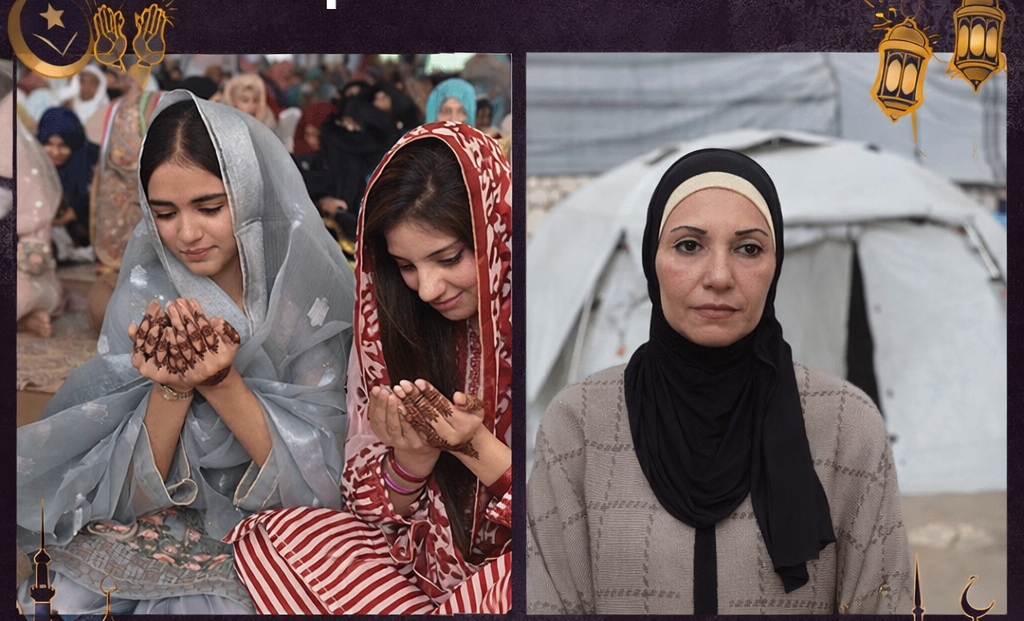
As Muslims across the world celebrate Eid ul Fitr, marking the end of Ramadan, a stark contrast has emerged between regions torn by war and those observing the festival with relative peace. From the conflict-ridden streets of Gaza and Beirut to the prayer-filled mosques of Pakistan, Eid this year reflects both resilience and hardship across the Muslim world.
In the Middle East, ongoing conflicts and economic crises have significantly dimmed the spirit of Eid. In Gaza, where much of the population remains displaced after months of Israeli bombardment, celebrations are subdued. Markets appear crowded, but many families cannot afford even basic food items, let alone traditional Eid gifts or clothing.
Residents describe a painful disconnect between the outward appearance of festivity and the harsh economic reality. Many families, now living in tents or partially destroyed homes, are struggling to secure daily necessities. For them, Eid is less about celebration and more about survival.
Similarly, in Lebanon, thousands displaced by recent Israeli strikes are marking Eid without homes. Public spaces in Beirut have turned into makeshift shelters, with families living in tents along the waterfront. For many, the priority is finding safety rather than celebrating the holiday.
In Iran, the situation is compounded by ongoing military tensions and a deepening economic crisis. With key marketplaces damaged and prices soaring, traditional Eid shopping has become both risky and unaffordable. The overlap of Eid with Nowruz has further divided public sentiment, with some choosing to forgo celebrations altogether.
Despite the devastation, a sense of solidarity persists. Families continue to gather in whatever way possible, holding onto communal bonds as a source of strength amid uncertainty.
In contrast, Pakistan is celebrating Eid ul Fitr with traditional zeal and religious devotion, though the suffering in the Middle East remains deeply felt.
Across cities including Karachi, Lahore, and Islamabad, large congregations gathered at mosques and open grounds to offer Eid prayers. Sermons emphasized unity, compassion, and the need for peace in the Muslim world, particularly in light of ongoing conflicts in the Middle East.
President Asif Ali Zardari and Prime Minister Shehbaz Sharif, in their Eid messages, called for national unity, resilience, and solidarity with oppressed Muslims worldwide. Both leaders urged citizens to embody the values of patience, sacrifice, and compassion learned during Ramadan.
“Eid is a reminder to share our joys with the less fortunate and to strengthen the bonds of brotherhood,” the president said, while also praying for peace and stability globally.
Prime Minister Shehbaz Sharif echoed similar sentiments, highlighting the importance of collective responsibility and expressing solidarity with those suffering in Gaza and other conflict zones.
In Pakistan, families are celebrating with traditional enthusiasm—wearing new clothes, exchanging gifts, and enjoying festive meals—while also fulfilling religious obligations such as Zakat ul Fitr to support those in need.
Yet, even amid celebrations, there is a strong awareness of the broader challenges facing the Muslim Ummah. Special prayers were offered nationwide for peace, justice, and unity across the Islamic world.
This year’s Eid underscores a powerful dual reality: while some communities gather in joy and gratitude, others endure loss and displacement. The contrast serves as a reminder of both the blessings of peace and the urgent need for global solidarity in times of crisis.


35 Comments
Facilita il confronto tra prezzi e servizi offerti.
prednisone 50: trusted steroid medication source – prednisone 10
buy prednisone without prescription paypal: corticosteroid medication online – prednisone 3 tablets daily
Global India Pharmacy: pharmacy website india – Global India Pharmacy
indian pharmacy online: Global India Pharmacy – Global India Pharmacy
trusted canadian pharmacy: NorthAccess Rx – reputable canadian online pharmacy
Global India Pharmacy: indian pharmacy – world pharmacy india
http://northaccessrx.com/# canadian pharmacy price checker
cheapest online pharmacy india: india online pharmacy – Global India Pharmacy
Paw Trust Meds: discount pet meds – Paw Trust Meds
Paw Trust Meds: Paw Trust Meds – Paw Trust Meds
Paw Trust Meds: online vet pharmacy – dog medicine
trustworthy canadian pharmacy: canada drugs online review – ed drugs online from canada
dog prescriptions online: Paw Trust Meds – vet pharmacy
Global India Pharmacy: Global India Pharmacy – Global India Pharmacy
top 10 pharmacies in india: india pharmacy mail order – indian pharmacy online
precription drugs from canada: NorthAccess Rx – online canadian pharmacy reviews
pharmacy com canada: NorthAccess Rx – my canadian pharmacy
canadian mail order pharmacy: canada pharmacy online legit – legitimate canadian pharmacy online
legitimate canadian pharmacy online: onlinepharmaciescanada com – medication canadian pharmacy
reputable indian online pharmacy: Global India Pharmacy – top 10 pharmacies in india
Paw Trust Meds: Paw Trust Meds – pet meds for dogs
buy medicines online in india: Online medicine home delivery – Global India Pharmacy
canadian pharmacy service: NorthAccess Rx – canadian pharmacy drugs online
vet pharmacy online: dog medicine – pet med
https://globalindiapharmacy.com/# Global India Pharmacy
canadian pharmacy 365: canadian pharmacy online – canadian pharmacy no scripts
pet pharmacy online: Paw Trust Meds – canada pet meds
Paw Trust Meds: pet pharmacy – Paw Trust Meds
https://northaccessrx.com/canadian-pharmacy-rating.html# canadian pharmacy antibiotics
my canadian pharmacy: canadian pharmacy review – online canadian pharmacy
canadian family pharmacy: NorthAccess Rx – online canadian pharmacy
Global India Pharmacy: Global India Pharmacy – Global India Pharmacy
Global India Pharmacy: Global India Pharmacy – Online medicine order
https://pawtrustmeds.com/# pet pharmacy