


Webdesk- Shiza Iqbal
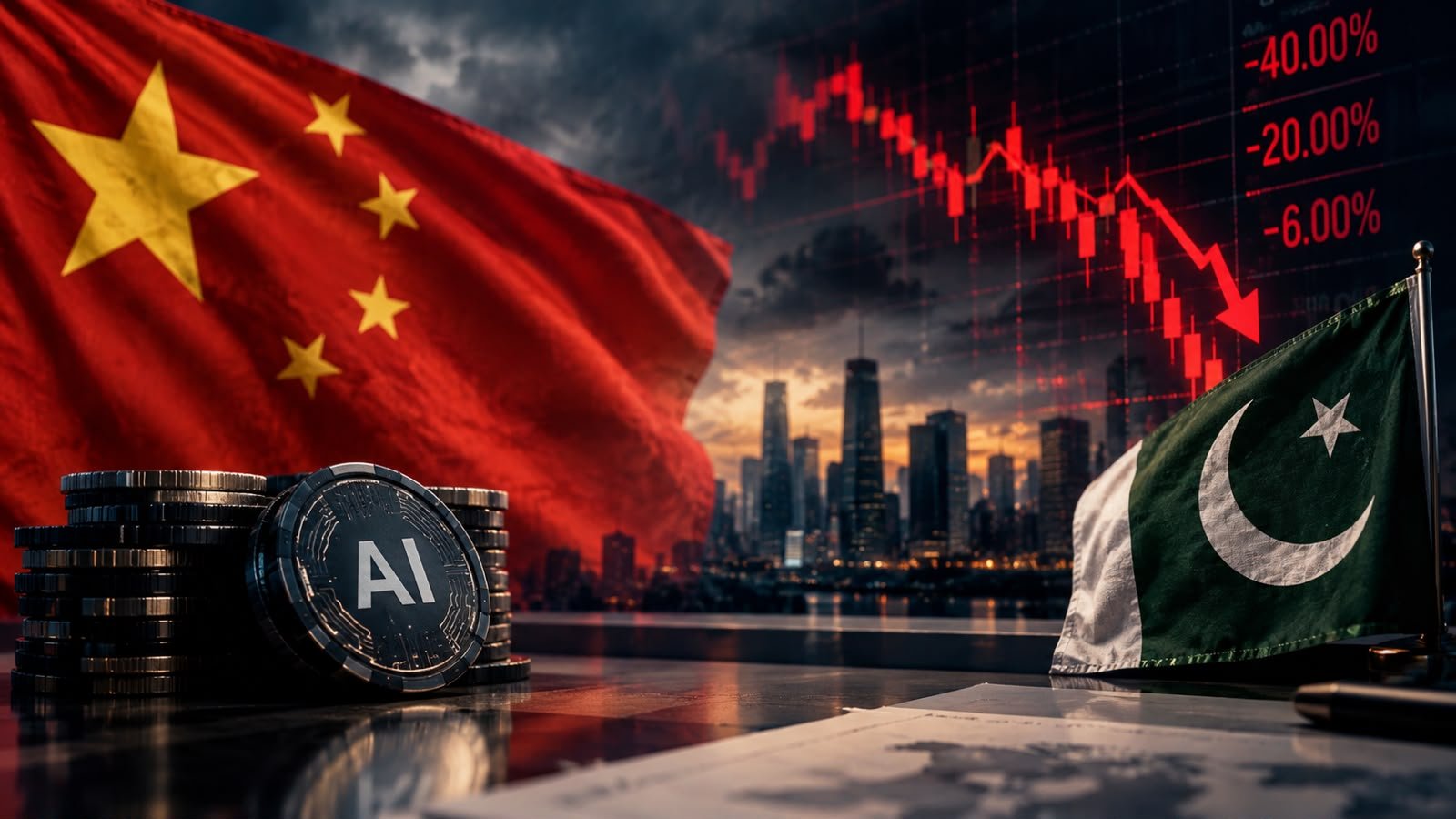
China’s artificial intelligence and semiconductor sectors are reportedly experiencing a sharp market downturn, wiping out an estimated $480 billion in market value and raising concerns about the potential consequences for Pakistan’s growing technology industry.
According to reported market figures, China’s STAR50 index, which tracks major technology companies, has declined approximately 40 percent in less than four months. Meanwhile, the CSI300 index has reportedly fallen nearly 20 percent from its June highs, reflecting mounting pressure on Chinese equities.
The downturn has affected several prominent technology companies, including robotics manufacturer Unitree Robotics and semiconductor firms MetaX Integrated Circuits and Moore Threads Technology.
Shares associated with these companies have reportedly experienced substantial declines following earlier periods of strong investor enthusiasm. Optical component manufacturers Zhongji Innolight and Eoptolink Technology have also faced significant market pressure amid concerns over potential United States trade restrictions.
The developments have prompted questions about how a prolonged slowdown in China’s artificial intelligence industry could affect Pakistan, which maintains close economic and technological ties with Beijing.
For Pakistani businesses, the downturn could present opportunities, particularly through potentially lower prices for Chinese artificial intelligence technologies.
Local fintech companies, software developers and e-commerce businesses increasingly require affordable digital solutions. Greater competition among Chinese technology providers could make artificial intelligence tools, cloud services and computing equipment more accessible to Pakistani startups.
However, the situation also presents potential risks.
Pakistani companies relying on Chinese technology providers, including Alibaba Cloud and Huawei Cloud, could face uncertainty if financial pressures lead to industry consolidation, reduced investment or changes in service availability.
The reported downturn could also influence broader technological cooperation between Pakistan and China.
Pakistan’s reported participation in China’s World AI Cooperation Organization reflects its interest in strengthening international collaboration on emerging technologies. Financial instability within China’s technology sector could potentially affect future investment commitments and joint development initiatives.
Pakistani consumers may also experience changes in the prices of Chinese smart devices, robotics products and artificial intelligence-powered equipment if manufacturers introduce competitive pricing strategies to maintain international demand.
Nevertheless, cheaper products could carry risks, particularly if struggling manufacturers reduce software updates, technical assistance or long-term customer support.
Industry observers suggest that Pakistani businesses should prioritize reliable technology partnerships while exploring opportunities created by changing market conditions.
Although falling technology stock prices do not necessarily indicate a collapse in artificial intelligence development, the reported market correction highlights the importance of financial stability, supplier diversification and sustainable investment.
For Pakistan, the key challenge will be balancing the potential benefits of affordable Chinese technology against the risks of depending heavily on an increasingly uncertain market.

