


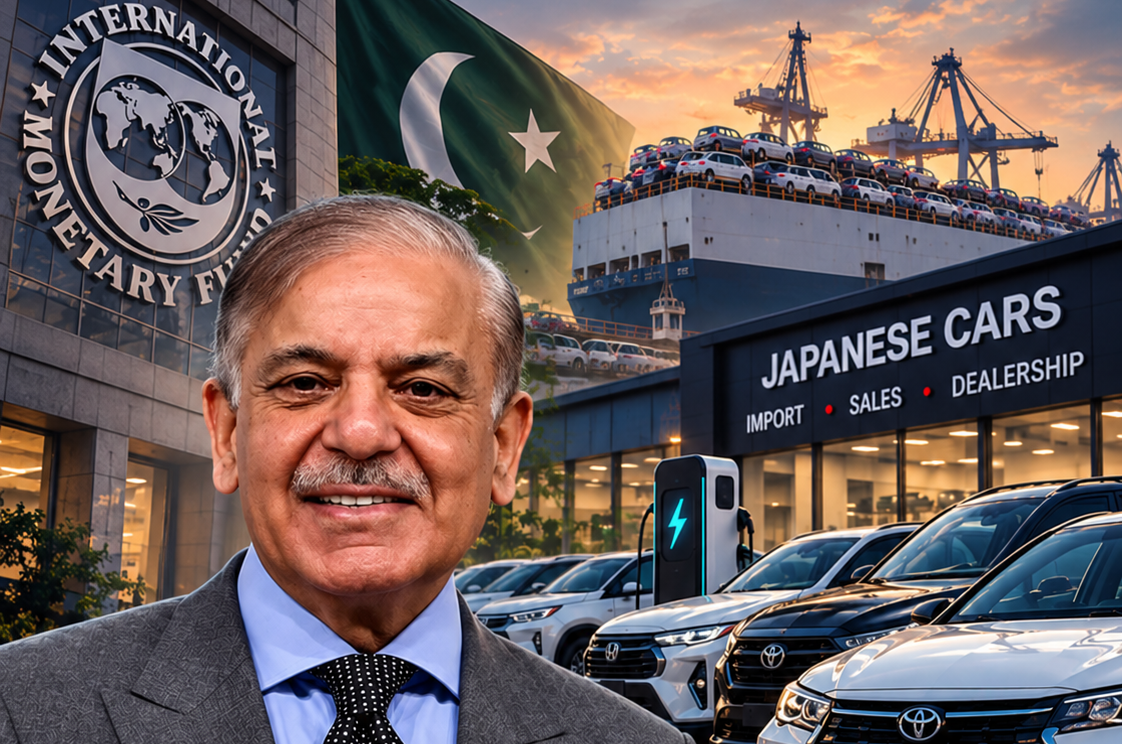
Pakistan approves a five-year auto policy, rejects the IMF’s EV tax proposal, sets a $6 billion export target, and triples limits on electric-vehicle financing to boost domestic production.
1. Pakistan rejects IMF demand on electric vehicles
The government has refused the IMF’s proposal to raise sales tax on electric vehicles to 18 percent. EV sales tax stays at one per cent through 2031 — a direct pushback against fund pressure and a signal that Islamabad is protecting its EV growth agenda.
2. $6 billion export target — with penalties for missing it
PM Shehbaz Sharif has approved a five-year auto policy with a $6 billion vehicle export target and $1.2 billion in auto parts exports by 2030-31. Manufacturers who miss targets for two consecutive years risk losing their manufacturing certificates entirely.
3. EV financing jumps from Rs3 million to Rs10 million
The financing cap for electric vehicles has more than tripled — from Rs3 million to Rs10 million — and the repayment period has been extended from three to five years. Smaller EVs priced below $15,000 get additional tariff relief to make them affordable for lower-income buyers.
4. A new levy on cars above 1,000cc — Rs232 billion in five years
The policy introduces an Automotive Development Levy on vehicles with engine capacity above 1,000cc, projected to generate over Rs232 billion over five years. The funds go toward export incentives, industrial development, and technology upgrades for local parts manufacturers.
5. Independent testing institute and mandatory safety standards
Pakistan will establish a dedicated Automotive Testing Institute for research, certification, and audits. Global safety standards will become mandatory for both locally made and imported vehicles, with two sector audits annually and third-party verification of all incentive payments.

