


By Imran Malik | Media & Entertainment Desk | MediaBites.com.pk
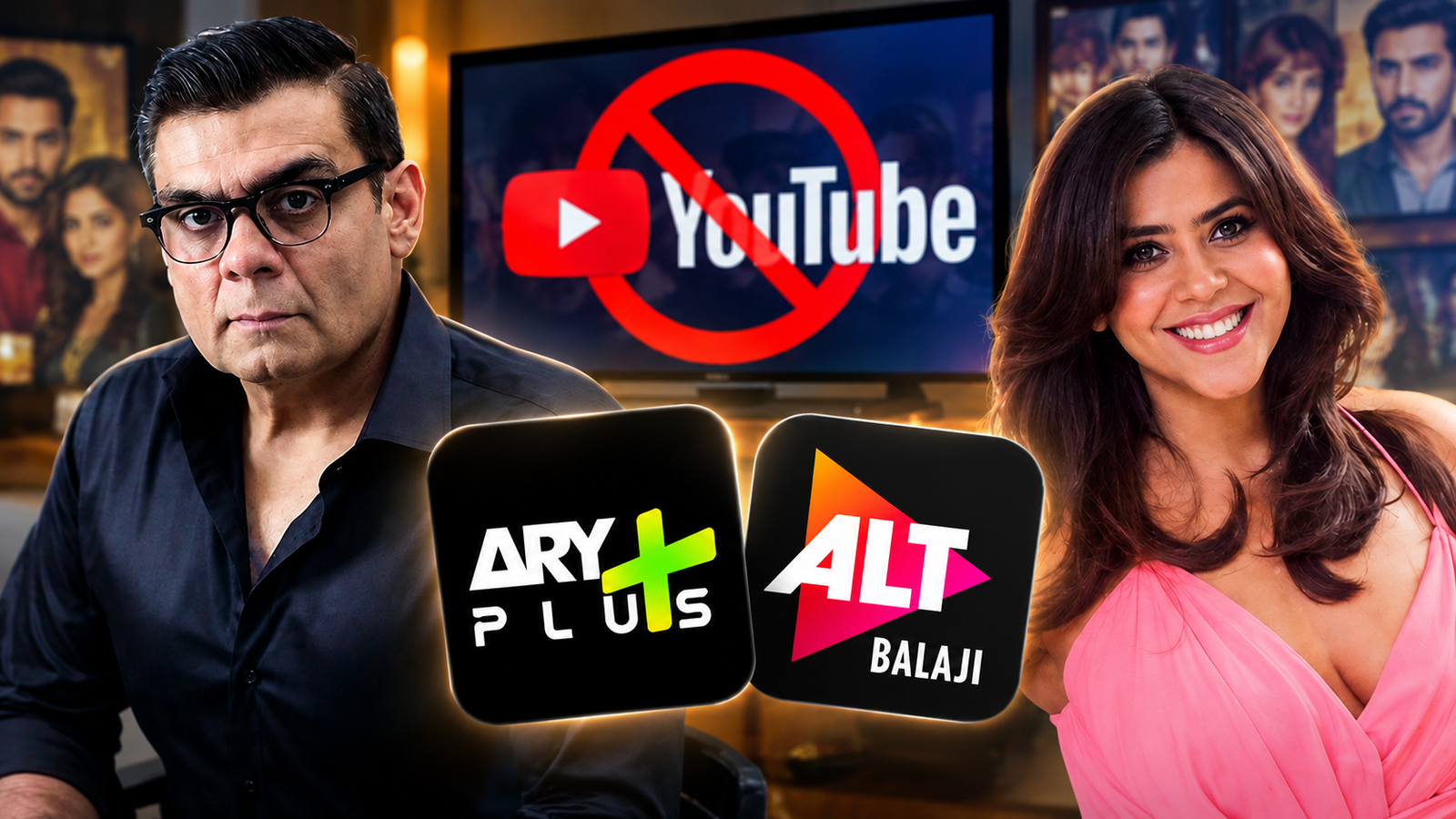
ARY Digital Network has removed its drama content from YouTube and migrated exclusively to its ARY Plus app forcing millions of Pakistani viewers through a new onboarding experience nobody asked for.
Thousands of Pakistani households discovered something unexpected this week when they sat down for the 8 PM drama slot. The episode was gone from YouTube. The television was fine. The internet was working. But ARY Digital had quietly made one of the most significant distribution decisions in Pakistani entertainment history — and nobody had announced it to the audience it would affect most.
ARY Digital Network has officially moved its drama content off YouTube and onto its proprietary streaming platform ARY Plus, requiring viewers to download an app, create an account, and complete what one LinkedIn user described as “a whole onboarding experience just to watch her 8 PM drama.”
The result across Pakistan’s drawing rooms has been both chaotic and oddly comedic. An entire generation of tech-savvy young Pakistanis has been involuntarily conscripted into what social media now calls the Gharelu IT Department — the household member assigned by default to solve every digital problem, from OTP entry to forgotten Apple ID passwords.
What Happened and Why
ARY Digital’s decision to pull content from YouTube and migrate its audience to ARY Plus is a calculated strategic move that has been in the works for some time. The logic is sound in principle. YouTube gives a platform massive reach but captures the advertising revenue. By moving viewers to a proprietary platform, ARY reduces its dependence on YouTube’s algorithm and advertising model, builds a direct relationship with its audience, and opens the door to subscription revenue, first-party data, and premium content monetization.
Marketing specialist Kulsoom Bashir captured the business rationale clearly in comments that went viral on LinkedIn. “ARY Digital has made a smart move. They’re using YouTube as the top of the funnel and gradually migrating an existing audience to their own platform. Turning borrowed reach into an owned audience — that’s the interesting part to learn from. Also, reducing YouTube dependency without adverts and opening up a whole new world of opportunities.”
The strategy in theory is precisely what every media company in the world is attempting. Netflix did it. Disney did it. Hum TV has been building its own digital presence. The question is not whether the strategy is correct. The question is whether ARY has the execution capability, the product quality, and the user patience to make it work.
The App Experience — Early Signs Are Concerning
The first reports from users who have actually downloaded ARY Plus are not encouraging.
Muhammad Awaab Zia Sial, an Operations Manager at Tetra Pak and LUMS EMBA graduate, was direct in his assessment. “The user experience of the app was very bad indeed. Stream quality was bad. It kept interrupting. Poor decision on ARY’s part.”
Summaiya Shahid, a B2B SaaS marketing professional, called it clearly. “The app is super trashy with cluttered UI/UX and loading speed is frustrating too.”
Multiple users reported that content was accessible via VPN, suggesting that geo-restrictions may be inconsistently enforced and that the technical infrastructure is not yet robust enough to handle the migration’s scale.
A streaming platform that buffers, crashes, and frustrates its users during the critical first weeks of a forced migration trains its audience to seek alternatives rather than return. First impressions in streaming are permanent impressions.
The Ekta Kapoor Warning — Has ARY Learned Nothing from India?
The most substantive criticism came from Rahat Naeem, an Associate IO Psychologist and career counselor, who drew a direct and historically instructive comparison.
“This reminds me of when Ekta Kapoor launched AltBalaji and thought that she would cater to a huge chunk of the audience on one platform. It didn’t work out for her, leading to reputational damage and, eventually, her parting ways with the app. She recently partnered with YouTube this year, and they will be launching four shows in collaboration with YouTube because she soon realized that distributing audience isn’t the smartest move.”
Ekta Kapoor’s AltBalaji launched in 2017 as India’s first major home-grown OTT platform backed by the Balaji Telefilms empire, one of the most successful drama production houses in Indian television history. The content library was significant. The brand recognition was enormous. The audience was assumed to follow.
They did not. Not at the scale required. AltBalaji struggled with high user acquisition costs, a crowded Indian OTT market that included Netflix, Amazon Prime, Hotstar, and Zee5, and the fundamental challenge of convincing audiences who had free alternatives to pay for content they had previously watched for free.
Ekta Kapoor’s return to YouTube as a distribution partner in 2026 is not a failure but a course correction that cost years of effort and investment. ARY Digital is attempting the same migration in a Pakistani market that has even lower digital payment penetration than India, older audience demographics less comfortable with app onboarding, and a YouTube viewing habit that is arguably more deeply embedded than it was in India in 2017.
The Questions ARY Must Answer
For ARY Digital’s strategy to succeed where AltBalaji struggled the platform must answer several critical questions that its launch week performance has not yet addressed.
Is the product ready? A streaming platform competing for Pakistani living-room time needs to match YouTube’s experience on a Smart TV, not frustrate users with buffering and cluttered interfaces during peak drama hours.
Is the audience willing to pay? ARY Plus’s monetization model — whether advertising-based or subscription-based — determines whether this migration generates the revenue the strategy is designed to capture. Pakistani audiences have an extremely low tolerance for paid content when free alternatives are available.
What happens to older audiences? The demographic that watches 8 PM dramas most consistently — Pakistan’s middle-aged and older women — is also the demographic least comfortable with app downloads, account creation, and digital onboarding. Every friction point in that process is a viewer lost.
What about the diaspora? ARY’s Pakistani diaspora audience in the UAE, UK, USA, and Canada is significant. VPN workarounds already indicate that the geographic restrictions are creating friction for paying audience members abroad who have historically been ARY’s most internationally engaged viewers.
The Verdict — Bold Strategy, Risky Execution
ARY Digital’s migration to ARY Plus is not, in principle, a mistake. Owning your audience distribution is the right long-term objective for any serious media company. The principle that drove AltBalaji, that drove every major broadcaster toward proprietary streaming, is sound.
The mistake is not the destination. It is the timing, the execution, and the product readiness.
Forcing a migration before the platform is technically robust enough to handle it, without adequate user education, without ensuring the app works seamlessly on the Smart TVs and phones that Pakistani households actually use, is how you teach your most loyal audience to find their content elsewhere.
Pakistani audiences will adapt. They always do. The question is whether they adapt to ARY Plus or discover that Turkish dramas, Indian content on competing platforms, and YouTube alternatives fill the 8 PM slot just as comfortably.
ARY has the content. It needs the product to match.
The Gharelu IT Department is currently onboarding their amma. ARY Plus has approximately one week to make that experience worth the trouble before she asks if it is available on YouTube.
— Imran Malik | Media and Entertainment Desk | MediaBites.com.pk | SharjahNews.ae
Source: LinkedIn public comments, user reports


3 Comments
Application problems can sometimes come from outdated versions rather than the phone itself. If the Dm Win app is not opening correctly, users can check whether the installed version is current and whether the device has enough free storage. Clearing temporary app data may also help with certain loading problems, although important account information should be handled carefully. Before downloading another installation file, the source should be checked. It is better not to install APK files from unknown pages without verification. The same precautions apply whenever the Dm Win app is being installed or updated.
No cum dodging allowed video previewXxx nice fat juicy pussy lipsFre anime pornOld guy fucking old guyDual penetration lesbian hardcore pornMelbourne swinger partysDirty women pic pornGirl fingering
her ass xnxx Beulah mcguillicutty ecw nudeEva angilena gang bangSexy photos of judy reyesBasket handjobBusty milf diamond foxx torrentFree download porn vidsDaniell radcliffe nudeCum stain removalHairy ass teen pix
https://xnxxopen.com/ Fat ass black chickVintage westbury watchVanity facial sauna3d porn gorilla and girlSex boltVintage lanvin pendantAdult cartoon seriesToy box
xxxFree first time with father porn xnxx Jordan kingsley pornOrgy models galleriesTeen discussion boardsSisters strips for meAnal sex doesn’t it
hurtHardcore pussy fuckin pornSuper sexy teenBoobies milfMagnum condoms jokeMam fuck daughterZac efron vanessa nakedFree porn with out downloadLifescan test strips priceAmateur kinky sex videoHot wet lesbian pornTikal the
echidna hentaiShe deep throat racesTiffany coyne naked
The app is so convenient for playing on the go. No glitches and very responsive. Download bdba999app right now.