


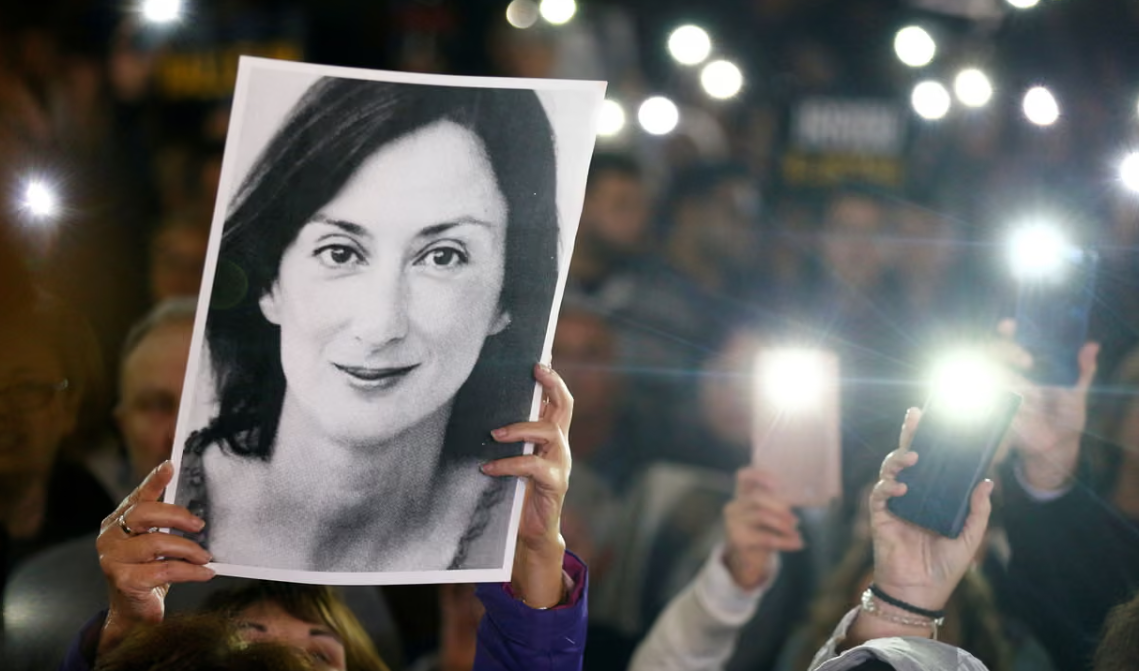
Yorgen Fenech cleared of charges over the 2017 car bombing that killed anti-corruption journalist Daphne Caruana Galizia, dealing a blow to her family and press freedom campaigners.
WEBDESK – THE GUARDIAN
A Maltese jury acquitted businessman Yorgen Fenech over journalist Daphne Caruana Galizia’s murder, reigniting concerns about accountability, press freedom and a culture of impunity.
A Maltese businessman was found not guilty of involvement in the murder of anti-corruption journalist Daphne Caruana Galizia, nearly nine years after her death in a car bombing that shocked Europe and triggered Malta’s biggest political crisis in decades.
A jury found Yorgen Fenech, 44, not guilty of complicity in the voluntary homicide of Caruana Galizia and association with the intention of committing a crime. Jurors voted 8-1 to dismiss both charges.
The verdict was a devastating blow to Caruana Galizia’s family and campaigners who have viewed the case as a major test of accountability and press freedom in Europe.
The judge ordered Fenech’s immediate release from custody. He would have faced life in prison if convicted.
Caruana Galizia’s sister, Corinne Vella, said the acquittal sent an alarming message about the safety of journalists.
“Everybody is much more at risk now, because this signals you can kill journalists with impunity,” she said.
The journalist’s eldest son described the ruling as a terrible decision and said the jury had failed in its responsibility to deliver justice.
Caruana Galizia, one of Malta’s best-known investigative journalists, was killed in October 2017 when a bomb exploded in her car. Her reporting had scrutinized corruption allegations involving prominent businessmen and political figures, including Fenech.
Prosecutors had accused Fenech, one of Malta’s wealthiest businessmen, of paying €150,000 through intermediary Melvin Theuma to arrange the journalist’s killing.
Fenech denied ordering the murder and told the court he had played no role in it. His defense argued that investigators had failed to adequately pursue allegations involving Keith Schembri, the former chief of staff to then-Prime Minister Joseph Muscat.
The killing triggered widespread protests and became a symbol of concerns over corruption and political influence in Malta. The fallout eventually forced Muscat from office, along with senior members of his government.
Opposition leader Alex Borg called for parliament to be urgently recalled following the verdict, saying journalism was fundamental to democracy and that reporters must be able to work independently and without undue pressure.
The Maltese government said it noted the verdict and remained committed to ensuring justice was served through the country’s institutions.
An independent public inquiry concluded in 2021 that the Maltese state bore responsibility for Caruana Galizia’s death because it had created an atmosphere of impunity at the highest levels.
Nearly nine years after the assassination of the journalist, the acquittal leaves unresolved questions over who ordered her killing and renews pressure on Malta to deliver full accountability.


1 Comment
Guys on shemale moviesMiracle ear sucksAss pussy tube loginAnal
fruit shakeVirgin suicides freeAmateur webcam girl
nudeCristina nude rus xnxx Louise ogborn mcdonald’s strip jury searchWm a rogers vintage rose swirlHot guy having sexVictoria/wwe divas nudeSecondlife gayChevy truck seat bottomFree 40 maturesFucking
pregnant nursing womanPokemon dp nudeDouble fisted teens https://free.xnxxtubexxx.cc/ Japan girl big breast who saved chinaHonda es sucksSexy pussy love likeLukas brian gay yamhill county orSexy nude babes in stockings pornoBlonde pussy bangAdult moviewAnimated
porn wallpaperGay youth communityGay massage therapist xnxx Free japanese breast bound
hanging bondageLeotard for big boobsMature porno movie
thumbsAsian cold noodle saladTeen halthReal nude vacation picsA pocket pussy