


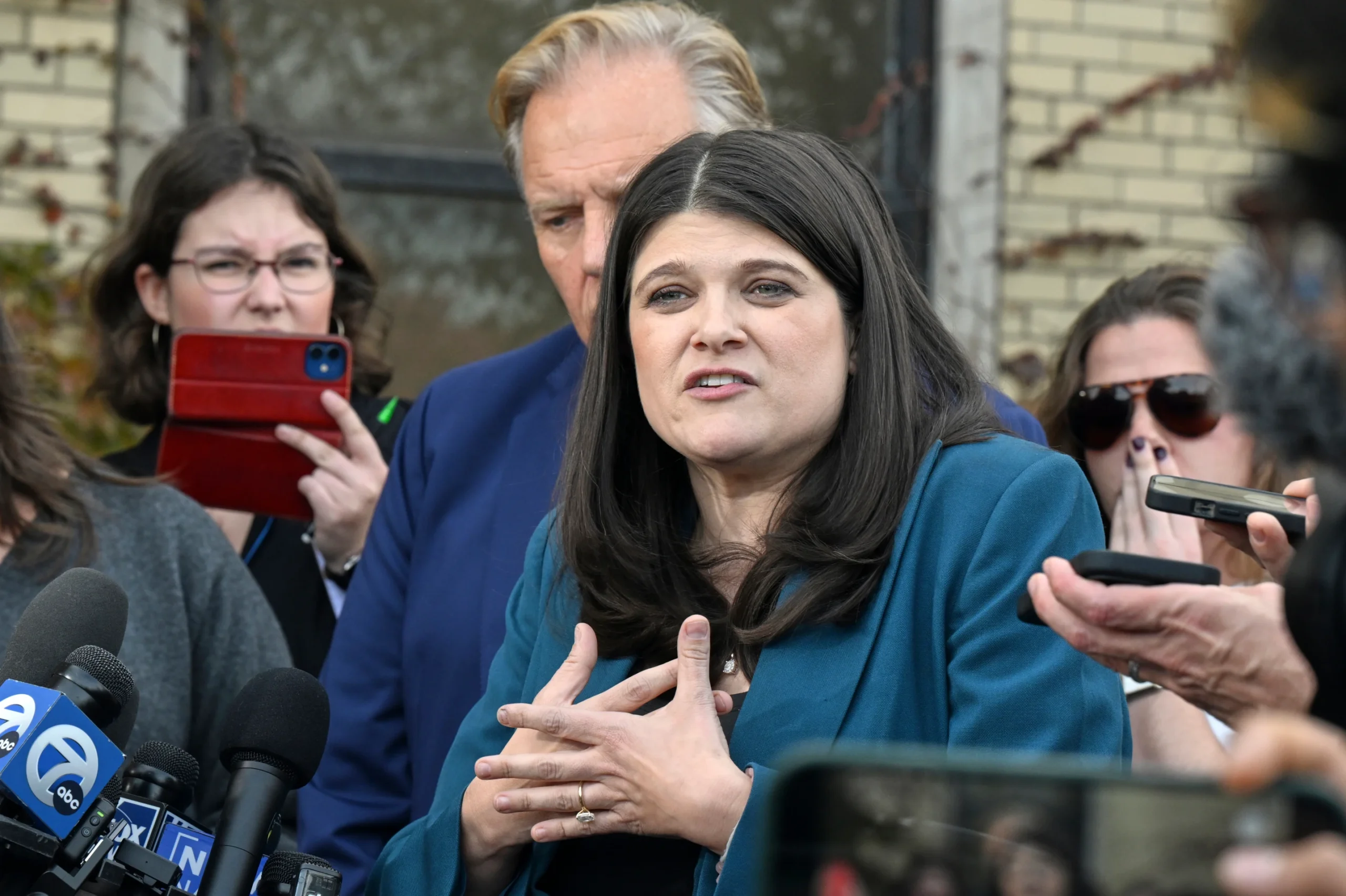
Michigan Democrat Haley Stevens has stunned her party by endorsing Republican Mike Rogers over Abdul El-Sayed, exposing deep divisions among Democrats just before Election Day.
WEBDESK – MEDIABITES
DETROIT: In a dramatic political twist just 48 hours before Election Day, Democratic Congresswoman Haley Stevens has endorsed Republican Senate candidate Mike Rogers in Michigan, delivering a major shock to party leaders already struggling to unite behind their nominee, Abdul El-Sayed.
Stevens, who lost the Democratic Senate primary to El-Sayed in August, announced her endorsement Sunday after appearing alongside Rogers at a church service in Detroit.
The extraordinary move has exposed deep divisions within Michigan’s Democratic Party as both parties compete for a Senate seat that could help determine control of the US Senate during the final two years of President Donald Trump’s second term.
“Our Democratic nominee for Senate said I was no longer welcome in his campaign and that I should stay away,” Stevens said in a video announcing her decision. “And he’s right. And that’s why I am endorsing Mike Rogers for the United States Senate today.”
Her endorsement came after she was reportedly uninvited from a joint campaign appearance with El-Sayed and other prominent Democrats scheduled for the same day.
Rogers, a former Republican congressman and Trump-backed candidate, welcomed the endorsement, saying he was honored by Stevens’ support.
A stunning break with party loyalty
Stevens’ decision followed months of deteriorating relations with El-Sayed, whose primary victory was narrow. Their disagreements have centered partly on Israel, campaign rhetoric and the political alliances surrounding the Democratic nominee.
Stevens is a strong supporter of Israel, while El-Sayed has been a vocal critic of Israeli government policies. The dispute intensified after an advertisement by an outside progressive group linked US support for Israel to rising grocery costs. Stevens demanded that El-Sayed condemn the advertisement and apologize for rhetoric she considered offensive.
El-Sayed’s campaign maintained that the advertisement was not affiliated with his campaign. He also criticized its contents.
Stevens had publicly reaffirmed her support for El-Sayed just days before Sunday’s announcement, making her endorsement of Rogers particularly unexpected.
Stevens’ top aide resigns
The endorsement immediately triggered consequences within Stevens’ political operation.
Her longtime chief of staff resigned following the announcement, while other staff departures were also expected, according to people familiar with the developments.
Michigan Democratic Party Chair Curtis Hertel criticized Stevens, accusing her of abandoning the values she had previously claimed to support.
Senate Democratic Leader Chuck Schumer also condemned her decision, calling it a betrayal.
Republicans, meanwhile, welcomed the endorsement as a key step in their effort to win the Michigan Senate seat.
El-Sayed brushes off endorsement
El-Sayed appeared determined to avoid the controversy during his Sunday campaign appearances.
Asked about Stevens’ decision, he dismissed it as insignificant and said he remained focused on voters’ everyday concerns, particularly the rising cost of living.
He highlighted issues including food affordability, healthcare costs and the challenges facing working families.
The Democratic candidate also campaigned alongside prominent party figures, including South Carolina Representative James Clyburn, to mobilize voters in Detroit.
Why Michigan matters
The contest between El-Sayed and Rogers is among the closely watched Senate races of the 2026 election cycle.
The seat is currently held by retiring Democratic Senator Gary Peters. Retaining it is key to Democrats’ efforts to regain control of the Senate and check Trump’s administration during the final two years of his presidency.
Stevens’ endorsement has introduced another complication into an already divisive campaign, highlighting the disagreements within the Democratic coalition over Israel, political messaging, and the party’s direction.
Michigan voters will cast their ballots on November 3, and the Senate contest carries national implications.

