


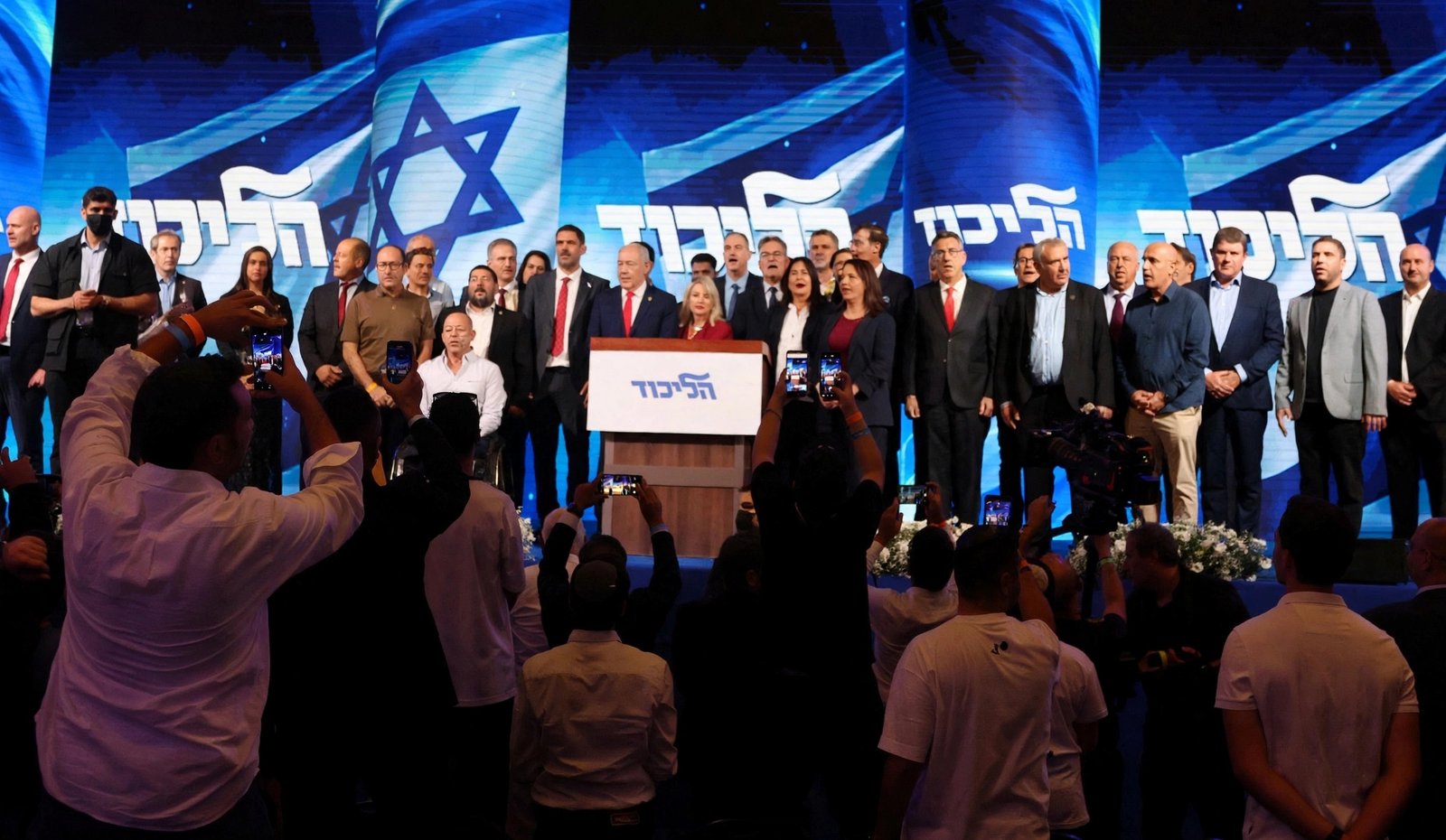
Israel’s election results show Netanyahu’s alliance falling short of a parliamentary majority, with 90% of votes counted. Likud leads with 26 seats, while opposition and Arab parties make significant gains.
webdesk-sardar muneeb
The vote-counting process is continuing following Israel’s general elections, with 90 percent of the votes counted. Prime Minister Benjamin Netanyahu’s alliance has failed to secure a simple majority in the 120-member parliament, according to the reported results.
Netanyahu’s alliance is projected to win 53 seats, while the opposition alliance led by Gadi Eisenkot is expected to secure 48 seats. Arab political parties are also projected to make significant gains, with the Joint List expected to win 12 seats and the United Arab List seven.
Netanyahu’s Likud party has emerged as the largest single party with 26 seats. However, two far-right allies, Itamar Ben-Gvir and Bezalel Smotrich, have suffered losses. Their parties held a combined 20 seats in the previous parliament but are now projected to secure only 13 seats.
Both politicians had strongly supported Israel’s military campaign in Gaza, including its devastating impact on Palestinians.
The opposition alliance has secured 48 seats, including 21 for Yashar, the new party led by former Israeli army chief Gadi Eisenkot. The parties associated with Yair Lapid and former prime minister Naftali Bennett have secured a combined 12 seats, according to the reported figures.
Israel follows a nationwide proportional representation system in which the entire country serves as a single electoral constituency. Political parties publish ranked candidate lists, and parliamentary seats are allocated according to the share of votes each party receives.
Voter turnout in the Israeli elections reached 78 percent. Arab citizens of Israel participated actively in the voting, contributing to the expected gains of Arab political parties, which are projected to win a combined 19 seats. Celebrations were reported in Arab communities following the results.
However, neither of the two main political alliances supports including Arab parties in a coalition government. The exception in recent years was Naftali Bennett, who included an Arab party in his government in 2021.
Despite divisions within the two major alliances, a new government could still emerge through coalition negotiations. Opposition leader Gadi Eisenkot has argued that the public mandate is against Netanyahu.
Eisenkot also warned Netanyahu against using the Israeli military for political purposes, saying the prime minister should not dare to do so again.

