


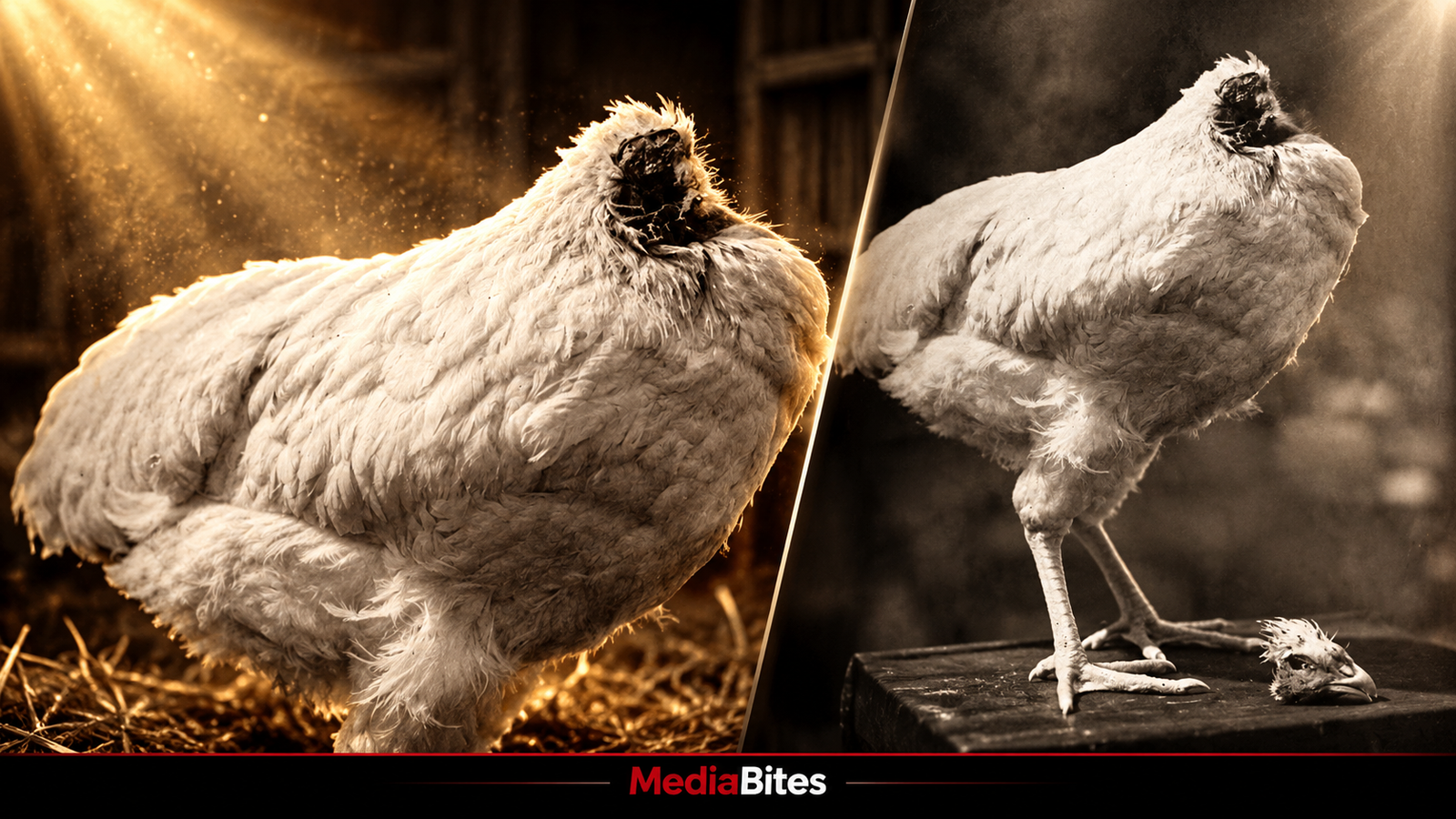
A Colorado rooster survived for 18 months after being beheaded in 1945. Nearly eight decades later, his extraordinary story continues to draw thousands to an annual festival.
WEBDESK – MEDIABITES
A rooster that survived for 18 months after being beheaded has become an unlikely American legend, inspiring an annual festival that brings around 15,000 visitors to a small Colorado town.
Mike, famously known as “Miracle Mike” or “Mike the Headless Chicken”, survived an axe blow in September 1945 that should have killed him. Instead, the bird continued moving around a farm in Fruita, Colorado, astonishing his owners and eventually attracting national attention.
More than 80 years later, Mike’s extraordinary survival story remains the inspiration for a festival that combines local traditions, live music, running events and unusual food competitions.
How Mike survived without a head
The remarkable incident occurred on September 10, 1945, when farmer Lloyd Olsen selected a young Wyandotte rooster for a family supper with his wife, Clara Olsen, and her mother.
Olsen struck the bird with an axe, but the cut missed its jugular vein and left much of its brainstem intact. A blood clot helped prevent fatal bleeding, allowing the rooster to survive despite losing most of its head.
Rather than dying immediately, Mike continued walking around the farm. The family initially expected him to die overnight, but the rooster was still alive the following morning.
Olsen later recalled being surprised to find the bird moving around, preening itself and apparently attempting to crow.
The family eventually decided to care for the unusual animal. According to accounts of Mike’s life, Olsen used an eyedropper to deliver a mixture of milk and water directly into the bird’s exposed oesophagus and fed him small grains of corn.
The survival was possible because parts of the brain responsible for basic functions, including breathing and heart rate, remained intact. Mike’s case became a striking example of how much an animal’s survival can depend on the precise location of an injury.
From a farmyard curiosity to a travelling attraction
As word of the headless rooster spread, Mike became a sensation. The Olsens partnered with sideshow promoter Hope Wade, taking the bird on tour and displaying him to curious audiences.
Mike reportedly travelled to Salt Lake City, Utah, where scientists at the University of Utah examined him. His story also attracted media attention, including coverage in Life magazine.
The attraction brought opportunities for the family while turning an extraordinary accident into a travelling spectacle. Mike’s survival was so unusual that his owners reportedly began betting people that they had a living headless chicken.
His fame eventually extended well beyond Colorado, helping secure his place in popular culture and the Guinness World Records as the longest-surviving headless chicken.
An unexpected legacy in Colorado
Mike’s story did not end with his death. On March 17, 1947, the rooster died in a motel in Phoenix, Arizona, after choking. The Olsens reportedly could not clear his throat because the eyedropper they used to help him had been left at the previous show location.
Mike had survived for approximately 18 months after being beheaded.
In 1999, Fruita began celebrating his legacy with the Mike the Headless Chicken Festival, transforming the bizarre episode into an annual community event.
The festival has grown into a major local attraction, drawing visitors from across the United States and abroad. Organisers say some attendees travel from as far away as Australia.
The event features a 5K run, live music, comedy performances and chicken-themed eating contests. Its playful atmosphere has helped the small Colorado community build a distinctive identity around a story that might otherwise have remained a footnote in agricultural history.
The festival’s programme has also included a “Release the Head” comedy show and a peep-and-wing eating contest, reflecting the unusual humour surrounding Mike’s legacy.
Why the story still fascinates people
Mike’s appeal lies in the extraordinary contrast between the circumstances of his survival and the life he managed to lead afterwards.
His case is not evidence that chickens can normally survive decapitation. Rather, it illustrates how an incomplete injury can sometimes leave vital neurological structures and blood supply intact, producing an outcome that appears almost impossible.
For Fruita, however, the story has become about more than biology. It is a source of local pride, a tourism draw and an opportunity to bring residents and visitors together through an event unlike any other.
Ciara Amann, Fruita’s interim parks and recreation director, said visitors come from around the world to experience the festival and celebrate Mike’s unusual place in history.
Nearly eight decades after his death, the rooster continues to attract attention — proving that even the strangest stories can develop a life of their own.


1 Comment
The article helped me look at a familiar issue from a slightly different angle. This is definitely a page I will keep in my bookmarks.