


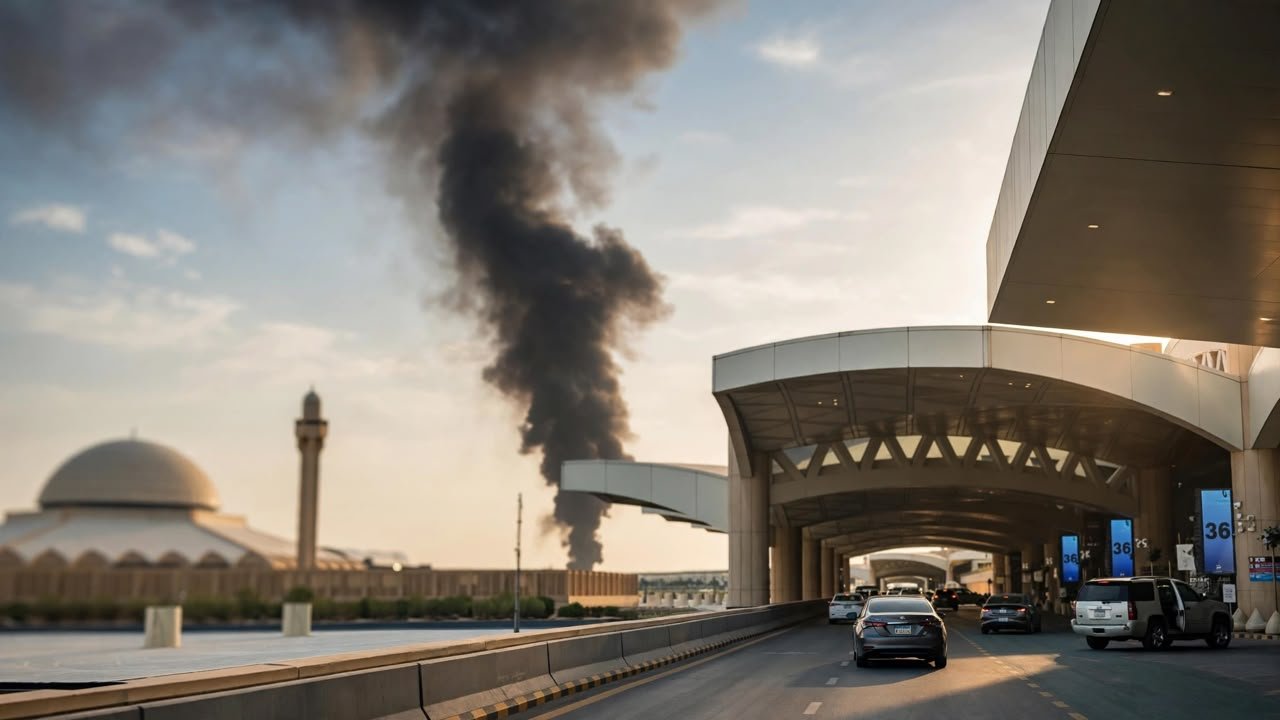
Houthi rebels have targeted major Saudi airports with missiles and drones, escalating Yemen’s conflict and disrupting air travel while increasing pressure on Riyadh amid renewed fighting.
RIYADH: Yemen’s escalating conflict has spilled into Saudi Arabia, with the Houthis claiming responsibility for missile and drone attacks on major airports in Riyadh and Abha that Saudi authorities say killed three people and injured dozens.
Saudi Arabia’s General Authority of Civil Aviation said two people were killed and 28 injured in an attack on Abha International Airport, near the Yemeni border. In a separate incident, an attack on King Khalid International Airport in Riyadh killed one person and injured eight others.
Houthi military spokesperson Yahya Saree claimed the attacks were carried out using ballistic missiles and drones. He said the strikes were in response to Saudi military operations in Yemen and warned international airlines against using Saudi airspace.
Analysts say the choice of airports reflects both military and political calculations. Denis Citarinovich, a senior researcher at the Institute for National Security Studies, said the Houthi strategy was intended to demonstrate that Saudi Arabia could also face consequences from restrictions imposed on Yemen’s aviation.
He described the approach as “blockade for blockade”, referring to Houthi demands for an end to restrictions affecting Sanaa International Airport.
Airports also provide the Houthis with a way to create disruption beyond the battlefield. Ahmed Naji, a senior Yemen analyst at the International Crisis Group, said attacks or threats against airports can disrupt flights, create uncertainty for passengers and airlines and generate international media attention.
The latest attacks come as fighting in Yemen intensifies. Analysts say the Houthis have previously targeted Saudi airports and other strategic infrastructure, but the increased frequency of recent attacks indicates a renewed escalation.
The Houthis have also claimed an attack on Aden International Airport, a key gateway for areas of Yemen outside their control.
Experts say the group has demonstrated the ability to use drones and missiles against targets at considerable distances. However, maintaining a sustained campaign could eventually put pressure on its weapons stockpiles.
The latest developments point to a widening confrontation in which both sides are seeking to increase pressure on the other. For Saudi Arabia, the challenge is to protect critical infrastructure and civilian aviation while responding to attacks from across its southern border.
For the Houthis, continued attacks appear aimed at increasing the political and economic cost of Saudi involvement in Yemen.
With military operations intensifying on both sides, the attacks on Saudi airports highlight how the conflict is increasingly affecting civilian infrastructure and regional air travel.

