


By Imran Malik | World Affairs & National Security Desk | MediaBites.com.pk | SharjahNews.ae
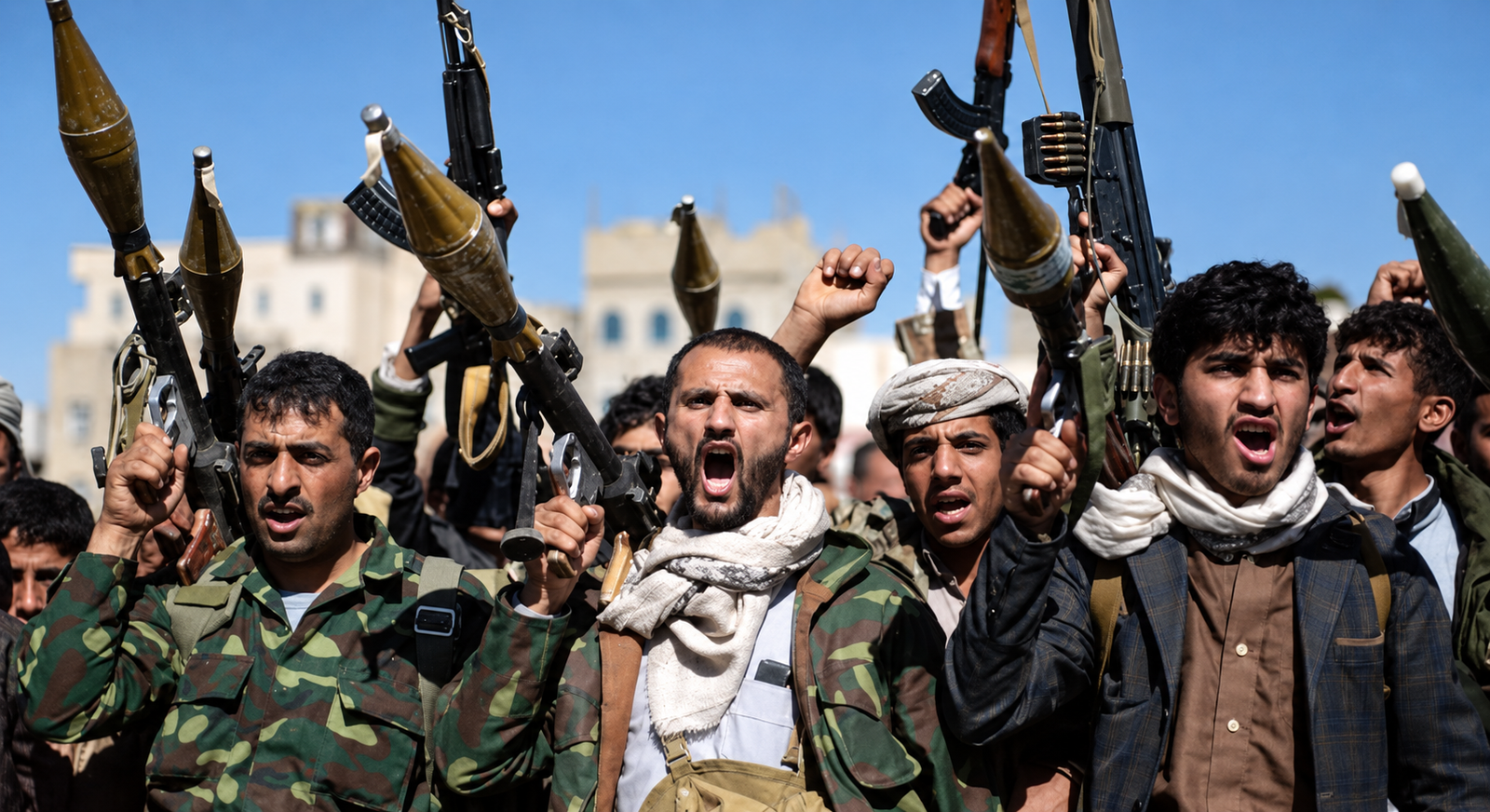
The Houthi movement has warned Pakistan and Türkiye that any direct military intervention in support of Saudi Arabia under the Makkah Defence Agreement would trigger immediate retaliation with an iron fist.
The Makkah Joint Defense Agreement has faced its first major test — and it has arrived faster and with more force than anyone anticipated when Pakistan, Saudi Arabia and Türkiye signed the collective security framework just weeks ago in August.
Mohammed al-Bukhaiti, a senior Houthi political official, has issued a direct and unambiguous warning to both Pakistan and Türkiye. If either country intervenes militarily in support of Saudi Arabia, the Houthi movement will respond with what he described as an “iron fist.”
The warning, reported by News18, transforms what was presented as a defensive diplomatic framework into a live and active geopolitical calculation with immediate consequences for Islamabad, Ankara and Riyadh.
What the Houthis Are Doing — and Saying
The Houthi warning did not arrive in a vacuum. It came alongside an escalating campaign of attacks against Saudi territory that is testing the kingdom’s air defenses and its diplomatic patience simultaneously.
On Saturday, the group claimed responsibility for missile and drone attacks targeting sensitive sites in Riyadh. They also said they had struck an Aramco facility in Yanbu — one of Saudi Arabia’s most strategically critical oil infrastructure sites on the Red Sea coast.
Saudi authorities said they intercepted incoming missiles and prevented attacks on several locations. But the frequency and ambition of the strikes signal that the Houthis are operating with confidence rather than caution.
Al-Bukhaiti’s message to Pakistan and Türkiye is therefore both a warning and a declaration of intent. The Houthis are not deterred by the Makkah agreement. They are directly challenging it.
The Makkah Agreement — What It Says and What It Means
Saudi Arabia, Pakistan and Türkiye signed the Makkah Joint Defense Agreement in August, establishing a framework for collective security and expanded military cooperation. The agreement’s core provision states that an armed attack against any one of the three countries shall be regarded as an attack against all three.
At a meeting in Istanbul on August 31, their foreign and defense ministers and military chiefs agreed to strengthen cooperation, establish a secretariat in Saudi Arabia and expand defense-industry and military coordination.
Turkish Foreign Minister Hakan Fidan indicated Ankara was prepared to provide technical military support while stressing the agreement’s defensive character.
Pakistan’s DG ISPR, Lieutenant General Ahmed Sharif Chaudhry, was explicit in describing the pact as defensive, complementary to existing relationships, and carrying “no regional aspirations.”
Both positions are now under pressure from a Houthi movement that has no interest in the distinction between defensive and offensive arrangements.
Pakistan’s Dilemma — The Most Sensitive Position
Of the three Makkah agreement signatories, Pakistan faces the most complex and most consequential set of calculations.
Pakistan maintains critical relationships with both Saudi Arabia and Iran. Riyadh is one of Pakistan’s most important bilateral partners, a major source of financial support, remittances from 1.6 million Pakistani workers, and diplomatic backing at moments of Pakistani vulnerability. Iran shares a long border with Pakistan, hosts significant Pakistani Shia communities, and is a relationship that Islamabad cannot afford to turn into an adversarial one.
The Houthis are an Iranian-backed force. Any Pakistani military intervention in support of Saudi Arabia against Houthi attacks is therefore not simply a bilateral Pakistan-Saudi matter. It is a potential rupture in Pakistan’s carefully maintained neutrality in the Sunni-Shia regional confrontation that Iran and Saudi Arabia have been waging through proxies for years.
Pakistan has reiterated its commitment to resolving regional disputes peacefully and respecting international law. Islamabad has emphasized diplomatic engagement and de-escalation as its preferred approach to rising regional tensions.
Those are the right words. But the Makkah agreement’s Article 5-equivalent commitment — that an attack on one is an attack on all — creates a legal and diplomatic framework that may eventually demand more than words.
Türkiye’s Calculation — Military Capability Meets Political Complexity
Türkiye is a NATO member. It is also a signatory of the Makkah agreement. It has indicated willingness to provide technical military support to Saudi Arabia. And it now faces a direct Houthi warning that such support would make it a party to the Yemen conflict.
Ankara’s calculation involves its NATO obligations, its regional ambitions, its relationship with Iran, its domestic political positioning, and President Erdogan’s long-standing project of repositioning Türkiye as a leading Muslim-world power. All of those factors pull in different directions.
The Houthis understand Türkiye’s complexity and are exploiting it. By naming Türkiye alongside Pakistan in the warning, al-Bukhaiti is creating maximum political discomfort for both countries before they have made any operational decision.
The Test the Agreement Was Not Ready For
The Makkah agreement was signed in August 2026. By September 2026, it is already facing its first significant test. And the test is not the kind its architects anticipated.
The agreement was designed as a deterrence framework — the kind of collective defense arrangement that prevents conflict by making the cost of aggression too high. It was not presented as an instrument for offensive operations or for direct intervention in Yemen’s civil war.
The precise application of the agreement to Saudi Arabia’s confrontation with the Houthis remains open to interpretation. Saudi Arabia is not being invaded by another state. It is being attacked by a non-state armed group operating from Yemeni territory and backed by Iranian logistics, technology and strategic guidance.
Whether that constitutes the kind of “armed attack” the Makkah agreement’s collective defense clause was designed to address is a question that Pakistan and Türkiye’s legal and military advisers are working through right now.
The Associated Press reported that Saudi Arabia has been seeking military assistance from several regional and Western partners as its stocks of missile interceptors come under pressure. No country had publicly committed to direct military support at the time of that report.
— Imran Malik | World Affairs and National Security Desk | MediaBites.com.pk | SharjahNews.ae | Southera.com
Sources: News18, Associated Press, WAN-IFRA, Al Arabiya English, Arab News

