


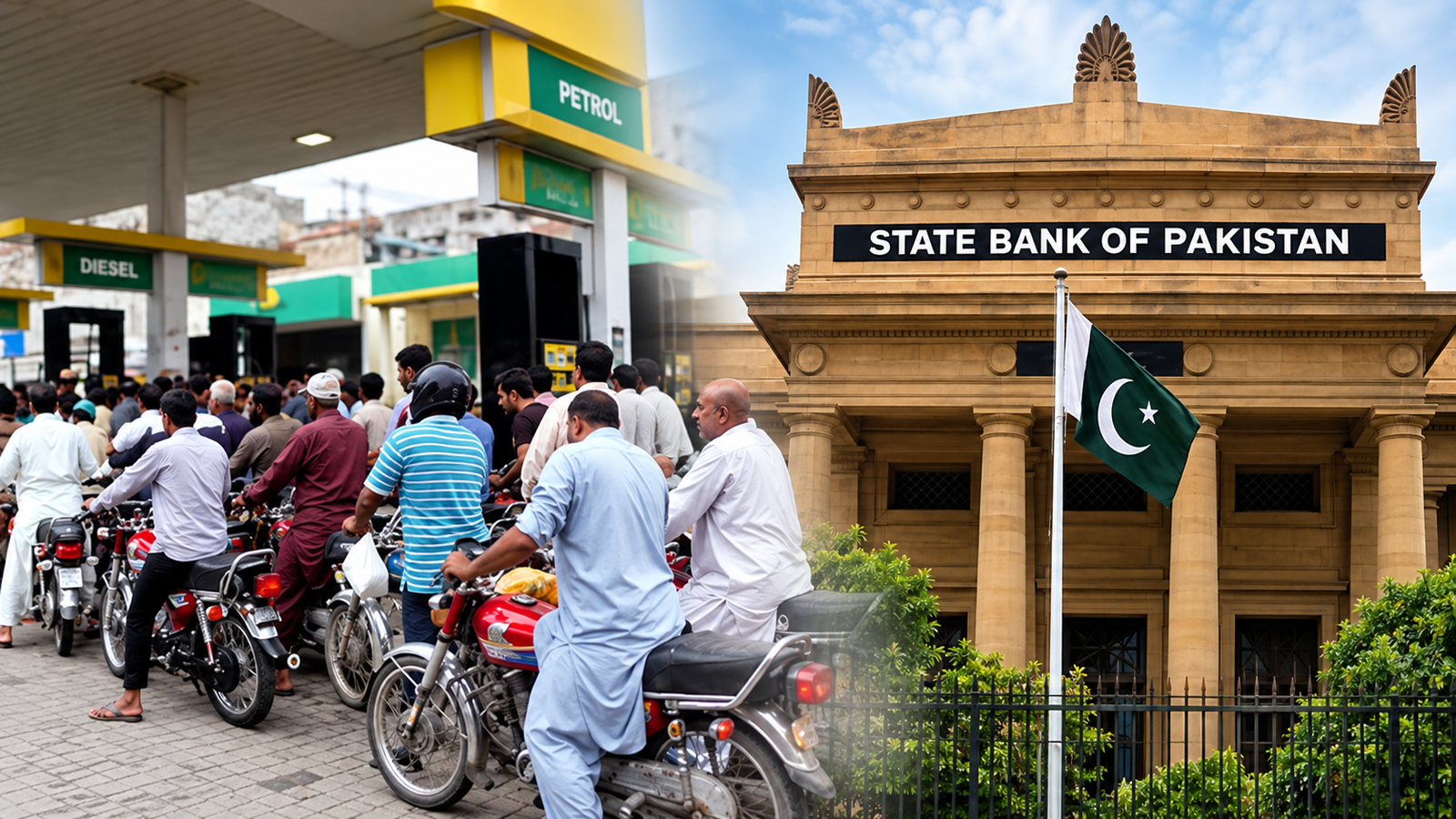
Pakistan’s central bank faces a difficult rate decision as rising oil prices lift inflation risks, but stronger fiscal and external buffers support holding the benchmark rate steady at 11.5%.
WEBDESK – MEDIABITES – BR
Pakistan’s Monetary Policy Committee faces a closely watched interest-rate decision as renewed Middle East tensions and a fresh surge in oil prices complicate the inflation outlook, even as domestic economic fundamentals argue for caution against another rate hike.
An analysis published by Business Recorder argues that the State Bank of Pakistan (SBP) should keep its policy rate unchanged at 11.5%, while maintaining a clearly hawkish stance and preserving the option of tightening later if inflationary pressures prove persistent.
Market expectations have become increasingly divided. Treasury desks surveyed by BR Research are reportedly split between those expecting the central bank to maintain the current rate and those anticipating a 50-basis-point increase.
The shift toward a more hawkish outlook has largely been driven by external developments, particularly rising crude prices following the escalation of the Middle East conflict.
Oil prices surged after drone attacks disrupted Saudi Arabia’s East-West pipeline, a key alternative route for moving crude to the Red Sea while shipping through the Strait of Hormuz remains severely constrained. Reuters reported that Brent crude rose above $107 a barrel following the latest developments.
For Pakistan, the shock poses a significant inflation risk because higher international energy prices can increase transportation, freight, electricity generation, and import costs.
However, the case for an immediate rate hike remains less straightforward.
Pakistan’s external position has strengthened considerably compared with previous periods of crisis. According to the analysis, the country recorded a cumulative current-account surplus of $264 million between March and July, while foreign-exchange reserves held by the SBP reached about $18.3 billion in early September.
The fiscal position has also improved. Pakistan recorded a consolidated fiscal deficit of 2.6% of GDP in the last fiscal year, while the government posted a primary surplus for a third consecutive year and reduced the debt-to-GDP ratio.
Fiscal revenue has also shown some resilience. The Federal Board of Revenue collected Rs1.72 trillion during July and August, slightly exceeding its combined target of Rs1.71 trillion. The SBP also transferred Rs1.93 trillion in profit to the federal government, providing additional fiscal breathing room.
The biggest challenge remains inflation.
Consumer inflation accelerated to 11.1% in August, according to recent data, up from 9.2% in July. Core inflation has also remained elevated, increasing concerns that the recent energy shock could spread beyond fuel prices.
Yet the analysis argues that monetary policy cannot directly resolve a supply-side oil shock. Raising interest rates cannot reduce global crude prices, repair damaged infrastructure or lower war-risk insurance and shipping costs.
Instead, the key question for policymakers is whether higher energy prices begin to produce second-round effects through wages, core inflation, consumer expectations, and the exchange rate.
There are signs that domestic demand is already moderating. Large-scale manufacturing grew during the fiscal year but weakened toward its end, while petroleum consumption also declined sharply in August.
That suggests the economy may already be absorbing some of the inflationary pressure without requiring another immediate tightening of monetary conditions.
The SBP kept the policy rate at 11.5% in July, saying the existing monetary stance remained appropriate for bringing inflation toward its medium-term target of 5%-7%, although it warned that the outlook remained vulnerable to developments in the Middle East.
The latest oil shock, however, means the central bank cannot afford complacency.
If the Saudi pipeline disruption persists, crude prices remain elevated and higher energy costs begin feeding into core inflation and inflation expectations, the argument for a rate hike at a subsequent meeting would strengthen considerably.
For now, the Business Recorder analysis concludes that the more prudent course is to hold the policy rate at 11.5%, maintain a hawkish bias and closely monitor the transmission of the external shock into Pakistan’s domestic economy.
That approach, however, depends heavily on fiscal discipline. Any government decision to convert temporary revenue gains or higher central-bank profits into additional spending could reignite domestic demand and force monetary policy to tighten later.
The message for policymakers is therefore clear: holding rates is not the same as easing policy. It is a decision to wait for clearer evidence that an external oil shock is becoming a sustained domestic inflation problem.

