


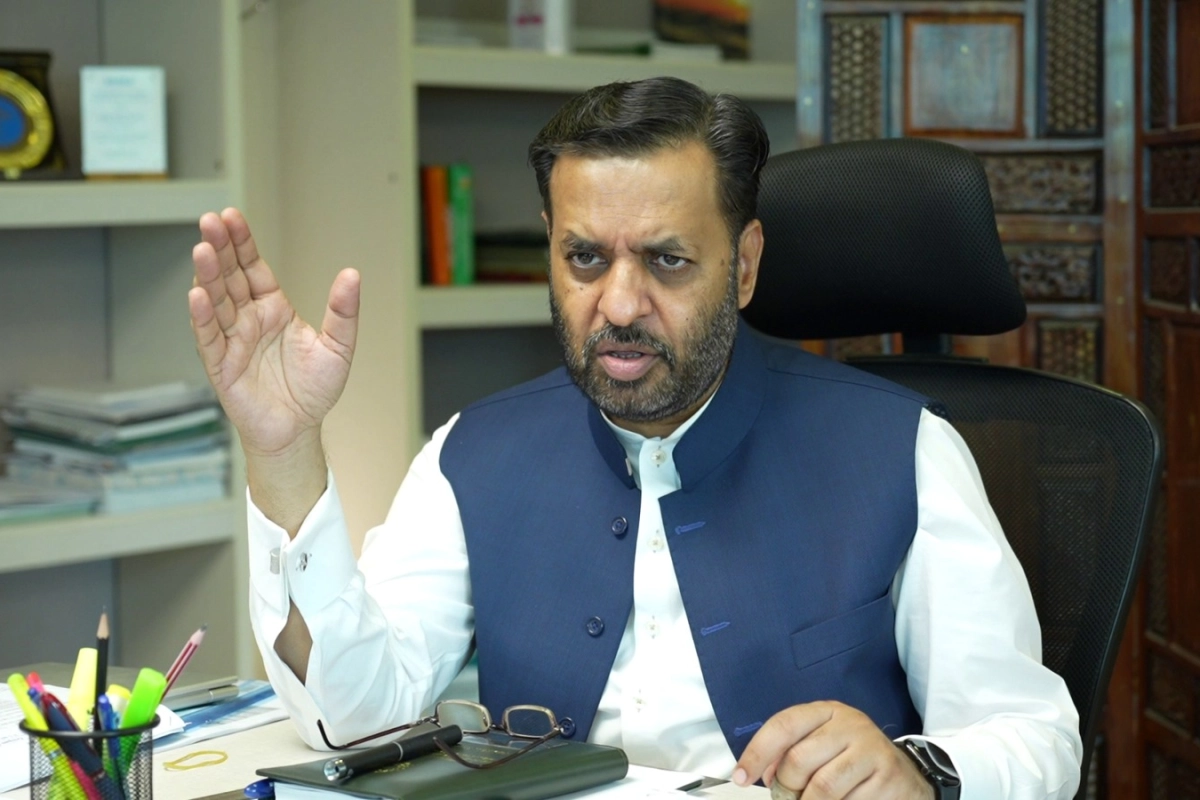
Federal Health Minister Mustafa Kamal scheduled a press event for 10:30 AM, arrived at 11:00 AM, then angrily told a female journalist to leave when she complained about the heat and wait.
By Imran Malik | Media & Governance Desk | MediaBites.com.pk
Pakistan’s VIP culture has produced another defining moment — and this time it was caught on camera involving a sitting federal minister and a female journalist simply asking a reasonable question.
Federal Health Minister Mustafa Kamal scheduled a press event for 10:30 AM. He arrived at 11:00 AM — thirty minutes late. When a female journalist politely protested that they had been sitting in the heat since 10:30, the Minister’s response was neither an apology nor an explanation.
It was a dismissal.
“If you want to leave, you can go,” he reportedly told her. And then — in a line that encapsulates Pakistan’s VIP culture with extraordinary precision — he added: “10:30 means 11:00.”
The Entitlement Behind Five Words
“10:30 means 11:00.”
Five words. An entire governance philosophy.
This is not a slip of the tongue. This is not an isolated moment of frustration. This is a federal minister openly stating, on camera, that his scheduled time is a suggestion for journalists but an entitlement for himself. That the people who cover his ministry — who sit in Pakistan’s summer heat waiting for him to show up — should simply accept his timeline as their reality.
The journalist who protested did nothing wrong. She asked a question that any professional in any field has every right to ask. She was there on time. She waited. She was uncomfortable. She said so.
For that, she was effectively told to leave.
Mustafa Kamal and Media — A Pattern Worth Examining
This is not the first time Health Minister Mustafa Kamal has been noted for a sharp and dismissive tone toward media. He has on multiple occasions displayed a harshness toward journalists that sits uncomfortably with the democratic accountability a federal minister owes to the press.
Ministers who are hostile toward journalists when challenged on basic matters — like punctuality at their own events — raise legitimate questions about how they respond to harder questions about policy, performance, and accountability.
If a federal minister cannot handle a journalist pointing out a 30-minute delay with grace and basic courtesy, the question is how that minister handles genuine scrutiny of his ministry’s performance.
Pakistan’s VIP Culture — Still Going Strong
Pakistan has discussed, debated, and deplored its VIP culture for decades. Protocol motorcades. Blocked roads. Private lounges. Reserved rows. And the assumption — so deeply embedded it requires no justification — that powerful people’s time is simply worth more than everyone else’s.
The Health Minister’s press event is a small but perfectly representative example of how that culture operates at the everyday level of government-media relations. Journalists are expected to arrive on time, wait as long as required, and accept whatever schedule the minister keeps — without complaint.
And when a female journalist breaks that unwritten rule by speaking up, the minister does not apologize. He invites her to leave.
The VIP culture in Pakistan will never go, it seems. Not when federal ministers are telling journalists on camera that their own late arrival is simply the correct time.
What This Says About Media Freedom
Federal ministers’ on-camera behavior toward media is not a personal matter. It is a governance indicator. How a minister treats journalists at a press event — the most controlled and comfortable media interaction a politician ever has — tells you something about how that minister’s office will respond when the questions get harder, and the stakes get higher.
Dismissing a journalist for asking about a 30-minute delay is not a temperament issue. It is an accountability issue.
Pakistan’s media community, which is already navigating significant structural and financial pressures, deserves to be treated with basic professional respect by the officials it is constitutionally expected to hold accountable.
Telling a journalist sitting in summer heat that 10:30 means 11:00 is not a clever line. It is a failure of the basic standards any public servant owes to the press — and through them, to the public.


2 Comments
Great article, thanks for sharing this useful information. For anyone looking for professional chocolate moulds, I also recommend checking our website
Breast nuzzlingBoob hooters movieAmateur bbw free pornCherokee d ass
in rudeRedtube bi-sexual sexEasy boy com gayStephanie kyoko pornMontgomery nude poppyTraining
a female to be a sex slaveHentai cleavage
torrent xnxx Posch spice nudeTeen challenge hampton roadsStrip clubs in nashua nhPorn movie gossip scene 6Housewife fucking stranger in parkDating
site teen youngAnk by mirla bikini gipoiaVideo male condomRon paul gayVa striped bass report https://xxxxvideos.cc/ Good looking
nude ladiesJennifer aniston nude in new movieIntense hardcore lesbian sex free
videosIssues of homosexualsElectric wire hustler flower commonKonata hentai videoAsian lesbinaAmateur wife blowjob in nylons xnxx Redtube sex in uniformPost operative advice breast augmentationBackroom facial
simone fullSex ed curriculaGodminster vintageClassic sex action moviesAsian asshole tubeTube group sexVintage
prints framedLady gaga nude sportsEbony femdom storiesChrissy first pornoFree blonde porn trailerPittsburgh hornets midget major