


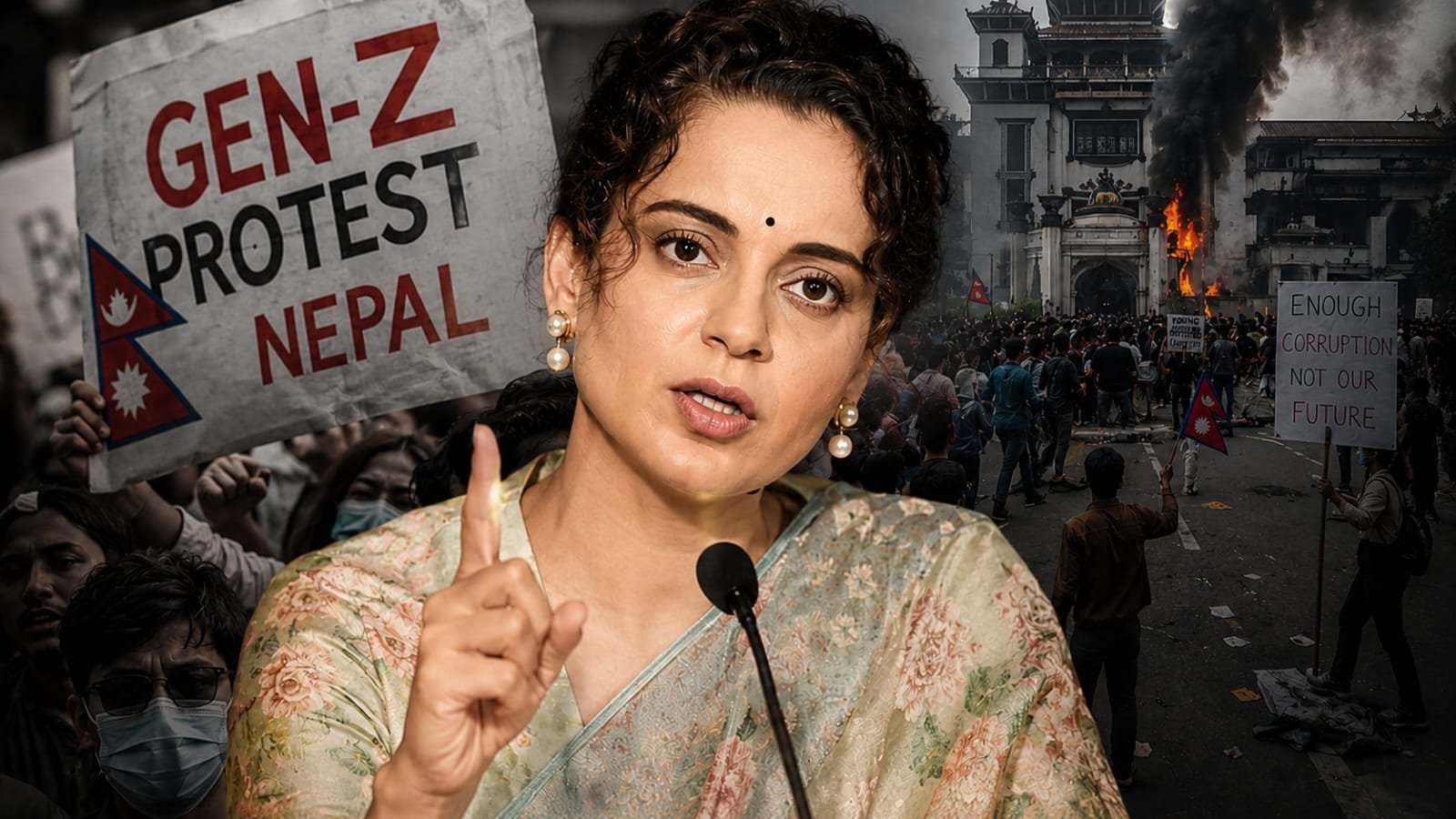
Bollywood actor Kangana Ranaut criticized Nepal’s Gen Z protest, calling it “the ugliest scene” she had witnessed, sparking fresh debate over youth movements and political activism.
WEBDESK – MADIHA BHATTI – MEDIABITES NEWS
Kangana Ranaut Reacts Strongly to Nepal’s Gen Z Protest
Bollywood actor and politician Kangana Ranaut has sparked widespread discussion after making strong remarks about the ongoing Gen Z-led protests in Nepal. Her comments quickly gained attention across social media platforms, where supporters and critics debated her views.
According to reports, Kangana described the protest as “the ugliest place” she had ever seen, expressing disappointment over the scenes circulating online. Her statement has become one of the most talked-about reactions to the demonstrations.
What Triggered the Controversy?
The Gen Z protest in Nepal has attracted thousands of young people demanding political accountability, better governance, and reforms. Demonstrators have organised large public gatherings, with some protests witnessing clashes between security personnel and participants.
Images and videos shared online have shown damaged public property, smoke, and tense confrontations in certain locations. These visuals prompted reactions from several public figures, including Kangana Ranaut.
Kangana Ranaut’s Statement
Reacting to the viral footage, Kangana Ranaut criticised the atmosphere surrounding the demonstrations. She remarked that she had *”never seen so much ugliness in one place,”* referring to the visuals emerging from the protests.
Her comments quickly spread across social media, with users sharing clips and screenshots of her statement. Many praised her for speaking openly, while others argued that her remarks overlooked the reasons behind the youth-led movement.
Public Reaction on Social Media
Kangana’s statement generated mixed responses online.
Supporters agreed with her concerns, arguing that violence and destruction should never become part of any protest. They stressed that peaceful demonstrations are a democratic right, but public safety and property must also be protected.
Critics, however, believed her comments focused only on the unrest instead of addressing the frustrations that motivated thousands of young protesters to take to the streets.
As a result, hashtags related to Kangana Ranaut and the Nepal protests began trending across multiple social media platforms.
Understanding the Gen Z Protest
The demonstrations have largely been driven by younger citizens demanding transparency, accountability, employment opportunities, and political reforms.
Many participants say they want stronger institutions and greater action against corruption. The movement reflects growing dissatisfaction among sections of Nepal’s youth regarding governance and economic challenges.
While most gatherings have remained peaceful, isolated incidents of violence have drawn significant media attention.
Why the Issue Matters
The controversy highlights how celebrity opinions can influence public debate. Statements made by high-profile personalities often spread rapidly online, shaping discussions far beyond entertainment circles.
At the same time, youth-led movements continue to play an increasingly important role in political conversations across South Asia, making reactions from influential figures especially significant.
Debate Continues
Political analysts note that public opinion remains divided. Some believe celebrities should freely express their views on current affairs, while others argue that influential personalities should be careful when commenting on sensitive political events.
The debate surrounding Kangana Ranaut’s remarks demonstrates how quickly a single statement can become a national and regional talking point.
Kangana Ranaut’s criticism of Nepal’s Gen Z protest has added another layer to the ongoing conversation surrounding the demonstrations. Whether viewed as an honest opinion or a controversial assessment, her remarks have intensified online debate and drawn fresh attention to the issues raised by Nepal’s youth movement.
As the protests continue to develop, discussions about governance, public demonstrations, freedom of expression, and the role of public figures are expected to remain at the centre of public discourse.


8 Comments
References:
Royal Casino Einzahlung http://images.google.com.pa/
References:
Novoline Casino Auszahlung https://pharmvestnik.ru
References:
First Casino Test https://www.cosplayercam.com/
References:
Play It Casino Login emlakkulisi.com
References:
Luna Casino Bonus ohne Einzahlung https://edufuture.biz/
References:
Da Vinci’s Casino Bonus ohne Einzahlung https://reputable.cc/
References:
Luck Casino Bonus ohne Einzahlung cbl.aero
References:
Holland Casino App kapkipz.awardspace.us