


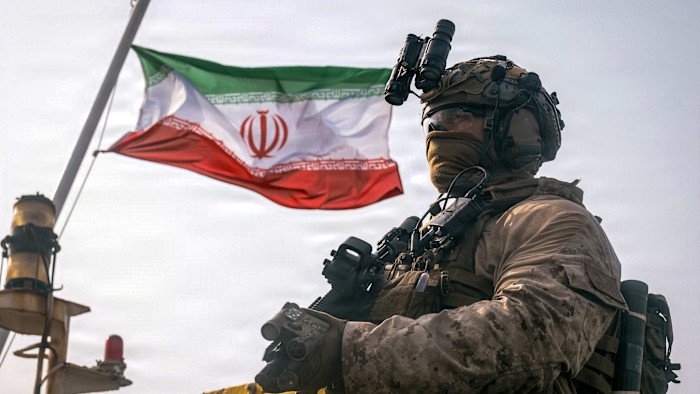
US airstrikes on Iran entered an 11th consecutive night as Tehran activated air defenses, escalating regional tensions, threatening Gulf shipping, and raising fears of a broader conflict.
WEBDESK – MEDIABITES
The Middle East conflict continues to intensify as US forces strike Iran for the 11th consecutive night, triggering air defence activity in Tehran and increasing concerns over regional stability, global oil supplies, and international shipping through the Strait of Hormuz.
The United States launched a fresh wave of airstrikes on Iran early Wednesday, extending its military campaign to an 11th consecutive night as Iranian air defence systems responded to reported attacks around Tehran and other strategic locations.
The latest strikes come as the conflict widens beyond Iran’s borders, threatening vital energy routes in the Gulf and Red Sea while increasing fears that the confrontation could draw additional regional powers into a prolonged military crisis.
According to the US military, the operation targeted Iranian military logistics facilities and strategic infrastructure believed to support Tehran’s ability to threaten commercial shipping through the Strait of Hormuz, one of the world’s most critical oil transit routes.
Iranian state media reported explosions near several locations, including Bushehr, home to the country’s only operational nuclear power plant. State television said air defence systems were activated across western, eastern and northeastern Tehran after reports of incoming aerial attacks.
Trump: ‘We’re not finished’
President Donald Trump defended the ongoing campaign, arguing that Iran’s military capabilities had been severely weakened while signaling that further operations remain under consideration.
“If we left right now, it would take Iran 20 to 25 years to rebuild,” Trump said. “We’re not finished at all.”
Trump also suggested the underground Pickaxe Mountain nuclear complex near Natanz could become a future target, claiming Western intelligence believes the site may contain an undeclared uranium enrichment facility.
Iran strongly rejected the suggestion, warning that any attack on the facility would represent a major escalation. The Khatam al-Anbiya military command said such a strike would trigger retaliation against American interests and those of its regional allies.
Regional conflict widens
The conflict has increasingly spread across the Middle East.
Kuwait said its air defence systems intercepted Iranian drones on Wednesday, while Bahrain reported repelling missile and drone attacks a day earlier. Jordan also confirmed intercepting projectiles that crossed its airspace.
Iran claimed it targeted US military facilities in Kuwait and Bahrain, including radar installations, air defence systems and administrative sites.
Meanwhile, Yemen’s Houthi movement threatened to blockade Saudi Arabian ports, prompting Trump to warn of a US response if Red Sea shipping is disrupted.
Saudi Arabia condemned the threats, while maritime security firms reported that two oil tankers altered their routes in the Red Sea after loading crude oil from Yanbu.
Separately, the UK Maritime Trade Operations agency reported that an unidentified projectile struck a commercial tanker off the coast of Oman. Iran’s Revolutionary Guards also claimed explosions caused major fires aboard two tankers transiting the Strait of Hormuz.
The incidents have renewed concerns over global energy markets, with both the Strait of Hormuz and the Red Sea serving as vital corridors for international oil exports.
Mounting political pressure
The conflict, now approaching its fifth month, is also becoming an increasingly divisive political issue in the United States ahead of November’s congressional elections.
Defense Secretary Pete Hegseth said the war has cost the United States approximately $37.5 billion, while defending the administration’s request for additional military funding.
The growing financial burden has prompted criticism from lawmakers and sections of Trump’s political base, with questions mounting over the campaign’s long-term objectives and potential costs.
Diplomatic channels remain open
Despite the escalating military operations, diplomatic efforts have not completely collapsed.
Iranian Foreign Ministry spokesperson Esmaeil Baqaei said indirect communications with Washington continue through international mediators.
Pakistan has also remained engaged in regional diplomacy. During talks with Iranian Interior Minister Eskandar Momeni, Prime Minister Shehbaz Sharif urged all sides to exercise restraint and avoid actions that could further destabilize the region.
Analysts warn that continued escalation risks disrupting global oil supplies, expanding the conflict across the Middle East and making diplomatic efforts to restore stability increasingly difficult.


12 Comments
Theo mình thấy thì fly 88 có nhiều nội dung giải trí khá đa dạng.
References:
Goldstrike Casino Test https://s3.amazonaws.com/new-casino/711-Casino-Test.html
References:
Casino Royal Auszahlung maps.google.fi
References:
Wettformat Casino Bonus ohne Einzahlung https://exigen.com.au/?URL=https://voffice.lawyers.bh/wgxclaudio9994
References:
Vulcan Casino App https://wiki.hetzner.de
References:
Vulcan Casino Auszahlung omga-info.ru
References:
Kingmaker Casino Erfahrungen alginis.yoo7.com
References:
Jack Casino Einzahlung https://ogilvyspirits.com/?URL=http://tamilachat.org/community/profile/adelaidaschultz/
References:
Winsane Casino Test career.braincode.com.bd
References:
Casino Royal Bonus ohne Einzahlung punbb.skynettechnologies.us
References:
Luck Casino Bewertung https://bexys.com/
References:
F1 Casino Einzahlung worldaid.eu.org