


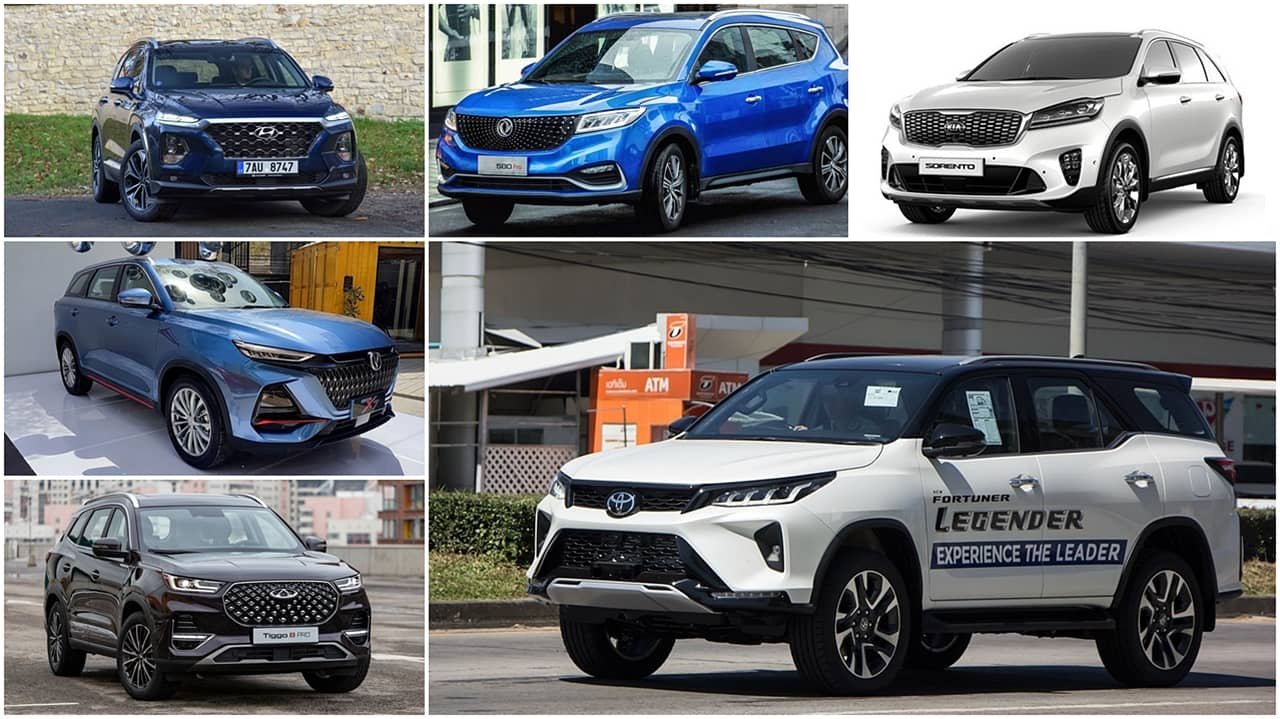
The world’s largest car market has recorded a shocking 20.2% sales decline in the first half of 2026, heading for its worst year since 2021 as fuel costs soar and subsidies collapse.
By Imran Malik | Business & Auto Desk | MediaBites.com.pk
The answer is China. And the numbers are staggering.
China’s passenger vehicle sales fell by 20.2% in the first half of 2026, sending the world’s largest automobile market toward what analysts describe as its worst performance since 2021. The China Passenger Car Association lowered its full-year 2026 retail sales projection to a decline of 14%, down from an earlier forecast of flat year-on-year sales, targeting final delivery volume of 20.4 million units compared to a record 23.7 million units in 2025.
For Pakistan, a market where Chinese brands have been aggressively challenging Japanese dominance, the ripple effects of this collapse carry significant implications.
What Is Driving the Collapse
Three forces are converging simultaneously to crush Chinese car sales in 2026.
Transportation energy costs soared 15.3% year-over-year in June, driving a collapse in demand for internal combustion engine vehicles. Retail sales of ICE vehicles fell 39% year-on-year in June, with pure gasoline models down 42%. Beijing’s pullback of electric vehicle subsidies, which had previously stimulated strong consumer appetite, has further tempered demand. And rising raw material costs including lithium and memory chips have pushed industry-wide profit margins down to just 3.4% for the January to May period, while industry profits fell 20% year-on-year.
Sino Auto Insights founder Tu Le described 2026 bluntly as “going to continue to be a brutal year.”
Analysts expect the brutal conditions to trigger a market shakedown, consolidating China’s fragmented electric vehicle market into seven or eight major players by 2030. American automakers are not expected to survive the competition. The predicted survivors include BYD, Geely, Leapmotor, Volkswagen, and Toyota.
BYD’s Split Reality — Struggling at Home, Surging Abroad
In the first half of 2026, BYD sold 1,808,511 NEVs, down 15.7% compared to H1 2025. Overseas sales grew 70.7% to 792,256 units, while domestic sales in China fell almost 40%.
This split tells the essential story of where Chinese automakers are placing their bets. The home market is under severe pressure. International expansion is doing the heavy lifting. And Pakistan is directly in the crosshairs of that international expansion strategy.
Pakistan — The Battleground Between China and Japan
Pakistan’s auto market is witnessing one of the most consequential brand battles in its history, as Chinese manufacturers aggressively challenge the decades-long dominance of Japanese and Korean brands.
Chinese automakers currently account for about 20% of Pakistan’s passenger vehicle market, according to Shehryar Qadir, senior vice chairman of PAAPAM. Great Wall Motor, the top-selling Chinese automaker in Pakistan, began local assembly in 2021 and reportedly sold about 10,000 units in 2025.
BYD entered Pakistan’s market in 2024 with imported electric vehicles, with local media estimating sales of about 2,000 units in 2025. BYD’s first assembly plant in Pakistan is being developed near Karachi through local partner Mega Motor Company, with an annual capacity of 25,000 vehicles and an estimated investment of around $150 million, expected to become operational in the third or fourth quarter of 2026.
Pakistan’s passenger vehicle market has long been led by Japanese automakers Toyota, Suzuki, and Honda, particularly in small cars and sedans. The price comparison tells the competitive story clearly. GWM’s Haval H6 is priced at around USD 18,000 to 22,000 in Pakistan, while Toyota’s RAV4 sells at USD 30,000 to 35,000. BYD’s Atto 3 is available at dealers for USD 20,000 to 23,000.
Chinese vs Japanese vs Korean — Pakistan’s Auto Market Comparison
| Brand | Origin | Pakistan Segment | Estimated 2025 Pakistan Sales |
|---|---|---|---|
| Suzuki | Japan | Small cars, dominant mass market | 120,000 plus units |
| Toyota | Japan | Sedans, SUVs, premium | 40,000 plus units |
| Honda | Japan | Sedans, mid-range | 25,000 plus units |
| Hyundai | South Korea | SUVs, sedans | 15,000 plus units |
| Kia | South Korea | SUVs, crossovers | 12,000 plus units |
| Haval (GWM) | China | SUVs, hybrids | 10,000 units |
| Changan | China | SUVs, sedans | 8,000 plus units |
| BYD | China | EVs, plug-in hybrids | 2,000 units |
| Chery, Geely, Jetour | China | Various | Growing rapidly |
EVs are projected to account for up to 50% of all vehicle sales in Pakistan by 2030, according to BYD Pakistan executives.
Why China’s Domestic Slump Could Actually Accelerate Pakistan’s EV Push
Here is the counterintuitive dimension of China’s auto crisis that Pakistani buyers should understand.
When China’s domestic market slumps, Chinese manufacturers push harder into international markets with more competitive pricing, more aggressive dealer networks, and stronger after-sales investment. Chinese brand BYD recently unloaded a shipment of 2,000 new energy vehicles directly into Pakistan, offering advanced battery technology at competitive prices.
The Middle East conflict has made this push even more urgent. Rising global fuel costs are driving overseas consumers toward Chinese-made EVs because of lower operating costs, creating exactly the demand surge that Chinese exporters need to compensate for their collapsing home market.
For Pakistani consumers sitting on the fence between a Japanese petrol car and a Chinese EV, China’s domestic crisis may paradoxically deliver better deals, faster model launches, and more competitive pricing in the Pakistani market than would otherwise have been possible.
The Road Ahead
China’s auto market is expected to recover in 2027 as vehicle fleets age and replacement demand returns, supported by export growth. BYD’s exports set a new record at 175,349 units in June 2026, about 43% of everything BYD sold that month.
For Pakistan, the transition from a Japanese-dominated to a genuinely competitive multi-brand market is already underway. The question is not whether Chinese brands will challenge Japanese dominance here. That challenge is happening right now. The question is how quickly Pakistani consumers, charging infrastructure, and regulatory frameworks can adapt to a market being reshaped at extraordinary speed.

