


ARY Digital chief Salman Iqbal’s claim that he declined Netflix is generating controversy, but the harder conversation is whether Pakistani productions currently meet the global streaming giant’s quality benchmarks.
By Imran Malik | Media & Entertainment Desk | MediaBites.com.pk
Salman Iqbal has made headlines by confirming that Netflix approached ARY Digital to license its content — and that ARY declined. His argument: Pakistan should build its own OTT platform rather than depend on global services. He pointed to the worldwide Urdu-speaking population, which he put at over a billion people, as justification for a homegrown streaming ambition.
It is a bold statement. And it deserves an honest response.
The Patriotic Vision — And Its Blind Spot
Salman Iqbal’s instinct to build domestic digital infrastructure rather than hand content to international platforms is not wrong in principle. Creative control, revenue retention, and long-term platform ownership are legitimate strategic goals for any content producer.
But the argument has a significant blind spot. Before discussing whether Pakistan should have its own Netflix, it is worth asking whether Pakistan’s current content would pass Netflix’s quality requirements in the first place.
The answer, based on available evidence, is largely no. And that is the conversation nobody wants to have honestly.
The YouTube Success Does Not Equal Netflix Readiness
ARY Digital, Geo Entertainment, and Hum TV collectively generate hundreds of millions of YouTube views per episode on their drama catalogues. Pakistani dramas are genuinely popular globally among South Asian diaspora audiences.
But YouTube popularity and Netflix selection are measured by entirely different standards. YouTube rewards frequency, familiarity, and emotional engagement from a pre-existing loyal audience. Netflix evaluates production quality, narrative originality, technical execution, writing depth, and competitive positioning against the world’s best content.
These are different bars. Pakistan clears the YouTube bar comfortably. The Netflix bar is a different conversation.
Have We Produced a Breaking Bad? A Kohra?
Let us be specific rather than general.
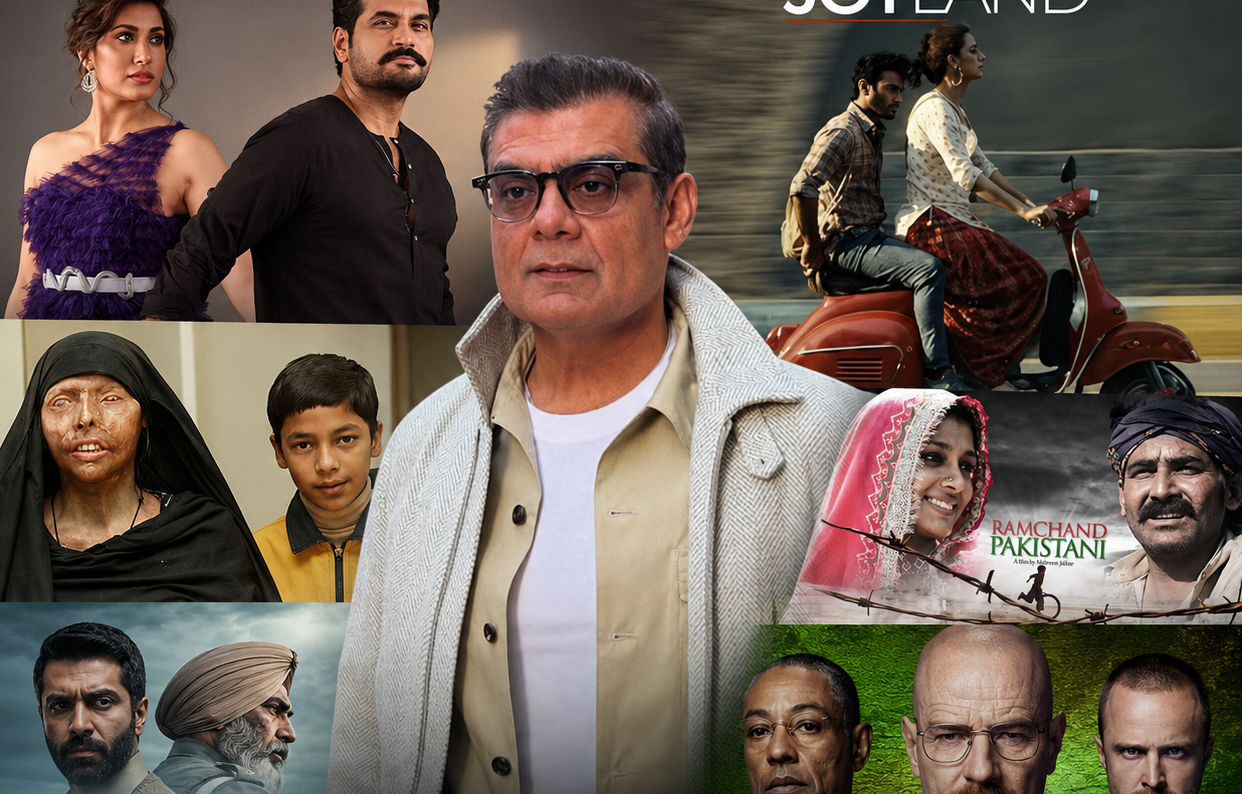
Breaking Bad is an American series that transformed television storytelling globally through its writing, character development, cinematography, and moral complexity across five seasons. Kohra, a Pakistani thriller produced for a streaming platform, is the closest Pakistan has come to internationally competitive series content — and it generated genuine critical attention precisely because it applied international production standards to a Pakistani story.
The question worth asking about ARY’s content specifically: do ARY-produced films featuring Fahad Mustafa and Humayun Saeed meet the standards required to screen at top international film festivals? Do they carry the production values, narrative ambition, and technical execution that Netflix requires from content it places on a global platform alongside Squid Game, Narcos, and Sacred Games?
Shamoon Abbasi reportedly mentioned that a Pakistani channel, which he did not name, has been working on a Netflix project for approximately three and a half years and has still not met the platform’s quality guidelines. The project remains in limbo. That detail tells a more honest story than any public statement about declining Netflix offers.
Mehreen Jabbar Was Also Right — But Incomplete
A few days ago, acclaimed director Mehreen Jabbar made similar observations about Netflix and Pakistani content, arguing that the absence of Pakistani productions on global platforms was primarily a political and structural issue rather than a quality one.
She is partially right. Netflix and Amazon Prime’s regional headquarters being based in India does create inherent acquisition bias. That structural reality is real and worth addressing through policy and advocacy.
But Mehreen, like Salman Iqbal, did not fully address the quality dimension. Politics explains some of the gap. Quality explains the rest. And the quality conversation cannot be avoided simply because it is uncomfortable.
Pakistan has some exceptional directors whose documentary work has been selected for Oscar consideration and whose films have premiered at Cannes. But it is worth noting that Cannes selections have come primarily in categories that target specific international festival circuits rather than mainstream global commercial streaming audiences. That is valuable artistic recognition — but it is a different market from Netflix’s core subscriber base.
The Honest Assessment
Pakistani television drama is genuinely world class and demonstrably superior to most Indian television content in writing quality, acting depth, and emotional authenticity. That achievement is real and deserves full recognition.
Pakistani cinema and original series content for streaming platforms have not yet reached international benchmark standards. That assessment is also real and deserves honest acknowledgement.
The path forward requires both things simultaneously. Advocate for fairer treatment from global platforms where structural bias exists. And invest in raising production standards, writing quality, and technical execution to the level where quality can no longer be used as a justification for exclusion.
Salman Iqbal’s vision of a Pakistani OTT platform is not unreasonable. But a domestic platform built on content that does not yet meet international quality standards will remain a domestic platform. Global ambition requires global quality.
Build the platform by all means. But build the content first.


2 Comments
Kohra was an indian content not Pakistani to what little i know, you need to review the para related to Kohra and probably amend.
Welcome to the thrilling world of bsb007 casino, bsb007, where chance meets gaming.
Here, you can experience a variety of options that ensure an unforgettable
time. Join us and test your strategy today!
Also visit my webpage https://bsb-007-aus.com/