


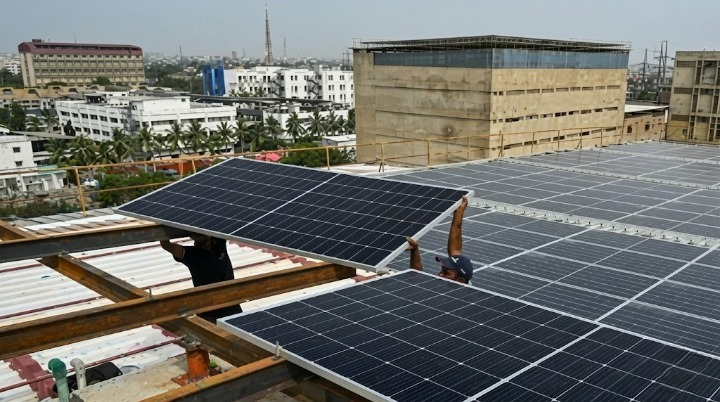
Solar panel prices in Pakistan are increasing ahead of the Budget 2026–27 GST proposal, sparking concerns among consumers, installers, and renewable energy investors nationwide.
WEBDESK – UzGul – MEDIABITES NEWS
Prices Climb as Budget Uncertainty Hits Solar Market
Solar panel prices in Pakistan have started to rise ahead of the upcoming Budget 2026–27, as uncertainty builds over a possible revision in the General Sales Tax (GST) structure. Market players say traders and importers are adjusting prices early in anticipation of higher taxation on renewable energy products.
This early price movement has created concern among consumers who were planning to shift toward solar energy due to rising electricity bills and frequent load-shedding across the country.
Industry stakeholders argue that even speculation about higher GST rates is enough to shift market behavior, pushing distributors to revise prices before any official policy announcement is made.
The result is a more cautious and unstable solar market, where both buyers and sellers are reacting to expectations rather than confirmed government decisions.
Strong Solar Demand Continues Across Pakistan
Despite rising prices, demand for solar panels remains strong across Pakistan. Households, commercial users, and agricultural sectors continue investing in solar systems as electricity tariffs remain unpredictable and grid reliability issues persist.
Experts say Pakistan’s solar adoption has grown significantly over recent years due to three major factors: rising electricity costs, frequent power outages, and increased awareness of renewable energy benefits.
Urban areas like Lahore, Karachi, and Islamabad are seeing higher rooftop solar installations, while rural regions are adopting solar solutions for irrigation pumps and off-grid power needs.
However, analysts warn that any increase in taxes or import duties could slow down adoption rates, especially among middle-income families who are already struggling with inflation and rising utility bills.
GST Proposal Sparks Market Speculation
The upcoming Budget 2026–27 has triggered widespread discussion in the renewable energy sector regarding whether the government will introduce or increase GST on solar panels and related equipment.
Although no official decision has been announced, the mere possibility of tax changes has already influenced pricing behavior in the market.
Importers and distributors are reportedly increasing prices to protect themselves from potential future tax burdens, while also managing currency fluctuation risks.
This has created a “wait-and-see” environment where many buyers are delaying purchases until the budget announcement provides clarity on taxation policies.
Pakistan’s Renewable Energy Goals Face Pressure
Pakistan has been gradually shifting toward renewable energy as part of its broader strategy to reduce dependence on imported fossil fuels. Solar energy, in particular, has become one of the fastest-growing alternative energy sources in the country.
Government and private sector initiatives have supported solar expansion over the past few years, helping reduce pressure on the national grid during peak summer demand.
However, experts warn that increasing taxes on solar equipment could slow down this progress. Affordable pricing has been one of the biggest drivers of solar adoption in Pakistan, and any cost increase could reduce accessibility.
If prices continue to rise, the sector could face several challenges, including reduced household affordability, slower commercial adoption, and delays in achieving long-term renewable energy targets.
Consumers Delay Decisions Amid Rising Costs
For many Pakistani consumers, solar energy is seen as a long-term solution to rising electricity bills. However, the current price surge is forcing many families and businesses to reconsider or delay installation plans.
Installers across major cities report a noticeable shift in customer behavior. While inquiries remain high, actual purchase conversions have started to decline due to uncertainty about future prices.
This hesitation is creating additional pressure in the market, as vendors face inventory planning challenges and fluctuating demand patterns.
Industry Outlook Remains Uncertain Before Budget 2026–27
Market analysts believe the solar industry will remain highly sensitive until the government officially announces its tax policy in the upcoming budget.
If GST rates remain unchanged, prices are expected to stabilize, potentially restoring buyer confidence and increasing demand once again.
However, if taxes are increased, Pakistan’s solar market may experience short-term disruption, including higher installation costs, reduced sales volume, and a possible shift toward smaller or lower-capacity systems.
Some experts also suggest that such a move could unintentionally slow down Pakistan’s transition toward clean energy at a time when energy security remains a major national concern.
For now, the solar market continues to operate in a volatile environment driven largely by speculation, expectations, and policy uncertainty rather than confirmed regulatory changes.
Final Outlook
As Pakistan moves closer to Budget 2026–27, the solar sector stands at a critical point. The balance between taxation policy and renewable energy growth will determine whether solar adoption continues its upward trend or faces a temporary slowdown.
Consumers, investors, and industry stakeholders are now closely watching the government’s next move, which will shape the future direction of Pakistan’s renewable energy landscape.

