


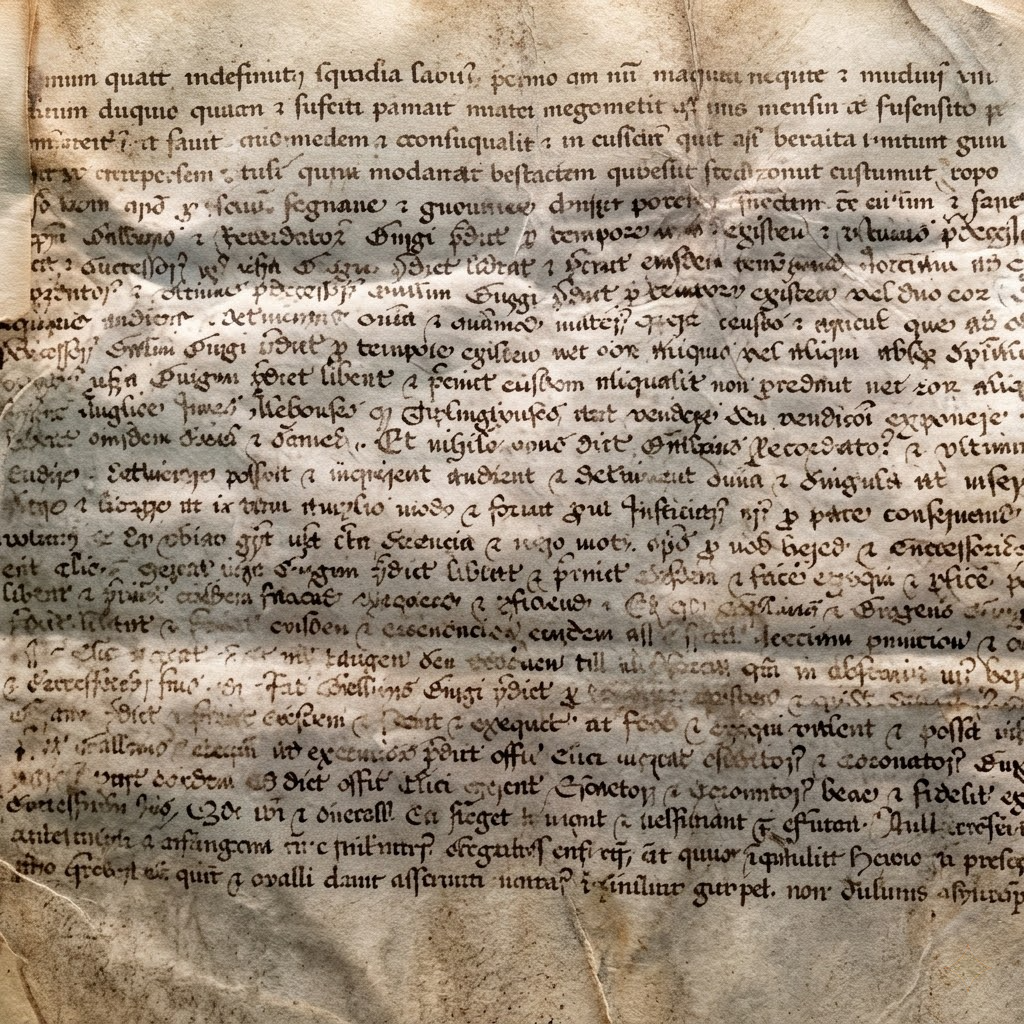
AI is decoding centuries-old manuscripts, revealing hidden historical secrets, and transforming research. This breakthrough helps historians restore damaged texts and uncover lost knowledge faster than ever before.
WEBDESK – UzGul – MEDIABITES NEWS
Artificial intelligence is rapidly transforming historical research by decoding centuries-old manuscripts that were previously unreadable, damaged, or partially destroyed. Scientists say modern AI systems can now reveal hidden text, restore faded writing, and reconstruct lost knowledge from ancient documents that were once considered impossible to read.
This technological breakthrough is changing how historians study the past. Instead of spending years manually analyzing fragile archives, researchers can now process historical data in minutes. Experts believe this advancement could significantly reshape global understanding of ancient civilizations, cultures, and historical events.
The technology is already being tested in research institutions worldwide, where AI tools are helping recover information that has remained hidden for centuries in libraries, museums, and private collections.
AI REVOLUTION IN HISTORICAL RESEARCH
Artificial intelligence systems are being trained on thousands of handwritten scripts, ancient languages, and damaged manuscripts. These advanced models learn to recognize writing styles, even when ink has faded, pages are torn, or sections are missing.
Using powerful image recognition and machine learning techniques, AI can reconstruct missing parts of texts with remarkable accuracy. This makes it possible to recover historical content that scholars previously believed was permanently lost.
Historians highlight that this technology is especially useful for fragile manuscripts that cannot be physically handled due to their age and condition. AI provides a safe, non-invasive way to study these important cultural artifacts without causing further damage.
FROM YEARS OF WORK TO MINUTES OF DISCOVERY
Traditionally, decoding ancient manuscripts required years or even decades of careful research. Scholars had to compare writing styles, analyze linguistic evolution, and manually interpret incomplete or damaged texts.
Now, AI has drastically changed this process. It can scan entire archives quickly, detect hidden patterns, and highlight words or phrases that human researchers might overlook.
This transformation is significantly speeding up academic discoveries. Universities, museums, and digital archives are now able to complete research projects in weeks that once took years.
Experts say this shift is not only improving efficiency but also opening new possibilities for discovering lost historical knowledge.
GLOBAL USE OF AI IN UNLOCKING HISTORY
Across Europe, the United States, and Asia, governments and academic institutions are investing heavily in AI-powered historical research. Museums and libraries are actively digitizing ancient collections to make them compatible with AI systems.
These digital preservation efforts aim to protect historical records from physical decay and ensure long-term accessibility. AI is becoming a central tool in this global movement to safeguard human history.
Researchers also believe that AI could eventually help solve major historical mysteries, including undeciphered scripts, lost languages, and incomplete ancient records that have puzzled experts for centuries.
PAKISTAN’S GROWING INTEREST IN AI RESEARCH
In Pakistan, artificial intelligence is gradually gaining attention in universities and research institutions. Most current AI applications focus on healthcare, agriculture, education, and business sectors.
However, experts believe that historical research is an untapped opportunity in the country. Pakistan has a rich cultural heritage, including ancient manuscripts, archaeological sites, and historical documents that could benefit from AI-based analysis.
Many of these materials are stored in museums and libraries, where they remain under-studied due to limited resources and preservation challenges. AI could help digitize and decode these valuable records, making them accessible for researchers and students.
This development could allow Pakistani scholars to contribute more actively to global historical discoveries while also preserving national heritage in a modern digital format.
FUTURE OF AI AND HUMAN COLLABORATION
Despite its powerful capabilities, experts emphasize that AI is not replacing historians. Human interpretation remains essential for understanding cultural meaning, historical context, and linguistic nuance.
AI works as a supportive tool that accelerates research and highlights patterns, while historians provide deeper analysis and interpretation. This partnership is expected to define the future of historical studies.
As technology continues to evolve, experts believe AI may eventually uncover secrets from ancient civilizations that have remained hidden for thousands of years, reshaping how humanity understands its past.


3 Comments
çok yararlı bir paylaşım olmuş teşekkür ederim çok işime yarıcak.
Thanks for this post, I am a big fan of this internet site would like to go on updated.
Pingback: ปั้มคนดูไลฟ์