


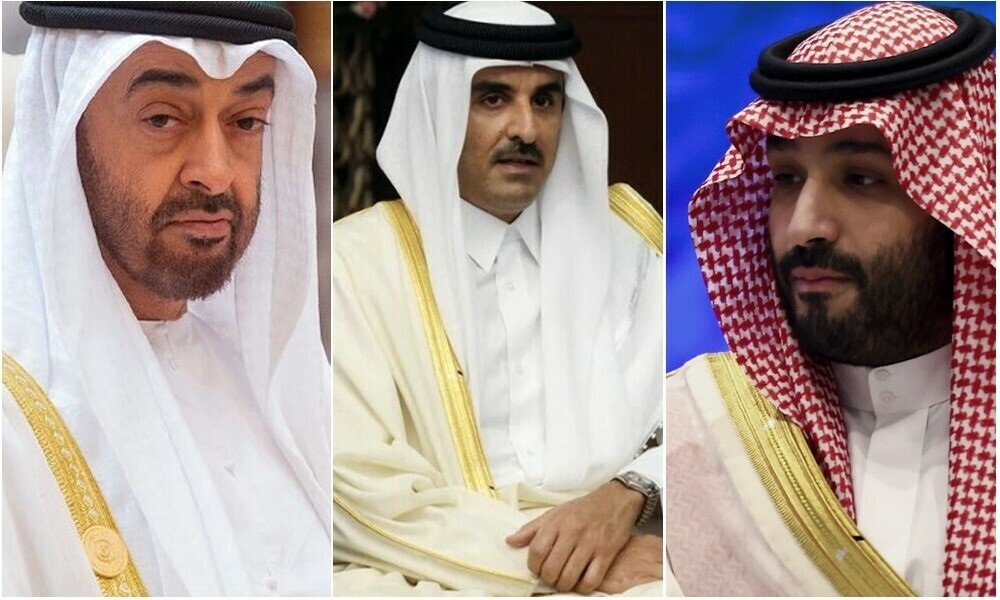
Saudi Arabia, the UAE and Qatar reportedly urged President Donald Trump to avoid striking Iran after a suspected drone attack heightened fears of wider Gulf conflict.
WebDesk – MediaBites News
Fresh fears of a wider Middle East conflict intensified Friday after reports emerged that Gulf nations privately urged U.S. President Donald Trump to avoid military strikes on Iran, while a suspected drone attack near the UAE’s strategic Barakah nuclear facility sharply raised regional tensions.
According to regional reports, Saudi Arabia, United Arab Emirates and Qatar warned Washington against direct confrontation with Iran due to fears of devastating economic and security fallout across the Gulf.
The concerns reportedly focus on the possibility of Iranian retaliation targeting vital oil infrastructure, shipping routes and energy exports through the strategically critical Strait of Hormuz.
The diplomatic push for restraint came alongside reports of a suspected drone attack targeting the Barakah Nuclear Power Plant, the UAE’s first nuclear energy facility and one of the country’s most sensitive strategic sites.
Although no organization has officially claimed responsibility, regional security analysts believe the operation may have been intended as a warning linked to the escalating Iran-Israel shadow conflict.
Experts say the attack’s method and timing suggest possible involvement by Iran-backed militias operating in Iraq, though no public evidence has directly connected Tehran to the incident.
The development has intensified fears that Gulf nations could become the next major battleground in the broader regional confrontation involving Iran, Israel and their allies.
The Barakah facility is considered critically important to the UAE’s national infrastructure, making any attempted attack especially alarming for Gulf security planners and global energy markets.
Regional governments are increasingly concerned that further escalation could destabilize oil supplies, disrupt maritime trade and trigger another major global economic shock driven by rising energy prices.
Meanwhile, reports circulating online about a supposed U.S. military campaign named “Operation Epic Fury” against Iran remain unverified, with no official confirmation or credible evidence indicating such an operation has taken place.
Instead, diplomatic efforts appear focused on preventing direct military confrontation as regional powers quietly push for de-escalation amid mounting instability.
International observers are now closely monitoring investigations into the Barakah incident, particularly concerns surrounding accountability, deterrence and the expanding role of armed proxy groups across the Middle East.


3 Comments
Pingback: hot fruits как выиграть
Pingback: จำนำรถ
Pingback: INFY 20K