


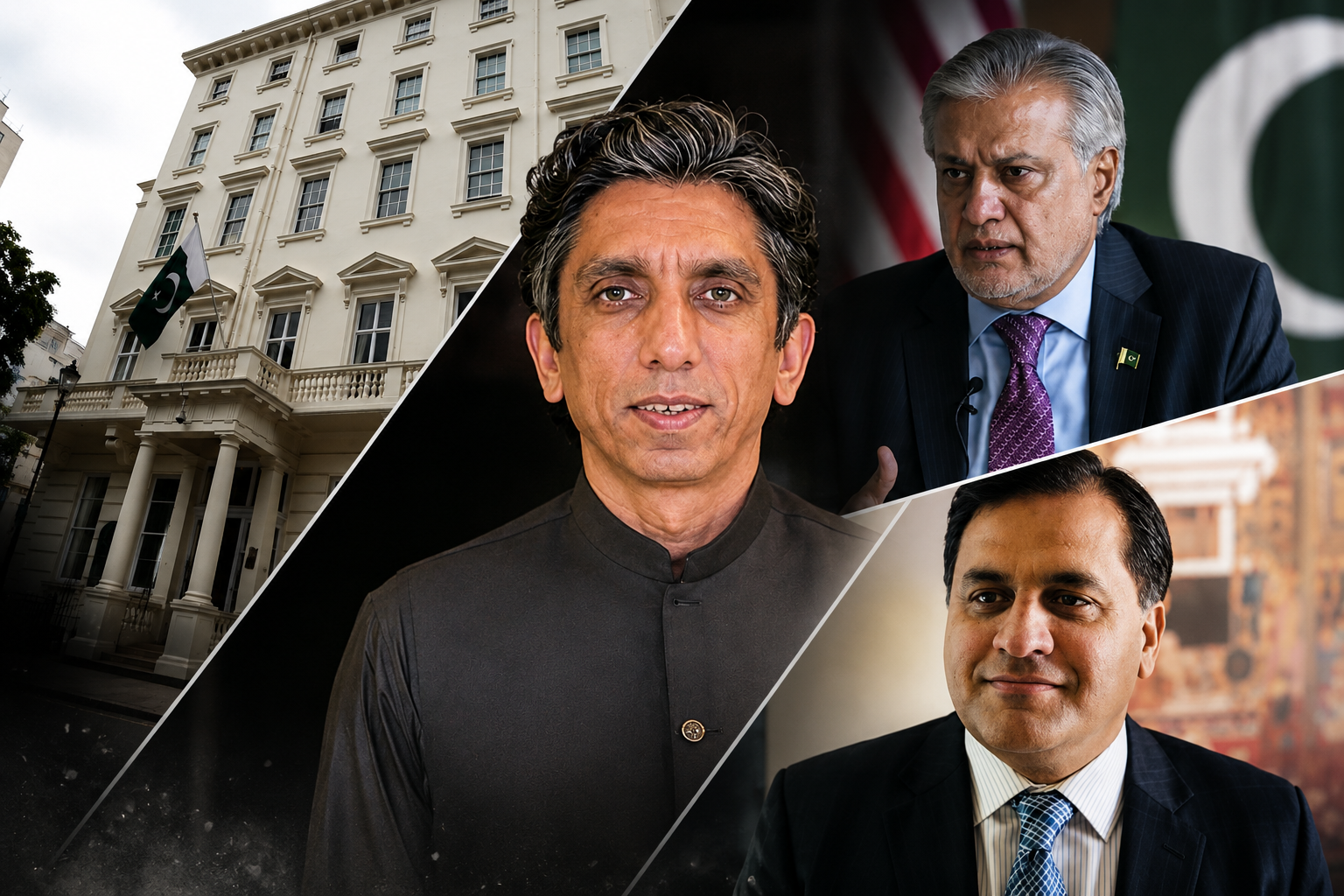
Fresh allegations surrounding the reported removal of senior diplomat Dr Mohammad Faisal have reignited debate over political interference, lobbying and internal power struggles inside Pakistan’s Foreign Office.
WebDesk – Media Bites Editorial
Senior journalist Aizaz Syed has claimed that Pakistan’s former High Commissioner to the United Kingdom, Dr Mohammad Faisal, was allegedly asked to leave his position following tensions involving influential political circles and an alleged contract-related dispute.
According to the claims made by Syed, Dr Faisal had returned to Pakistan on leave when differences reportedly emerged between him and top figures within the Foreign Office, including Deputy Prime Minister and Foreign Minister Ishaq Dar.
The journalist alleged that certain individuals wanted a contract in the UK to be awarded to a person linked with the ruling PML-N, but the arrangement allegedly did not materialize, leading to displeasure within powerful circles.
No official confirmation has been issued by the Foreign Office or Ishaq Dar regarding these allegations, and the claims remain unverified.
However, the controversy has triggered renewed discussion within diplomatic and media circles about the growing influence of political considerations over professional diplomacy in Pakistan.
Dr. Mohammad Faisal is widely regarded as one of Pakistan’s most recognized career diplomats of recent years.
Before serving as Pakistan’s High Commissioner to the United Kingdom, he held several important diplomatic and strategic positions, including Foreign Office spokesperson, Ambassador to Germany and Pakistan’s representative in multiple international forums.
Known for his polished communication style and calm media handling, Dr Faisal became a familiar public face during highly sensitive regional developments, particularly during tensions between Pakistan and India.
His regular press briefings as Foreign Office spokesperson earned him visibility both domestically and internationally, with many observers describing him as one of Pakistan’s more media-savvy diplomats.
Dr Faisal also holds a strong academic background, including expertise in security studies, international relations and strategic affairs.
During his tenure in London, he was viewed by many within diplomatic circles as an active and accessible envoy who maintained strong engagement with the Pakistani diaspora, British policymakers and international institutions.
The latest controversy has once again highlighted longstanding concerns within Pakistan’s bureaucratic structure, where critics argue that professional officers often become vulnerable to political changes, lobbying pressure and internal factionalism.
Analysts say such perceptions can negatively affect institutional credibility, particularly in sensitive sectors like diplomacy where continuity, neutrality and professional independence are considered essential.
Neither Dr Faisal nor the Foreign Office has publicly responded in detail to the latest claims circulating in media circles.
Still, the debate continues to raise uncomfortable questions: Are Pakistan’s diplomats being evaluated on professional performance — or political convenience?


2 Comments
I am regular visitor, how are you everybody?
This post posted at this web site is really nice.
Hey there, You’ve done an incredible job. I’ll definitely digg it and personally
suggest to my friends. I am sure they’ll be benefited from this site.