


At exactly 1:00 a.m., the rule of law apparently sets an alarm, gulps down some institutional caffeine, and decides it’s time to perform. Not in the quiet dignity of a courtroom, of course—but in full cinematic glory, with armed personnel knocking on doors like it’s a raid scene from a Netflix thriller.
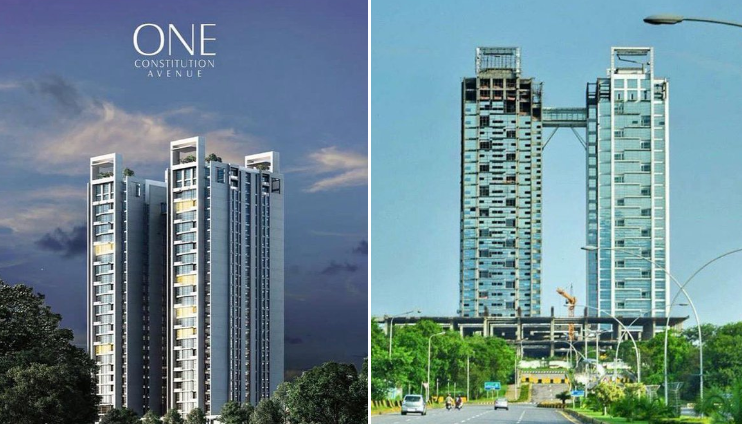
Welcome to One Constitution Avenue—where legality is a 20-year-old debate, but eviction is a 12-hour deadline.
For two decades, this architectural symbol of ambition, loopholes, and selective oversight stood tall in Islamabad’s Red Zone—just a stone’s throw from Parliament and the Supreme Court. Close enough to power to feel safe, yet far enough to remain… creatively interpreted.
The script is deliciously ironic.
A plot of land leased for a five-star hotel somehow evolves—through what can only be described as “urban imagination”—into luxury apartments, commercial spaces, and a lifestyle statement for Pakistan’s elite. Regulators watch. Courts intervene. Decisions reverse. Payments partially made. Violations acknowledged. Years pass.
Investors buy. Tenants rent. Politicians reside. Bureaucrats supervise. Judges, reportedly, observe from a respectable distance—sometimes legally, sometimes literally.
And then—plot twist.
One fine night, the same state that watched this slow-motion transformation for 20 years suddenly discovers urgency. Not gradual enforcement. Not phased relocation. Not even a polite notice period.
No—midnight justice.
Doors are knocked. Families startled. Children woken. Legal documents? Optional. Explanation? Minimal. Deadline? Brutal.
“Please vacate by noon.”
Twelve hours to undo twenty years.
Now here’s where the satire writes itself.
For years, when bulldozers rolled through informal settlements near places like Bari Imam, the narrative was simple: encroachments must go. Law must prevail. No exceptions.
And the elite nodded approvingly—from their climate-controlled apartments.
But now, when the same law tiptoes—no, storms—into a luxury tower where the rent equals a small village’s annual income, suddenly the questions become philosophical:
Is this humane?
Is this legal?
Is this timely?
Fascinating.
The law, it seems, is not blind. It just adjusts its glasses depending on the neighborhood.
The government insists: “There is no difference between rich and poor.”
Which is true—in theory, in press conferences, and occasionally in carefully worded statements.
But reality is a bit more… genre-bending.
Because when a poor settlement is demolished, it’s called enforcement.
When an elite tower is questioned, it becomes a committee.
Yes, a committee has now been formed. Because nothing says urgency like a one-week review after a midnight operation.
And while the committee deliberates, the nation debates:
- Was this justice finally catching up?
- Or power recalibrating its optics?
Meanwhile, investors watch nervously.
Because if a project can be approved, built, sold, lived in—and then declared problematic decades later—what exactly is the shelf life of “legal certainty”?
In Pakistan’s urban reality, it seems legality is not a status. It’s a timeline.
Legal yesterday. Questionable today. Evictable tomorrow.
And perhaps the most poetic part of this entire episode is geography.
Bari Imam—where homes of the poor were flattened—is not far from Constitution Avenue.
Just a few kilometers.
And an entire philosophy apart.
Because in the end, this isn’t just about a building.
It’s about a system where:
Violations are tolerated until they become inconvenient
Accountability is delayed until it becomes dramatic
And justice arrives—not on time—but on cue
So yes, maybe this does deserve a Netflix series.
Title suggestion:
“The Constitution: Terms & Conditions Apply.”


1 Comment
Pingback: ติดเน็ต ais