


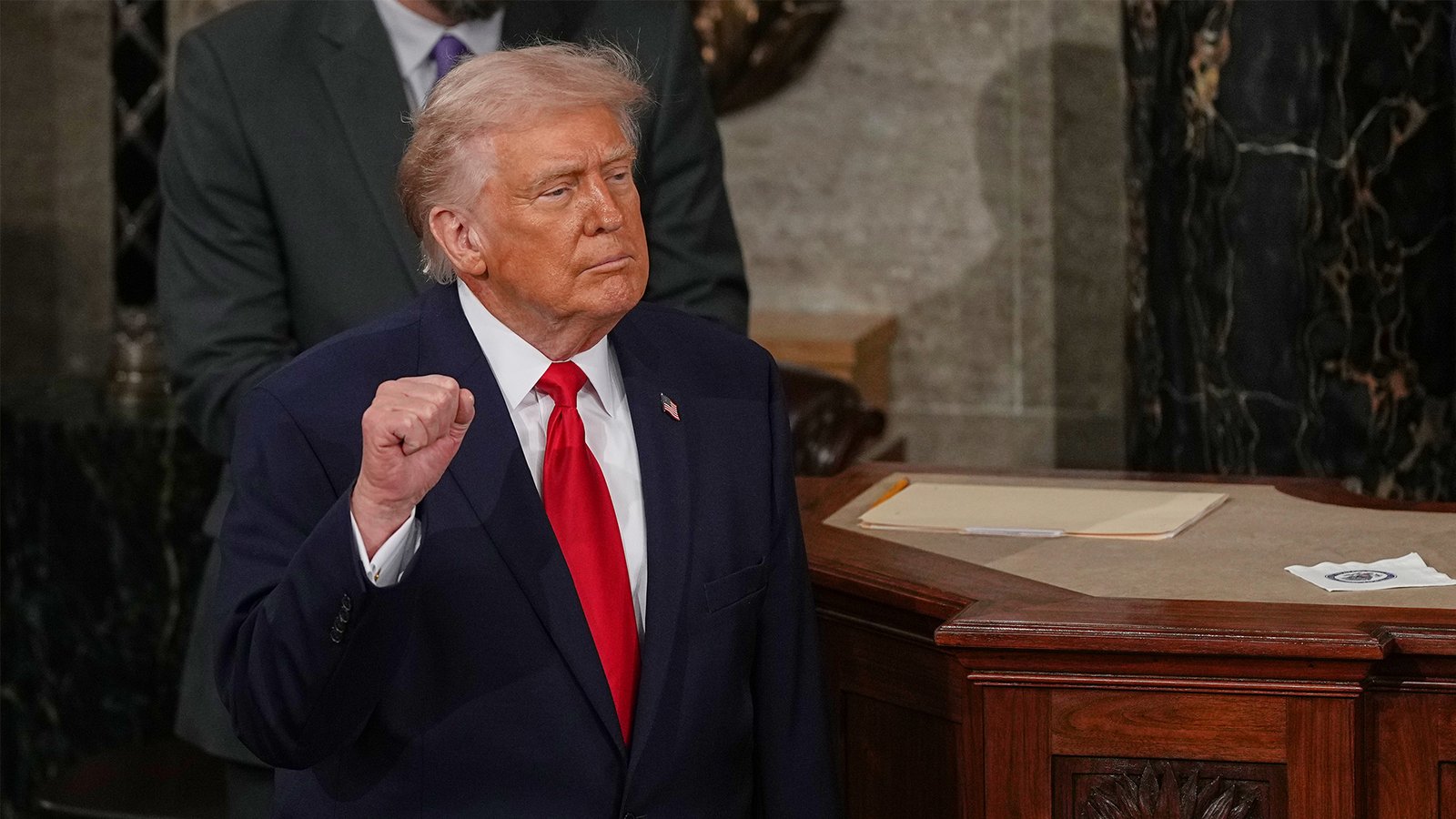
US President Donald Trump delivered a sharply political address Tuesday night, blending immigration attacks, warnings toward Iran, tariff defenses, and theatrical moments that underscored both his campaign strategy and governing priorities ahead of the 2026 midterm elections.
The speech reflected a familiar Trump formula — policy messaging mixed with confrontation and carefully staged symbolism.
Immigration takes center stage as Trump goads Democrats
Facing declining political momentum, Trump returned to one of his most reliable election themes: immigration.
Highlighting stories of victims of crimes committed by undocumented migrants, the president accused Democrats of enabling what he described as a “border invasion” and warned voters that electing Democrats would reopen U.S. borders.
In a dramatic moment, Trump challenged lawmakers to stand if they agreed that protecting American citizens should come before protecting undocumented immigrants.
Republicans rose in applause while Democrats largely remained seated, creating a televised partisan divide Trump quickly seized upon.
“You should be ashamed of yourself not standing up,” he told Democratic lawmakers, prompting shouted responses from Representatives Rashida Tlaib and Ilhan Omar.
Despite immigration remaining politically advantageous for Republicans in polling, Trump avoided discussing controversial enforcement incidents earlier this year that drew public backlash.
Tariffs remain central — but legal uncertainty lingers
Trump softened his tone toward the Supreme Court after it struck down parts of his global tariff policy, calling the ruling merely “unfortunate.”
Instead, he doubled down on economic nationalism, claiming tariffs could eventually replace income taxes — a prediction economists widely view as unrealistic.
In a notable shift, Trump said Congress need not formally approve his tariff program, despite constitutional authority over trade policy resting with lawmakers.
The stance signals the president’s intention to continue pursuing tariffs through executive power rather than legislation, even as some Republicans remain uneasy about economic fallout.
Democrats protest throughout speech
The address saw repeated Democratic protests, including Texas Representative Al Green being escorted from the chamber after displaying a protest sign as Trump entered.
Other Democrats interrupted or walked out during sections of the speech, highlighting deep partisan tensions that dominated much of the evening.
The confrontations underscored how Trump’s rhetoric continues to energize supporters while intensifying divisions inside Congress.
Trump outlines tougher rhetoric toward Iran
On foreign policy, Trump offered one of his clearest public justifications yet for potential future military action against Iran.
Arguing that Tehran continues pursuing nuclear ambitions despite earlier U.S. strikes on its facilities, Trump warned he would never allow Iran to obtain nuclear weapons.
While emphasizing diplomacy as his preferred path, the president’s remarks suggested military options remain firmly on the table as U.S. forces maintain a heavy regional presence.
Showmanship and symbolism dominate the stage
True to form, the speech featured extensive political theater.
Trump honored Olympic hockey champions, awarded multiple military medals and orchestrated emotional moments designed for television and social media impact. At several points, he openly tracked whether Democrats applauded — turning congressional reactions into part of the performance.
The carefully staged moments reinforced Trump’s reputation as a political showman who blends governance with campaign-style messaging.
Election-year messaging comes into focus
Beyond policy announcements, the address offered a preview of Trump’s election strategy: aggressive immigration rhetoric, economic nationalism through tariffs, warnings about foreign threats, and confrontation with Democrats.
As control of Congress hangs in the balance, the speech signaled that Trump intends to frame the 2026 elections around security, patriotism, and partisan contrast — themes likely to dominate American politics in the months ahead.


6 Comments
someone who takes steroids is risking which of the following outcomes?
References:
https://urlscan.io/result/019cb2cf-11ca-743e-bff1-c46e59df344c/
grand falls casino
References:
https://futuretechradar.com/hip-replacement-surgery-is-it-right-for-you
legal supplements to get ripped
References:
locklear-saleh-2.federatedjournals.com
hollywood casino cincinnati
References:
https://vivirnoescaro.com/
References:
Ute mountain casino
References:
https://evshop.com.tr/
paddy power casino mobile
References:
acc.femme.sk