


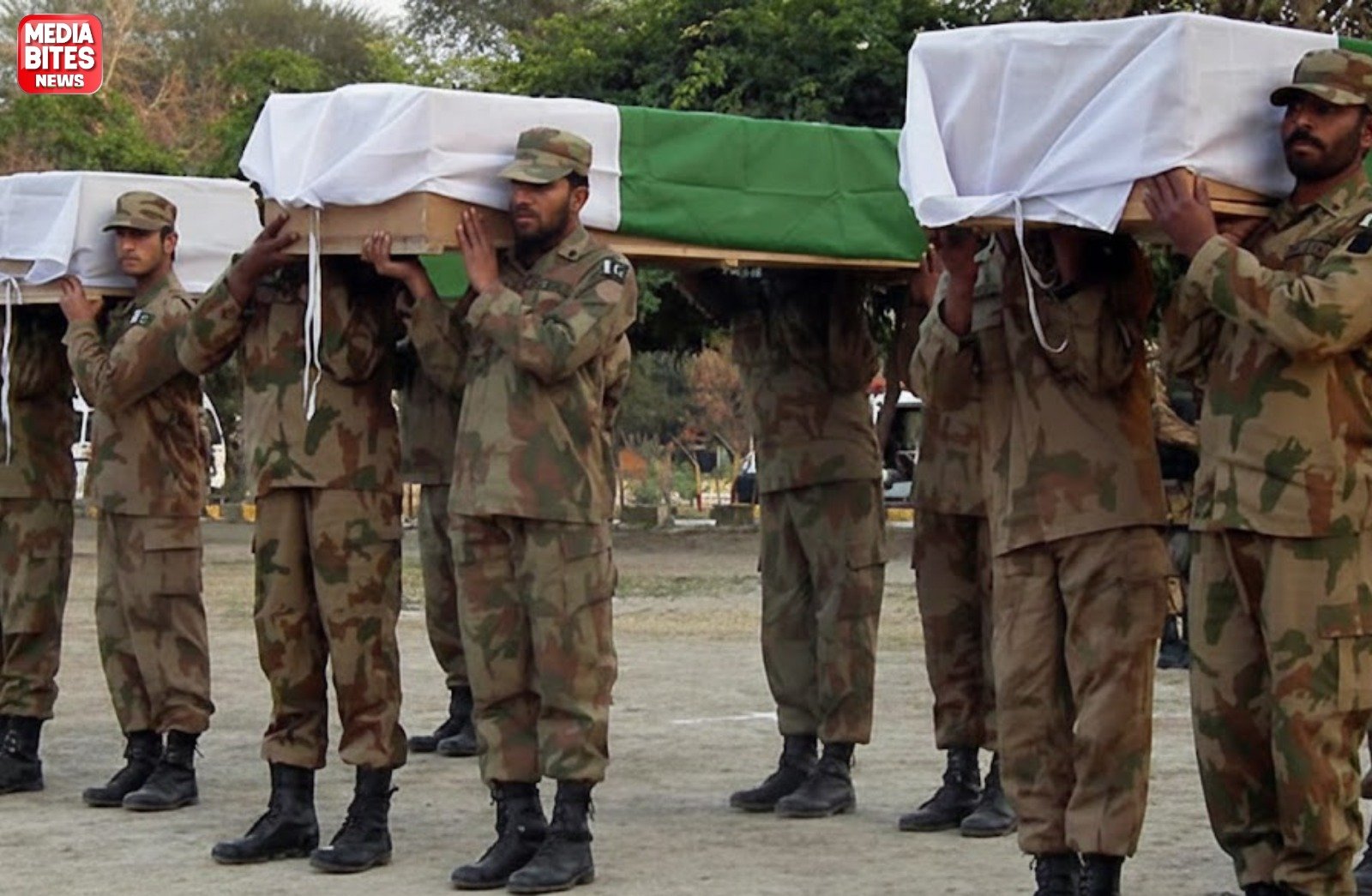
The landscape of Pakistan’s struggle against militancy has shifted dramatically over the last five years. While the large-scale military offensives of the previous decade (such as Operation Zarb-e-Azb) successfully cleared militant strongholds, a resurgence of targeted violence fueled by regional shifts and cross-border dynamics has exacted a heavy toll on the country’s defenders.
Since 2021, over 3,000 security personnel, including officers and soldiers of the Pakistan Army, Frontier Corps, and Police, have laid down their lives in the line of duty.
A Resurgent Threat: The Post-2021 Landscape
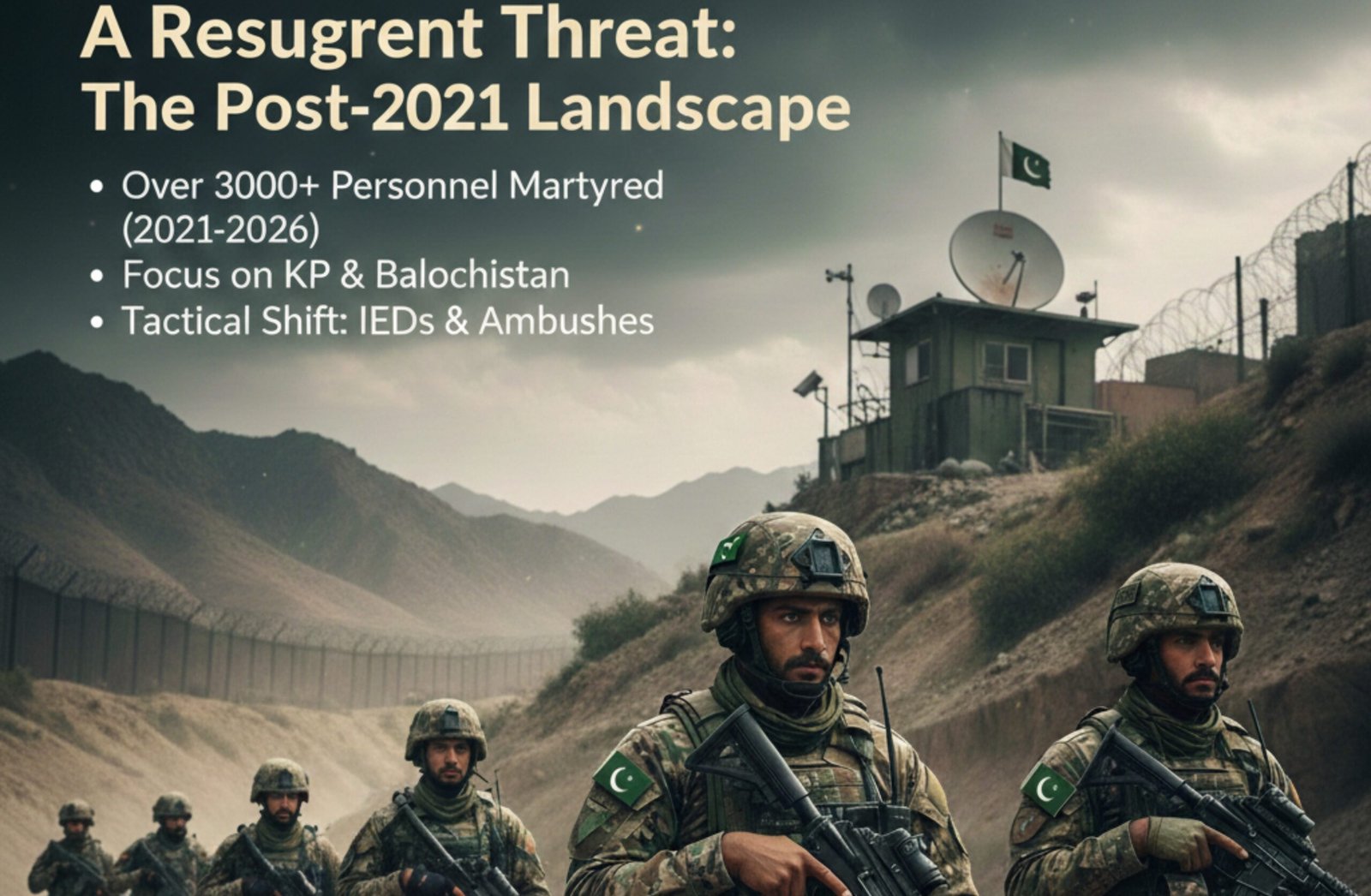 The withdrawal of international forces from Afghanistan in August 2021 marked a turning point. Analysts and security reports from the Center for Research and Security Studies (CRSS) and the Pakistan Institute for Peace Studies (PIPS) highlight a sharp spike in attacks following this transition.
-
Geographic Focus: The brunt of the violence has been concentrated in Khyber Pakhtunkhwa (KP) and Balochistan, which together account for over 95% of all terror-related incidents in the country.
-
Tactical Shifts: Militant groups like the TTP (Tehrik-i-Taliban Pakistan) and the BLA (Balochistan Liberation Army) have moved away from holding territory, instead favoring high-intensity guerrilla tactics, IEDs, and suicide ambushes.
The Human Cost: Year-by-Year Statistics
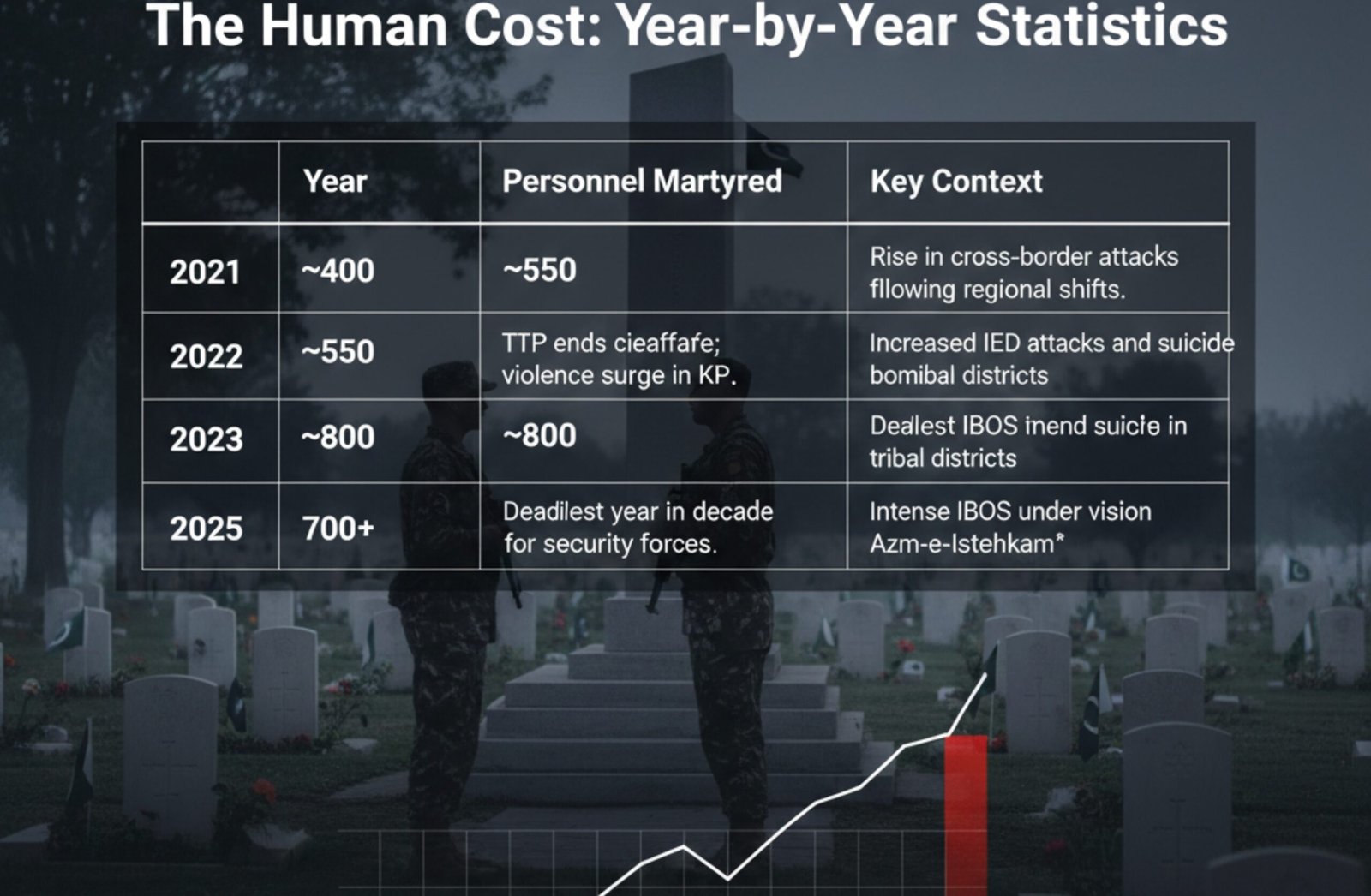 The sacrifice of the armed forces has been constant, with 2024 and 2025 emerging as some of the deadliest years for security forces in a decade.
| Year | Security Personnel Martyred (Approx.) | Key Context |
| 2021 | ~400 | Rise in cross-border attacks following regional shifts. |
| 2022 | ~550 | TTP ends ceasefire; violence surges in KP. |
| 2023 | ~600 | Increased IED attacks and suicide bombings in tribal districts. |
| 2024 | ~800 | Deadliest year in a decade for security forces. |
| 2025 | ~700+ | Intense IBOs (Intelligence Based Operations) under vision Azm-e-Istehkam. |
Operation Azm-e-Istehkam: The State’s Response
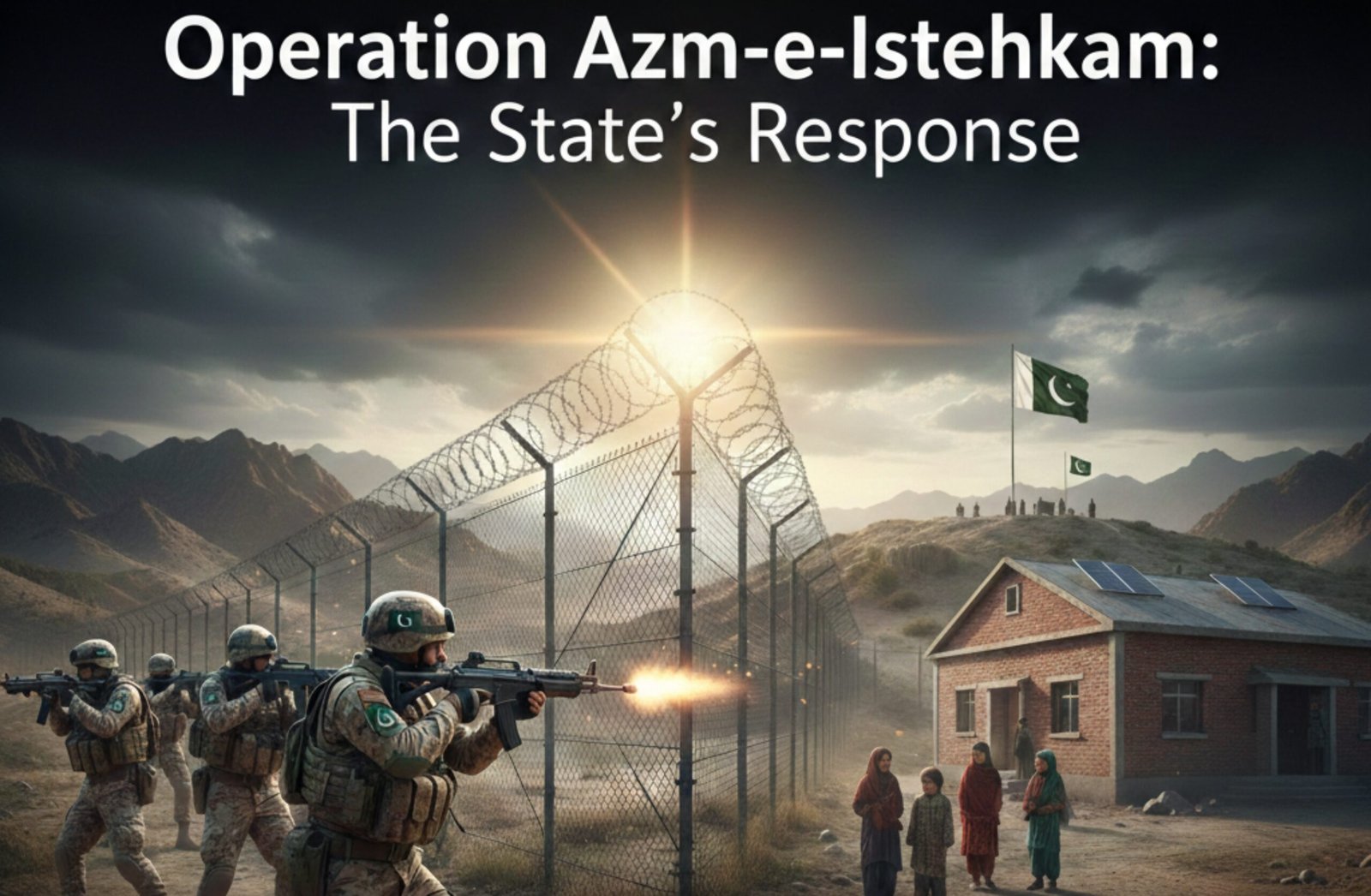 In response to the escalating threat, the government and military leadership launched Operation Azm-e-Istehkam (Resolve for Stability). This operation represents a multi-domain strategy:
-
Kinetic Strikes: Daily Intelligence-Based Operations (IBOs) to dismantle sleeper cells.
-
Border Management: Intensified fencing and surveillance along the Durand Line to curb infiltration.
-
Socio-Economic Development: Efforts to address the grievances in marginalized border regions to dry up militant recruitment.
“The sacrifices of our fearless sons will never go in vain. We will not allow elements that harm Pakistan’s integrity to succeed.” Prime Minister of Pakistan, October 2025.
Conclusion: A Debt of Gratitude
The figure of 3,000 martyrs represents more than just a statistic; it represents thousands of families left behind and a nation’s enduring resolve. Despite the high cost, the Pakistan Army continues to conduct an average of 130 operations per day to ensure that the peace won through a decade of war is not lost.
As the fight enters its most complex phase yet, the “Green and White” flag continues to be hoisted high on the shoulders of those who choose duty over life.
Would you like me to focus on the specific details of a particular operation or create an infographic-style summary of these statistics?
6 Soldiers Martyred in Kurram IBO on 29 October 2025| ISPR
This video provides an official report on a recent anti-terror operation, highlighting the specific names and ranks of those who made the ultimate sacrifice during an intelligence-based mission.
Frequently Asked Questions.
1. What does the figure of 3,000+ security martyrs represent?
It refers to Pakistani security personnel—including soldiers, officers, and police—who were martyred in counter-terror operations between 2021 and 2026.
2. Which security forces are included in this count?
The figure includes personnel from the Pakistan Army, Frontier Corps, Pakistan Police, and other law-enforcement agencies.
3. Why did militancy increase after 2021 in Pakistan?
Militant violence surged after regional security shifts in 2021, particularly following changes in Afghanistan, leading to increased cross-border infiltration and attacks.
4. Which regions have been most affected by terrorist attacks?
The majority of attacks occurred in Khyber Pakhtunkhwa and Balochistan, accounting for over 95% of terror-related incidents nationwide.
5. What tactics are militant groups using now?
Groups such as the TTP and BLA have shifted to guerrilla warfare, using IEDs, suicide attacks, and targeted ambushes instead of holding territory.
6. What is Operation Azm-e-Istehkam?
Operation Azm-e-Istehkam is Pakistan’s nationwide counter-terror strategy focused on intelligence-based operations, border security, and long-term stability.
7. How often do Pakistani forces conduct counter-terror operations?
On average, Pakistani security forces conduct more than 100 intelligence-based operations daily to prevent militant regrouping.

