


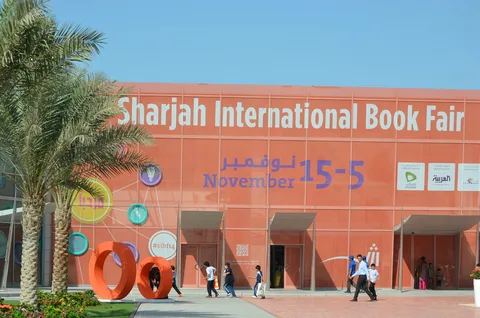
The 44th Sharjah International Book Fair became a hub of intellectual and artistic dialogue, hosting a session titled “On the Edge of Weight… Major Turning Points in the Course of Arabic Poetry.” Scholars, poets, and literary critics came together to explore how Arabic poetry has reflected the evolution of human thought, emotion, and artistic expression through centuries. A number of researchers emphasized that Arabic poetry has always been a mirror to societal change, aesthetic exploration, and the evolution of consciousness. From its pre-Islamic origins to modern free verse, the journey of Arabic poetry reflects not only linguistic transformation but also the changing identity of the Arab world.
The Journey of Arabic Poetry: A Reflection of Civilization
Moderator Abdul Aziz Al-Jahmi opened the session by highlighting that Arabic poetry, from the Mu‘allaqat to contemporary works, represents a continuous journey of transformation. Each era introduced new philosophies of rhythm, structure, and human beauty. This ongoing renewal shows how deeply poetry is intertwined with the Arab world’s history and values.
Abdul Hadi Al-Shehri’s Insight: From Oral Tradition to Structured Expression
Researcher Abdul Hadi Saleh Al-Shehri provided an analytical reading of the evolution of Arabic poetry. He began with the pre-Islamic era, where poetry thrived in an oral culture dependent on rhythm, memorization, and recitation. Poets of that time didn’t know technical meters but derived their rhythm naturally from the environment and the heartbeat of daily life. It was only with Al-Khalil bin Ahmad Al-Farahidi that the science of prosody emerged, defining the poetic meters that shaped Arabic verse. However, Al-Shehri pointed out that not all poets welcomed this system—Abu Al-Atahiyah and others resisted strict adherence to rhythm, valuing creative freedom over structural limits. This early debate between form and content continues to define Arabic poetry to this day.
The Renaissance Era: Rebirth of Arabic Poetry
As the discussion moved to the 19th and 20th centuries, Al-Shehri described the rise of poetic renaissance movements that reshaped Arabic literature. He discussed the Diwan, Mahjar, and Apollo schools, noting that each played a role in redefining poetic identity. The poet Khalil Mutran, for instance, introduced modernist techniques that might have sparked a revolution similar to the Andalusian Muwashshah had they found broader cultural acceptance. These literary movements marked the beginning of a new aesthetic consciousness, blending emotional depth with philosophical inquiry, and setting the stage for the next poetic revolution.
Modern Arabic Poetry: Freedom of Form and Expression
The dialogue also focused on the mid-20th-century emergence of free verse, pioneered by Nazik Al-Malaika and Badr Shakir Al-Sayyab. This shift allowed Arabic poetry to break away from rigid meter and rhyme, opening the door to free expression and new rhythms that mirrored modern life. According to Al-Shehri, this transition not only transformed literature but also influenced Arabic music, song, and cultural identity. The rise of free verse symbolized liberation from traditional constraints, enabling poets to engage with social, political, and emotional themes with renewed creativity and authenticity.
Sharjah’s Cultural Legacy: A Platform for Literary Transformation
The session was one of many at the Sharjah International Book Fair, a global platform celebrating literature, art, and intellectual exchange. The fair’s continued success underlines Sharjah’s role as a cultural bridge between the Arab world and global literary communities. The event not only revisits the legacy of Arabic poetry but also encourages future generations to innovate while respecting their roots.
The Enduring Relevance of Arabic Poetry
The scholars concluded that Arabic poetry remains more than just an art form—it is a living archive of Arab history, emotion, and identity. Through its rhythmic transformations, it documents the changing consciousness of humanity, illustrating how art evolves alongside society. As Sharjah continues to host such enriching discussions, it reinforces its standing as a beacon of culture and creativity in the Arab world. The exploration of poetry’s journey—from the desert songs of pre-Islamic Arabia to today’s free verse—reminds us that the heart of Arabic literature continues to beat strongly, echoing both the past and the promise of the future.

