


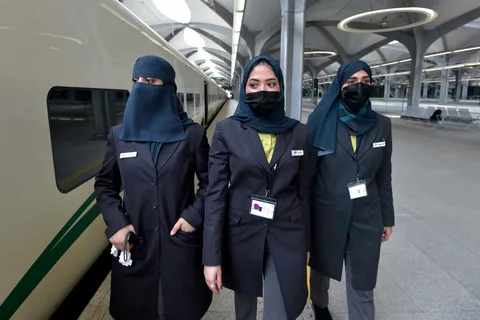
Saudi Arabia is making headlines once again, this time for a major achievement in its labor market. According to Ahmed Al-Rajhi, Minister of Human Resources and Social Development, women’s participation in the workforce has climbed to 34.5%, up from 23% in 2019. This is part of the broader Labor Market Strategy introduced in 2020, which has successfully met 92% of its objectives. Unemployment among Saudi citizens has also dropped to 6.8%, far below the 12% reported in 2019.
These numbers are more than just statistics—they show what a coordinated government vision can accomplish. By implementing over 100 initiatives aligned with Saudi Vision 2030, the government has strengthened the presence of local talent in critical sectors like engineering, accounting, and pharmacy. In some fields, employment for Saudi nationals has grown by up to 300%.
The strategy focuses not only on boosting employment but also on creating a vibrant economy by integrating the public, private, and nonprofit sectors. The Ministry has enacted professional localization decrees and provided incentives to hire and train Saudis. Women, once largely underrepresented, are now an essential part of the workforce, proving that gender inclusion can drive economic growth and social development simultaneously.
While Saudi Arabia’s progress is impressive, it raises a critical question for neighboring countries, including Pakistan: Why isn’t similar momentum happening at home? Pakistan faces high youth unemployment and underrepresentation of women in formal jobs, especially in professional sectors. Despite having a large, educated female population, participation rates remain low due to social barriers, lack of targeted policies, and inadequate incentives for businesses to hire women.
Pakistan could take cues from Saudi Arabia’s model by introducing clear labor market strategies, professional localization policies, and gender-focused incentives. Aligning government, industry, and civil society efforts could unlock significant economic growth, reduce unemployment, and empower women nationwide.
Saudi Arabia’s success isn’t accidental. It reflects visionary policy planning, consistent execution, and monitoring. If Pakistan wants to compete in the modern economy and uplift its workforce, it must consider similar reforms—before the opportunity slips by.
Read More: South Korea’s Cyber Attack Is a Big Warning


2 Comments
Pingback: Best Overseas Jobs for Pakistanis in 2025 – Gulf Country Salaries
Stumbled upon 999pub the other night. Has an old site feeling, but it does the work. So if you don’t mind the dated visuals, 999pub is a good spot!