


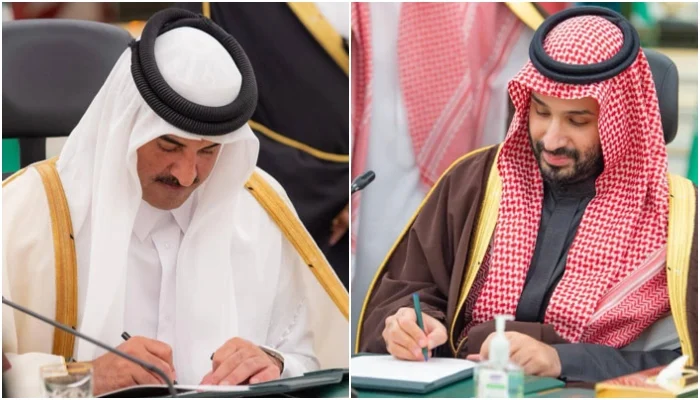
Saudi Arabia and Qatar have taken a major step toward regional connectivity by signing a high-speed rail agreement. This ambitious project will link Riyadh and Doha, reducing travel time between the two capitals to just two hours, while creating thousands of jobs and boosting trade and tourism.
Overview of the Saudi-Qatar High-Speed Rail Project
The agreement was signed during a meeting in Riyadh between Saudi Crown Prince Mohammed bin Salman and Qatar’s Emir Sheikh Tamim bin Hamad Al-Thani. Under the Saudi-Qatari Coordination Council, the project aims to strengthen cooperation, economic integration, and sustainable development across both nations.
The high-speed rail will cover 785 kilometers, connecting King Salman International Airport in Riyadh to Hamad International Airport in Doha. The trains will operate at speeds above 300 km/h, offering a modern and efficient alternative to air and road travel.
Key Features of the Rail Line
-
Travel Time: Only 2 hours between Riyadh and Doha.
-
Passenger Capacity: Over 10 million passengers per year.
-
Stops: Includes major cities like Hofuf and Dammam.
-
Job Creation: Approximately 30,000 jobs across both countries.
-
Economic Impact: Estimated SR115 billion ($30.6 billion) boost.
Strategic Importance of the High-Speed Rail
This rail project is more than just a transportation initiative. It is a strategic move to enhance trade, tourism, and regional cooperation. The rail line will facilitate easier movement of people and goods, supporting economic growth in both Saudi Arabia and Qatar.
Moreover, the project reflects a commitment to sustainable development. By offering a cleaner alternative to air and road transport, the rail line will help reduce carbon emissions and encourage innovative transportation solutions in the Gulf region.
Technological and Environmental Aspects
The high-speed rail will be designed using state-of-the-art technology, smart engineering, and modern rail infrastructure. Trains will be energy-efficient, with advanced battery and braking systems to minimize environmental impact. The project aligns with both countries’ goals to implement eco-friendly transportation solutions.
Economic and Social Benefits
The rail project is expected to generate massive economic and social benefits:
-
Boost in bilateral trade, which reached $930.3 million in 2024, up 634% since 2021.
-
Creation of thousands of direct and indirect jobs.
-
Increased tourism and business travel.
-
Strengthened regional connectivity and integration within the Gulf Cooperation Council (GCC).
Future Outlook
Construction of the high-speed rail is planned to be completed within six years, marking a transformative period for infrastructure development in the region. Once operational, it will set a new benchmark for transportation efficiency, regional collaboration, and sustainable mobility in the Middle East.
Conclusion
The Saudi-Qatar high-speed rail link is a landmark project that will reshape travel, trade, and regional connectivity. With modern technology, reduced travel time, and substantial economic benefits, it represents a key step toward a more integrated and sustainable Gulf region.
Read More: Iran arrests marathon organizers after women run without mandatory hijab


3 Comments
Pingback: Kanwal Cheema New CEO of Huawei Pakistan’s Financial Services
Pingback: Priyanka Chopra at Bridge Summit 2025
Pingback: WAN-IFRA & FIPP Merger 2026 – A Powerful Global Alliance