


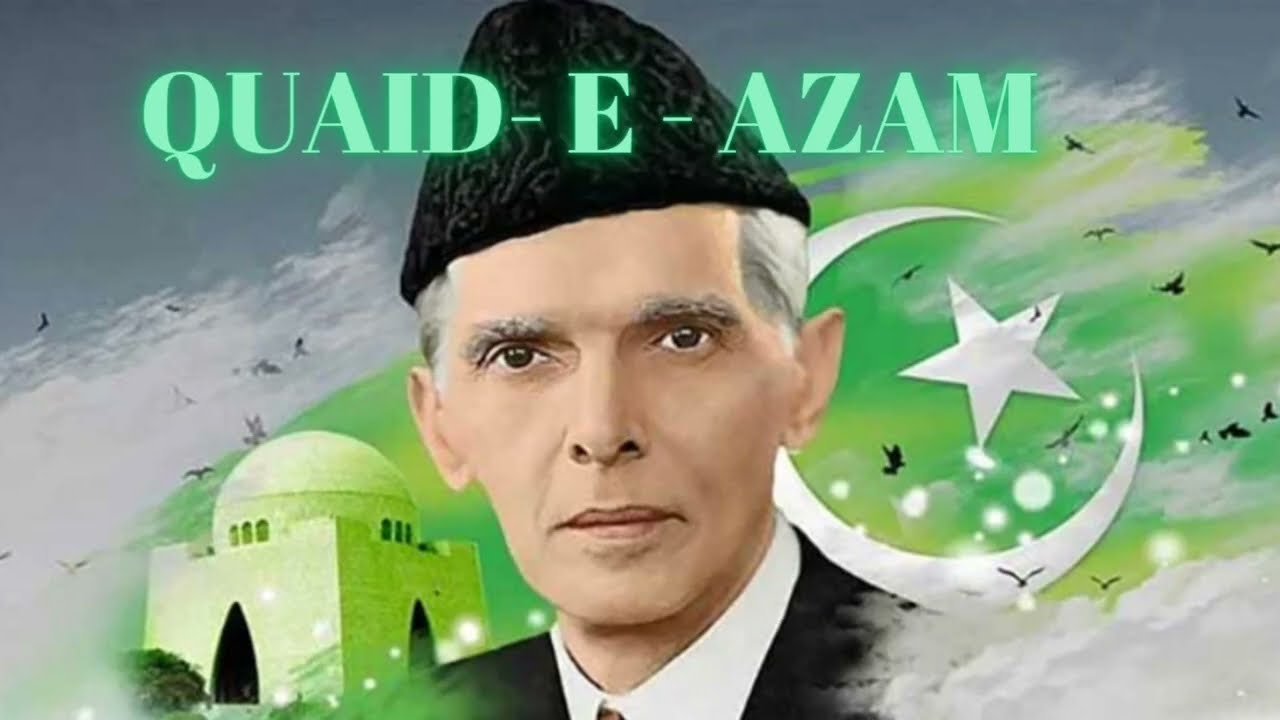
Today, Pakistan observes Quaid-e-Azam Day, remembering Muhammad Ali Jinnah not only as the founder of the nation, but as a leader whose vision still guides the country through moments of challenge and change. This day is more than a ceremonial tribute. It is a moment of national reflection, asking whether Pakistan today truly reflects the ideals Jinnah worked tirelessly to establish.
Quaid-e-Azam imagined a Pakistan built on justice, equality, and the rule of law. His speeches repeatedly emphasized that no nation can progress without discipline, honesty, and unity. He dreamed of a state where religion was a personal matter, where citizens were equal before the law, and where merit—not influence—defined success. These principles remain as relevant today as they were at the time of independence.
Pakistan today stands at a complex crossroads. On one hand, there is hope. The country has a vibrant youth population, growing digital industries, and an emerging entrepreneurial culture. Pakistani professionals continue to make their mark globally in technology, medicine, sports, and business. These developments reflect the resilience and potential that Quaid-e-Azam believed existed within the nation.
Yet, alongside hope come hard questions. Political instability, economic pressures, and governance challenges have created uncertainty for ordinary citizens. Inflation and unemployment affect daily life, while institutional conflicts often distract from long-term national planning. Many Pakistanis question whether the state truly delivers justice and equal opportunity, values that were central to Jinnah’s vision.
Social cohesion is another critical concern. Quaid-e-Azam spoke strongly about unity and mutual respect, warning against divisions based on language, ethnicity, or sect. Today, polarization—both political and social—poses a serious challenge to national harmony. Bridging these divides requires leadership rooted in dialogue, tolerance, and accountability.
Remembering Jinnah also means understanding that his struggle was not just about creating a country, but about shaping its character. He believed Pakistan’s strength would come from strong institutions, constitutional supremacy, and a citizenry committed to national interest above personal gain.
As Pakistan commemorates Quaid-e-Azam today, the tribute must go beyond speeches and wreath-laying. The real honor to his legacy lies in asking difficult questions and taking meaningful action. Quaid Ka Pakistan was meant to be a state of fairness, dignity, and opportunity. Keeping that vision alive remains a shared responsibility—one that demands courage, reform, and unity in the face of today’s realities.


3 Comments
bonos777vip looks pretty swanky! Wonder if the VIP treatment extends to the winnings, too? Let’s hope so! bonos777vip
Alright, who’s chasing the big one? Jackpot777br seems promising enough. The name alone gets you pumped, doesn’t it? I’ve put a few quid in, haven’t hit the jackpot YET, but there’s always tomorrow! See if you have better luck at jackpot777br.
**mitolyn**
Mitolyn is a carefully developed, plant-based formula created to help support metabolic efficiency and encourage healthy, lasting weight management.