


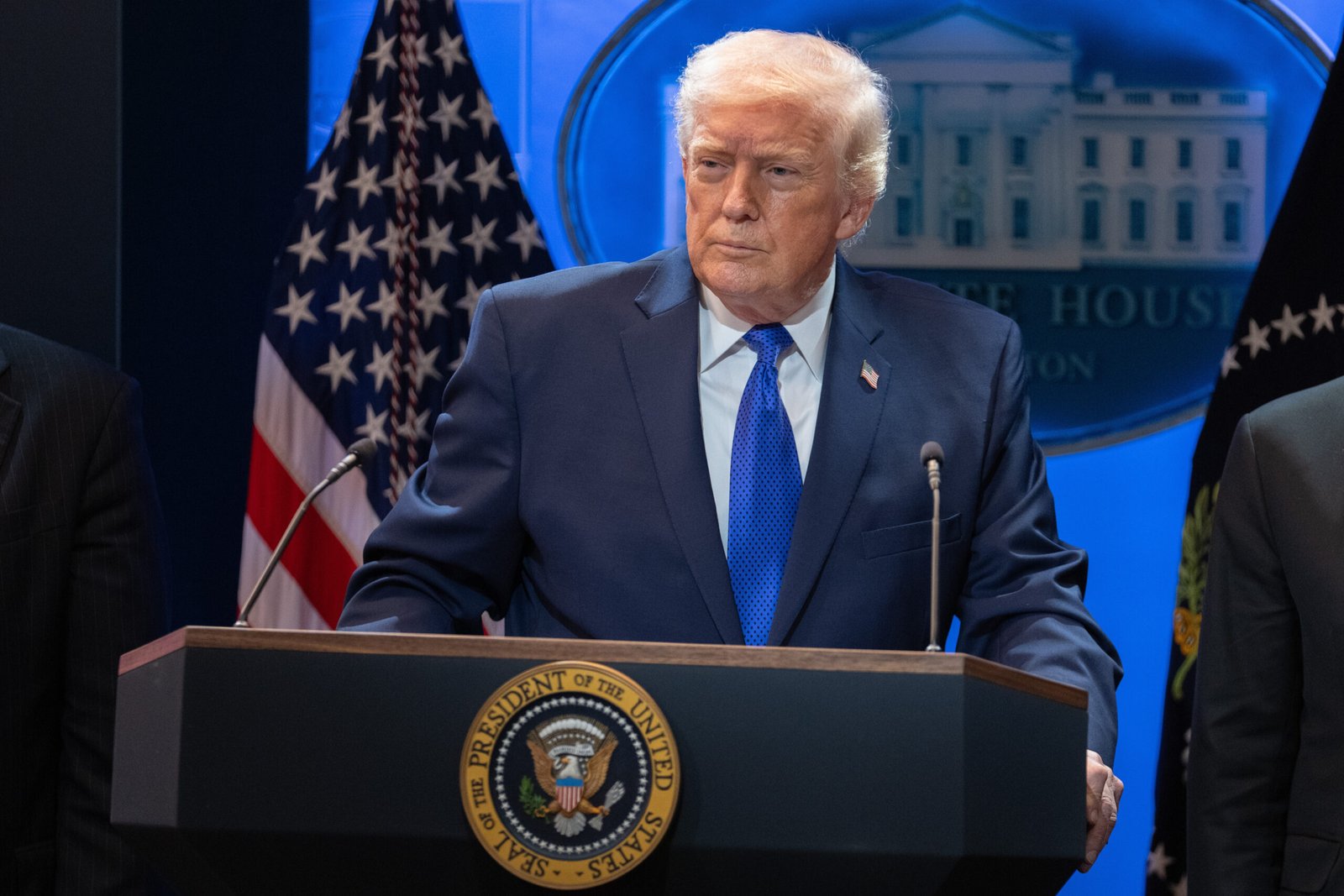
Trump threatened strikes on Iran’s power plants and bridges if the Strait of Hormuz remains restricted, as tensions rise, shipping drops sharply, and regional powers push diplomatic efforts to avoid escalation.
MediaBites News
Tensions in the Middle East escalated dramatically after Donald Trump issued a blistering ultimatum to Iran, threatening to target critical infrastructure if the Strait of Hormuz is not fully reopened by Tuesday.
In a fiery statement on Truth Social, Trump warned that Iran’s power plants and bridges could be struck, declaring that “all hell will break loose” if shipping through the vital النفط route is not restored. The warning marks one of the most aggressive US threats in recent years, pushing the الأزمة closer to a potential military confrontation.
Despite the угроза, Iranian-linked media reported that 15 vessels crossed the strait in the past 24 hours with Tehran’s approval. However, maritime traffic remains nearly 90% below pre-war levels, underscoring the severe disruption to global energy supply chains.
Iranian officials, including Foreign Minister Abbas Araghchi, insist the strait is “not closed,” but restricted for what they describe as “hostile nations.” Military authorities have also hinted at imposing transit fees on vessels, with some officials suggesting that the revenues could be used to compensate for war-related damage.
The powerful Islamic Revolutionary Guard Corps has warned that any escalation will trigger intensified retaliation against US economic interests, further raising the stakes in an already volatile region.
Meanwhile, diplomatic efforts are underway. Oman confirmed it is exploring multiple proposals with Iran to ensure uninterrupted maritime traffic through the strait, while the United Arab Emirates signaled support for US-led initiatives to safeguard shipping lanes.
UAE presidential adviser Anwar Gargash said regional attacks have paradoxically strengthened US and Israeli influence, reflecting shifting geopolitical dynamics amid the conflict.
With the Strait of Hormuz—through which nearly a fifth of the world’s oil passes—at the center of the crisis, global markets, governments, and militaries are bracing for what could become a decisive moment in the unfolding confrontation.

