


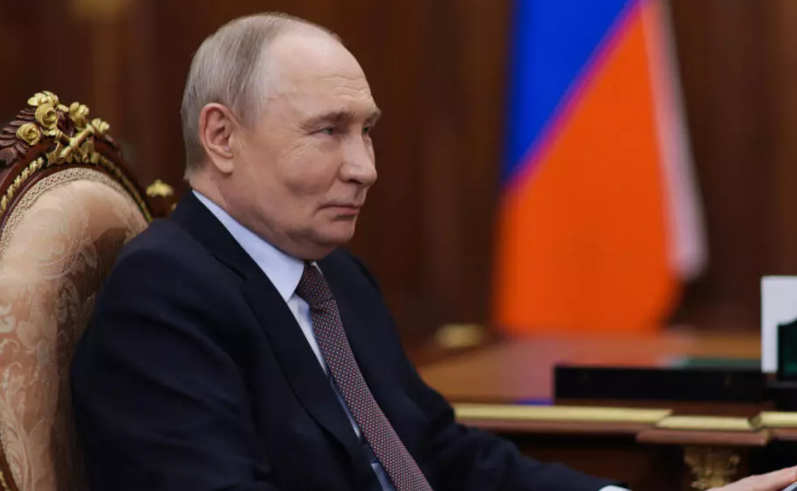
Fears of a wider war grow as U.S. officials say Russia shared intelligence with Iran to track American forces, raising questions about whether global powers are entering the escalating conflict.
WEBDESK – MediaBites News
Signs of the Middle East conflict expanding into a broader geopolitical confrontation emerged after U.S. officials alleged that Vladimir Putin’s Russia has shared intelligence with Iran that could help Tehran track United States military assets operating in the region.
Two American officials familiar with intelligence assessments said Russia had provided information that might help Iran locate U.S. warships, aircraft, and other military platforms deployed across the Middle East.
While officials stressed there is no evidence Moscow is directing Iranian military operations, they described the intelligence-sharing as the first sign that Russia may be indirectly stepping into the war that erupted last week.
War sparked by U.S.–Israel strikes on Iran
The conflict began after joint strikes by the United States and Israel targeted Iranian facilities. Tehran retaliated with missile and drone attacks on U.S. positions and allied states across the Persian Gulf.
The escalation has rattled global markets and raised fears that the war could spread beyond the initial combatants if major powers or regional allies become more directly involved.
White House downplays impact
The White House attempted to play down the significance of the reports.
Press Secretary Karoline Leavitt said any intelligence sharing had not changed the outcome of ongoing military operations.
“We are completely decimating them,” she told reporters, suggesting Iranian forces were suffering heavy losses.
Meanwhile, U.S. Defense Secretary Pete Hegseth said Washington was closely watching any external involvement in the conflict.
“The American people can rest assured their commander in chief is well aware of who’s talking to who,” he said, warning that any actions undermining U.S. security would be confronted strongly.
Trump dismisses intelligence question
During a White House event, Donald Trump reacted sharply when asked about reports of Russian intelligence support for Iran.
Addressing a question from a Fox News correspondent, Trump dismissed the issue, calling it “a stupid question” to raise during an active conflict.
White House officials declined to confirm whether Trump had discussed the matter with Putin or whether Washington was considering retaliatory measures against Moscow.
Kremlin avoids direct confirmation
The Kremlin has neither confirmed nor denied the allegations.
Kremlin spokesman Dmitry Peskov said Moscow remains in dialogue with Iranian leaders but indicated Tehran had not formally requested military assistance.
“We are in dialogue with the Iranian side and will continue this dialogue,” he said, declining to comment on intelligence sharing.
Russia–Iran alliance deepens
Strategic ties between Russia and Iran have grown significantly in recent years, particularly since Russia’s war in Ukraine.
Western intelligence agencies have accused Tehran of supplying Moscow with Shahed attack drones and missiles, while U.S. officials say Iran helped Russia establish drone production facilities to support operations in Ukraine.
Meanwhile, Volodymyr Zelensky said Ukraine is prepared to assist U.S. allies in the Middle East in countering Iranian drones, drawing on Kyiv’s experience defending against repeated aerial attacks.
Risk of a wider geopolitical war
Analysts warn that if major powers begin supporting opposing sides more directly, the conflict could evolve into a broader geopolitical confrontation linking the Middle East and Eastern Europe.
With Russia potentially backing Iran, the United States and Israel on the other side, and Ukraine offering assistance to Washington’s allies, the war’s alliances increasingly resemble a global power contest rather than a regional conflict.
For now, Washington says it is monitoring the situation closely — but the question many analysts are now asking is whether the Iran war is slowly turning into a wider international crisis.

