


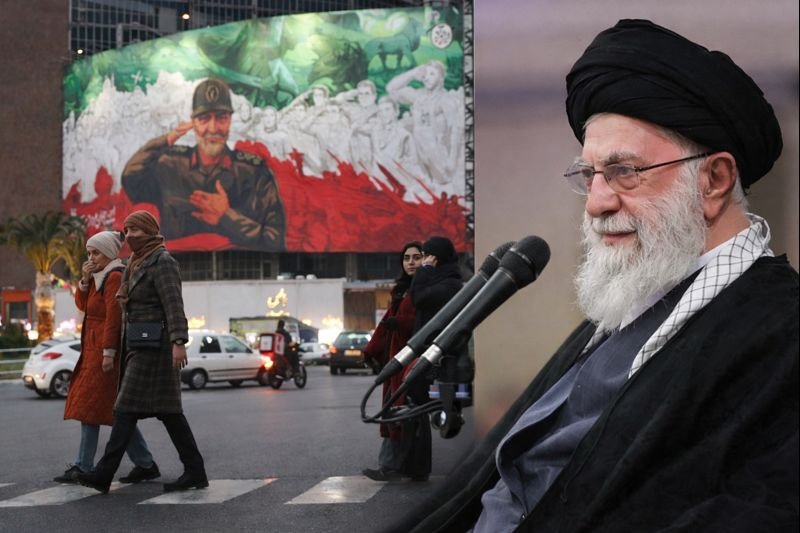
Mass protests sweep Iran as crowds chant against the clerical leadership, back Reza Pahlavi, and face an internet blackout amid a growing death toll and international warnings.
WEBDESK – MediaBites – January 9, 2026
Huge crowds marched through Iran’s capital and dozens of other cities, videos verified by BBC Persian showed, marking what activists describe as the largest display of opposition to the clerical establishment in years. The demonstrations, now in their 12th consecutive day, spread to more than 100 cities and towns across all 31 provinces as anger over a collapsing currency and soaring prices boiled over.
Footage from Tehran and the northeastern city of Mashhad showed peaceful nighttime marches that were not immediately dispersed by security forces. Protesters were heard chanting “Death to the dictator” — a reference to Supreme Leader Ayatollah Ali Khamenei — alongside monarchist slogans such as “Long live the shah” and “This is the final battle! Pahlavi will return.” In Mashhad, videos showed demonstrators climbing an overpass to remove what appeared to be surveillance cameras.
Internet blackout, rising toll
Later Thursday, internet watchdog NetBlocks reported a nationwide internet blackout, warning that escalating digital censorship was hindering communication at a critical moment.
Human rights monitors reported a mounting death toll. The U.S.-based Human Rights Activist News Agency said at least 34 protesters — including five children — and eight security personnel had been killed, with more than 2,200 arrests. Norway-based Iran Human Rights put the number of protesters killed at 45, including eight children. Iranian authorities have acknowledged the deaths of six security personnel.
Protest chants varied by region. In Isfahan, crowds shouted “Death to the dictator.” In Babol and Tabriz, demonstrators repeated “Don’t be afraid, we are all together.” In the western city of Dezful, video showed security forces appearing to open fire near a central square. Earlier footage from Lomar captured crowds chanting “Cannons, tanks, fireworks — mullahs must go.”
Who is Reza Pahlavi?
The protests gained momentum after Reza Pahlavi, the exiled son of Iran’s last monarch, urged supporters to take to the streets. Pahlavi, who lives in Washington, D.C., is the heir of Mohammad Reza Shah Pahlavi, overthrown in the 1979 Islamic Revolution. Long a symbolic figure for monarchists and some secular opposition groups, Pahlavi has in recent years sought to position himself as a unifying voice for a democratic transition, calling for civil resistance and international pressure on Tehran.
On X, Pahlavi said “millions of Iranians demanded their freedom tonight,” praised protesters as “courageous compatriots,” thanked U.S. President Donald Trump for holding the “regime to account,” and urged European leaders to do the same. He called for demonstrations to continue from 8 p.m. local time on Friday.
Official response, international pressure
Iranian state media downplayed the scale of the unrest, in some cases posting videos of empty streets. President Masoud Pezeshkian earlier called on security forces to exercise “utmost restraint” toward peaceful protests, while Khamenei said authorities should “speak with the protesters” but warned that “rioters should be put in their place.”
In Washington, Trump reiterated a warning of possible military action if protesters were killed. U.S. officials also said Iran’s economy was “on the ropes,” underscoring the pressure from sanctions and mismanagement.
Why now?
The protests began on Dec. 28 after shopkeepers protested another sharp fall in the rial. Inflation near 40%, corruption, and sanctions linked to Iran’s nuclear program have squeezed livelihoods. University students soon joined, and unrest spread nationwide.
Many Iranians told activists that despair is driving the movement. “Life here has become unbearable,” a woman in Tehran said in a message relayed to the BBC. The demonstrations are the most widespread since the 2022 uprising sparked by the death of Mahsa Amini and the largest since mass protests following the disputed 2009 election.
As chants for regime change echo from Tehran to Tabriz and the internet goes dark, activists say the coming days will test whether the movement can sustain its momentum — and how far authorities are willing to go to stop it.


13 Comments
kontol bapak kau kayak jamur kontol bapak kau sampah phishing
Great site. Plenty of helpful information here. I’m sending it to several friends ans additionally sharing in delicious. And obviously, thank you to your effort!
You actually make it seem so easy together with your presentation but I in finding this topic to be actually something which I believe I might never understand. It seems too complex and very vast for me. I am taking a look forward to your subsequent put up, I will try to get the hang of it!
I was reading through some of your blog posts on this website and I believe this internet site is real informative! Continue posting.
Hello! This is my 1st comment here so I just wanted to give a quick shout out and say I truly enjoy reading your articles. Can you recommend any other blogs/websites/forums that cover the same topics? Thanks a lot!
Very interesting information!Perfect just what I was looking for!
Hi, Neat post. There is a problem with your web site in internet explorer, would test this… IE still is the market leader and a big portion of people will miss your excellent writing due to this problem.
I love it when people come together and share opinions, great blog, keep it up.
Definitely, what a great website and instructive posts, I will bookmark your website.Have an awsome day!
certainly like your web site however you have to test the spelling on quite a few of your posts. A number of them are rife with spelling problems and I find it very troublesome to inform the truth however I’ll certainly come again again.
It’s in reality a great and helpful piece of information. I’m satisfied that you simply shared this useful information with us. Please keep us up to date like this. Thanks for sharing.
Great post, I believe website owners should acquire a lot from this web site its real user friendly.
It’s really a nice and helpful piece of information. I am happy that you just shared this useful information with us. Please keep us up to date like this. Thank you for sharing.