


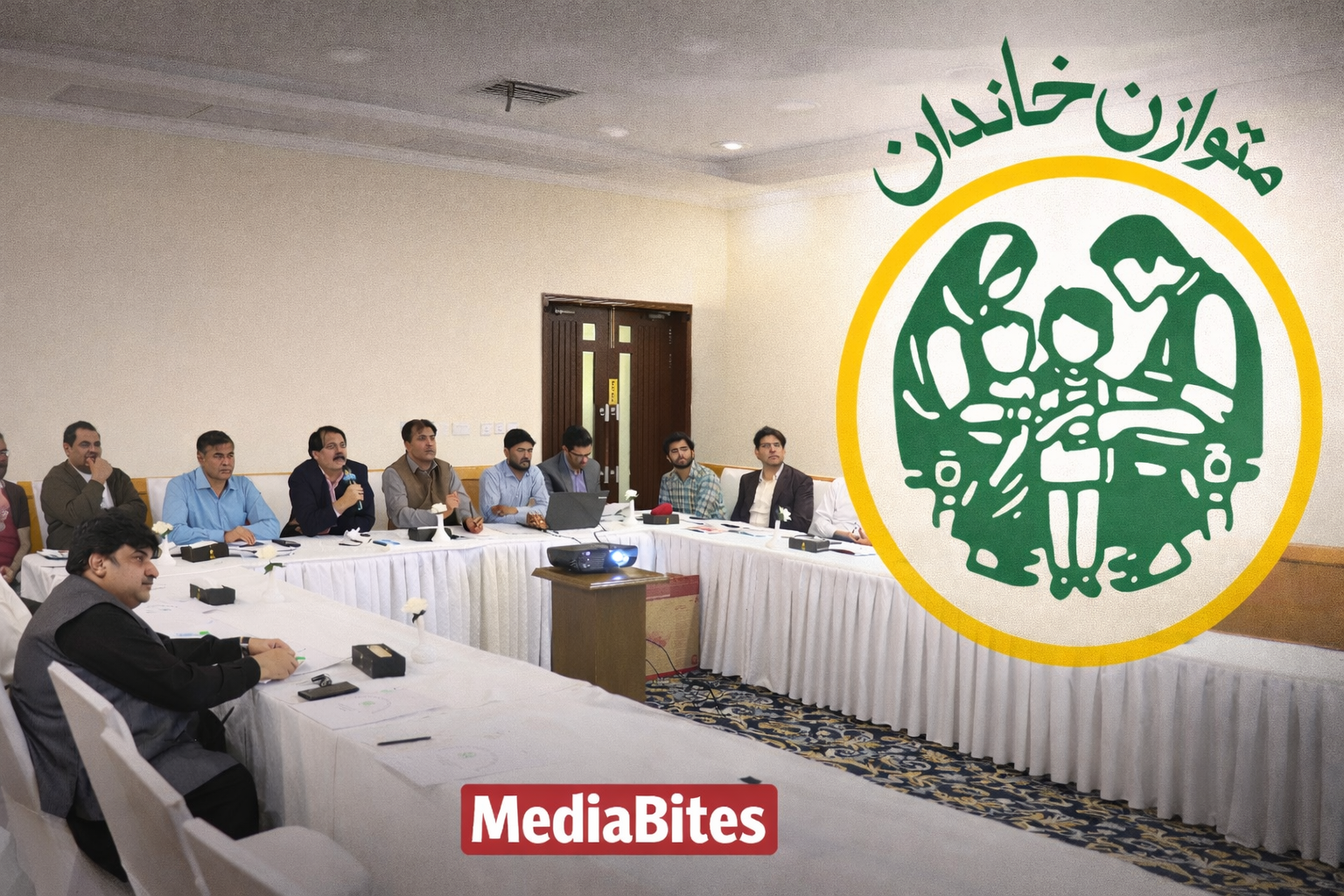
At a Ramazan iftar briefing in Lahore, Punjab’s Population and Family Planning officials warned that Pakistan’s population has crossed 270 million and is growing by 6.4 million people annually, nearly the size of Denmark each year, raising urgent economic and social concerns.
Imran Malik – MediaBites Editorial
LAHORE: What began as a routine Ramazan iftar invitation turned into a sobering national conversation as Punjab’s Population Welfare and Family Planning Department convened journalists and stakeholders at Faletti’s Hotel in Lahore.
Over a sumptuous iftar dinner, officials presented a stark demographic reality that they said demands urgent national attention.
Pakistan’s population has crossed 270 million, making it the world’s fourth most populous country, with an annual growth rate of around 1.6%. If current trends persist, officials warned, the figure could surge to nearly 330 million by 2030.
The economic indicators are equally troubling. Pakistan’s per capita income stands at approximately $1,710, placing it around 185th globally. By comparison, neighboring India ranks 164th with a per capita income of about $3,050. “It’s not a figure we proudly advertise,” one official remarked during the presentation.
Each year, Pakistan adds nearly 6.4 million people — roughly equivalent to adding a city the size of Rawalpindi annually. In global terms, that is almost equal to the entire population of Denmark.
“This is not just growth. This is acceleration,” a department representative emphasized.
Managing the surge
The central question raised during the session was unavoidable: how will the state manage such rapid population expansion?
Officials admitted there is no single comprehensive solution in place. In the current scenario, they described the distribution and improved accessibility of contraceptives as the most practical and immediate policy tool.
However, even that approach faces structural and fiscal challenges.
All contraceptives used in Pakistan are imported and subject to an 18% duty. A senior official shared that a request was made to the prime minister to waive the duty, arguing that low-income families lack the purchasing power to afford family planning products. While the duty was reportedly waived briefly, it was reinstated within three days due to fiscal pressures linked to International Monetary Fund commitments.
The episode highlighted the tension between economic constraints and long-term social planning.
The cultural barrier
Beyond fiscal issues lies a deeper societal challenge: stigma.
Buying and selling contraceptives remains taboo in many communities. Officials acknowledged that fear, embarrassment, and misinformation prevent many couples from accessing family planning services.
Participants stressed the need for religious scholars and media professionals to play a proactive role in reframing the conversation around responsible parenthood and economic sustainability. Without broader societal acceptance, even well-crafted policy measures may fail to achieve meaningful impact.
Voices at the table
Among those who participated in the session were Ch. Muhammad Afzal, Director IEC; Mazzhar Iqbal, DPWO; and Aamir Yousaf, DSM Marie Stopes Society. The media representation included Umar Daraz Gondal (ABN News), Ahsan Raza (Dawn), Sarfraz Ali (Daily Pakistan), Imran Malik (Media Bites), and Salman Ali (OLX).
Their presence underscored the department’s effort to move the debate beyond bureaucratic corridors and into public discourse.
A demographic crossroads
As the evening concluded, the tone remained reflective. Pakistan’s demographic trajectory presents both opportunity and risk. A youthful population can become an economic dividend — but only if supported by adequate education, healthcare, employment opportunities, and gender inclusion.
Otherwise, unchecked growth may intensify pressure on resources, infrastructure, and public finances.
The iftar gathering ended with a shared realization: population policy can no longer remain a peripheral issue discussed behind closed doors. It must become a national priority — before another “Denmark” is added to Pakistan’s population map next year.


68 Comments
I really like reading through a post that can make men and women think. Also, thank you for allowing me to comment!
Pretty! This has been a really wonderful post. Many thanks for providing these details.
naturally like your web site however you need to take a look at the spelling on several of your posts. A number of them are rife with spelling problems and I find it very bothersome to tell the truth on the other hand I will surely come again again.
This was beautiful Admin. Thank you for your reflections.
Great post. I was checking constantly this blog and I’m impressed! Very helpful info specially the last part 🙂 I care for such info much. I was seeking this certain info for a long time. Thank you and good luck.
Undeniably believe that which you stated. Your favorite reason appeared to
be on the web the easiest thing to be aware of.
I say to you, I definitely get annoyed while people consider worries that they plainly do not know about.
You managed to hit the nail upon the top and also defined out the
whole thing without having side-effects , people could take a signal.
Will likely be back to get more. Thanks
I believe what you posted was actually very logical.
However, what about this? suppose you wrote a catchier title?
I ain’t saying your information isn’t solid, but suppose you added a post title that makes people desire more?
I mean From iftar table to hard truths: Punjab officials warn of population surge as Pakistan adds 'a Denmark every year' – Media
Bites is kinda vanilla. You should peek at Yahoo’s front page
and watch how they create post titles to grab people to open the links.
You might try adding a video or a related picture or two
to grab people excited about what you’ve got to say.
Just my opinion, it could make your blog a little bit more interesting.
I visited various blogs except the audio feature for audio songs present at this site is actually superb.
I’m curious to find out what blog platform you happen to be utilizing?
I’m experiencing some small security issues with my latest
website and I’d like to find something more safeguarded.
Do you have any recommendations?
Hi there, You have done a fantastic job. I’ll certainly digg it and personally recommend
to my friends. I’m sure they will be benefited from this
site.
Woah! I’m really enjoying the template/theme of this website.
It’s simple, yet effective. A lot of times it’s challenging to
get that “perfect balance” between user friendliness and
visual appearance. I must say that you’ve done a awesome job
with this. Also, the blog loads very fast for me on Internet explorer.
Exceptional Blog!
fantastic post, very informative. I wonder why the other specialists of this sector don’t notice this.
You must continue your writing. I’m confident, you have a huge readers’ base already!
Way cool! Some extremely valid points! I appreciate you writing this article and the rest of the website is also really
good.
This blog was… how do you say it? Relevant!! Finally
I have found something that helped me. Thanks a lot!
Everything is very open with a very clear explanation of
the issues. It was truly informative. Your site is very useful.
Thanks for sharing!
constantly i used to read smaller articles or reviews which
also clear their motive, and that is also happening with this piece of
writing which I am reading at this time.
I have been exploring for a little bit for any high-quality articles or blog
posts on this sort of area . Exploring in Yahoo I at last stumbled upon this web site.
Studying this info So i’m satisfied to convey that I’ve an incredibly just
right uncanny feeling I discovered exactly what I needed.
I so much for sure will make sure to don?t fail to remember this
website and provides it a glance on a constant basis.
Thế giới ngôn tình Trung Quốc đặc sắc.
Đọc online miễn phí hàng ngàn bộ truyện tình cảm lãng mạn, ngược tâm, sủng ngọt.
Dịch hay, không nhảy quảng cáo.
I have learn several good stuff here. Definitely price bookmarking for
revisiting. I surprise how a lot effort you set to create any such fantastic informative web
site.
Thanks very nice blog!
Hi there, for all time i used to check blog posts here in the early hours in the break
of day, because i love to learn more and more.
three rivers casino
References:
https://www.google.gr/url?q=https://mrocasino.blackcoin.co
Hey There. I discovered your blog the use of msn. That is an extremely neatly written article. I will be sure to bookmark it and return to read more of your useful information. Thank you for the post. I’ll certainly return.
Great beat ! I wish to apprentice whilst you amend your web site, how could i subscribe for a blog web site? The account aided me a applicable deal. I have been tiny bit acquainted of this your broadcast provided bright clear idea
I believe this website holds some rattling excellent information for everyone. “Few friendships would survive if each one knew what his friend says of him behind his back.” by Blaise Pascal.
I love your blog.. very nice colors & theme. Did you create this website yourself or did you hire someone to do it for you? Plz reply as I’m looking to construct my own blog and would like to know where u got this from. thanks a lot
Good write-up, I am regular visitor of one’s blog, maintain up the nice operate, and It is going to be a regular visitor for a long time.
WONDERFUL Post.thanks for share..more wait .. …
Hello, you used to write wonderful, but the last several posts have been kinda boring… I miss your great writings. Past few posts are just a bit out of track! come on!
I like what you guys are up too. Such smart work and reporting! Keep up the superb works guys I have incorporated you guys to my blogroll. I think it’ll improve the value of my website 🙂
I’d have to check with you here. Which isn’t something I normally do! I take pleasure in studying a post that can make folks think. Additionally, thanks for permitting me to comment!
Can I just say what a relief to find someone who actually knows what theyre talking about on the internet. You definitely know how to bring an issue to light and make it important. More people need to read this and understand this side of the story. I cant believe youre not more popular because you definitely have the gift.
Admiring the dedication you put into your site and in depth information you provide. It’s great to come across a blog every once in a while that isn’t the same out of date rehashed material. Great read! I’ve bookmarked your site and I’m adding your RSS feeds to my Google account.
Do you mind if I quote a couple of your posts as long as I provide credit and sources back to your webpage? My blog is in the very same area of interest as yours and my visitors would really benefit from some of the information you provide here. Please let me know if this alright with you. Cheers!
It provided a fresh perspective that I had not considered before reading.
I also appreciate the balanced and neutral tone used throughout the article, which makes it feel trustworthy.
Just wanna input that you have a very decent internet site, I enjoy the style it really stands out.
Saya sering blogging dan saya sangat menghargai konten Anda. Artikel ini benar-benar menarik perhatian saya. Saya akan mem-bookmark situs Anda dan terus memeriksa informasi baru.
I loved as much as you will receive carried out right here. The sketch is tasteful, your authored subject matter stylish. nonetheless, you command get got an shakiness over that you wish be delivering the following. unwell unquestionably come further formerly again as exactly the same nearly a lot often inside case you shield this increase.
Reading this content felt informative rather than promotional, which I really appreciate.
You should take part in a contest for one of the best blogs on the web. I will recommend this site!
I will immediately grab your rss as I can not find your e-mail subscription link or newsletter service. Do you’ve any? Please let me know in order that I could subscribe. Thanks.
It’s actually a nice and helpful piece of info. I’m glad that you shared this useful info with us. Please keep us informed like this. Thanks for sharing.
Thanks for every other informative web site. The place else may I am getting that type of information written in such an ideal approach? I have a undertaking that I’m simply now working on, and I’ve been at the glance out for such info.
This is the appropriate blog for anyone who desires to find out about this topic. You understand so much its nearly hard to argue with you (not that I really would need…HaHa). You undoubtedly put a new spin on a topic thats been written about for years. Great stuff, just great!
As a Newbie, I am always exploring online for articles that can aid me. Thank you
I see something really interesting about your weblog so I bookmarked.
Hello! Quick question that’s entirely off topic. Do you know how to make your site mobile friendly? My web site looks weird when viewing from my iphone. I’m trying to find a theme or plugin that might be able to correct this problem. If you have any recommendations, please share. With thanks!
Hmm it looks like your blog ate my first comment (it was super long) so I guess I’ll just sum it up what I had written and say, I’m thoroughly enjoying your blog. I too am an aspiring blog writer but I’m still new to everything. Do you have any tips and hints for beginner blog writers? I’d certainly appreciate it.
I cling on to listening to the news update speak about receiving free online grant applications so I have been looking around for the finest site to get one. Could you advise me please, where could i acquire some?
so much great info on here, :D.
There is apparently a lot to realize about this. I suppose you made various good points in features also.
Precisely what I was searching for, thankyou for posting.
Aw, this was a really nice post. In concept I wish to put in writing like this moreover – taking time and actual effort to make an excellent article… however what can I say… I procrastinate alot and not at all appear to get something done.
I am happy that I observed this web site, precisely the right information that I was searching for! .
Great beat ! I would like to apprentice while you amend your website, how could i subscribe for a blog web site? The account helped me a acceptable deal. I had been tiny bit acquainted of this your broadcast provided vivid clear idea
I like this internet site because so much useful stuff on here :D.
Thank you for the good writeup. It if truth be told used to be a leisure account it. Look complicated to far added agreeable from you! However, how could we keep in touch?
Well I definitely enjoyed reading it. This tip procured by you is very useful for accurate planning.
But a smiling visitor here to share the love (:, btw great style. “Competition is a painful thing, but it produces great results.” by Jerry Flint.
I together with my pals ended up examining the nice tactics from your site and then at once I got an awful feeling I never expressed respect to the website owner for them. These young men appeared to be consequently very interested to see them and have undoubtedly been making the most of them. Many thanks for genuinely considerably accommodating and then for picking out certain remarkable subject areas most people are really eager to know about. My personal honest regret for not expressing appreciation to sooner.
fantastic publish, very informative. I’m wondering why the opposite experts of this sector don’t realize this. You should continue your writing. I’m sure, you have a huge readers’ base already!
Hello, you used to write great, but the last several posts have been kinda boring?K I miss your great writings. Past several posts are just a bit out of track! come on!
I think you have mentioned some very interesting details , regards for the post.
Good website! I really love how it is simple on my eyes and the data are well written. I am wondering how I could be notified whenever a new post has been made. I’ve subscribed to your RSS feed which must do the trick! Have a nice day!
Hey there! This post could not be written any better! Reading this post reminds me of my good old room mate! He always kept talking about this. I will forward this write-up to him. Fairly certain he will have a good read. Thanks for sharing!
I’m so happy to read this. This is the kind of manual that needs to be given and not the accidental misinformation that’s at the other blogs. Appreciate your sharing this greatest doc.
Hey there, I think your blog might be having browser compatibility issues. When I look at your website in Firefox, it looks fine but when opening in Internet Explorer, it has some overlapping. I just wanted to give you a quick heads up! Other then that, amazing blog!