


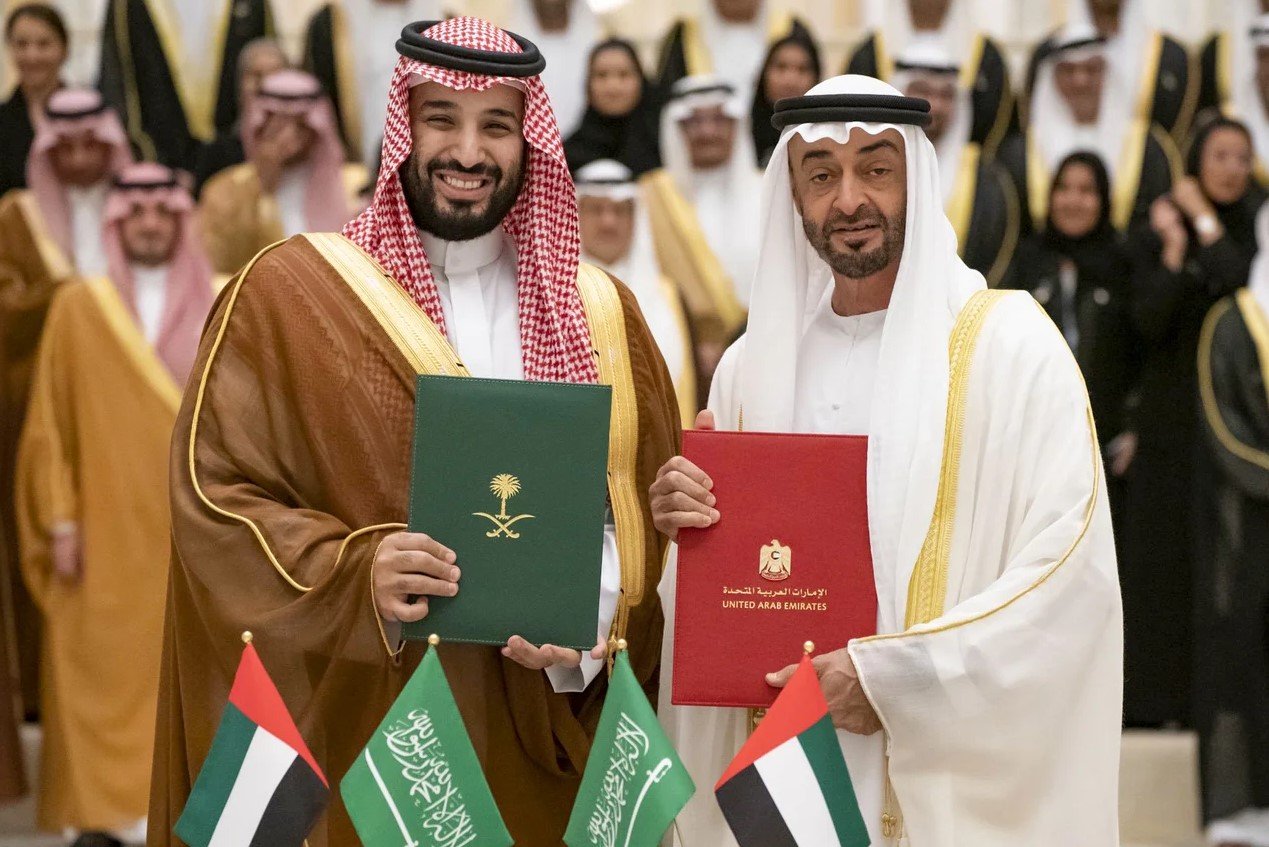
Saudi-UAE relations faced a rare strain after reports suggested misinformation triggered military moves, prompting urgent diplomatic outreach to prevent further regional escalation.
WEBDESK – MediaBites – January 7, 2026
Report suggests Abu Dhabi mobilized allied forces after being misinformed about a Washington meeting, prompting rare friction between regional partners
Tensions between Saudi Arabia and the United Arab Emirates may have been triggered by false information, rather than a deliberate policy shift, according to a report by CNN.
Citing informed sources, CNN reported that Riyadh believes Abu Dhabi mobilized forces linked to Yemen’s Southern Transitional Council (STC) in provinces bordering Saudi Arabia after being incorrectly told that Saudi Crown Prince Mohammed bin Salman had asked US President Donald Trump to impose sanctions on the UAE during a White House visit in November.
According to the report, Saudi officials say no such request was made, and Riyadh has since reached out to Abu Dhabi to clarify the matter. Public statements released at the time by the White House, the Saudi leadership, and US media contained no reference to the UAE, despite President Trump announcing US involvement in diplomatic efforts related to Sudan at the Crown Prince’s request.
The alleged misunderstanding appears to have escalated quickly. On December 30, Saudi Arabia carried out airstrikes on what it described as an uncoordinated UAE military shipment entering Yemen. Riyadh also backed the Yemeni government’s call for UAE forces to withdraw — a move Abu Dhabi later said it was already implementing voluntarily, while reaffirming its commitment to Saudi Arabia’s security and regional stability.
CNN further reported that additional Saudi strikes against STC positions could remain an option if separatist forces fail to withdraw. After the UAE reduced its military presence, the STC advanced toward secessionist moves but later lost territory under pressure from Saudi-backed forces, prompting the group to signal openness to dialogue.
Beyond Yemen, the report suggests Saudi concerns extend to UAE policies in Sudan, the Horn of Africa, and Syria, where Riyadh is reportedly wary of perceived support for separatist or destabilizing actors. These concerns align with recent Saudi public positions opposing forced territorial fragmentation in the region.
While neither government has publicly confirmed the details outlined by CNN, the report points to miscommunication — not confrontation — as the possible spark behind one of the most sensitive episodes in recent Saudi-UAE relations.
Courtesy: Arab News

