


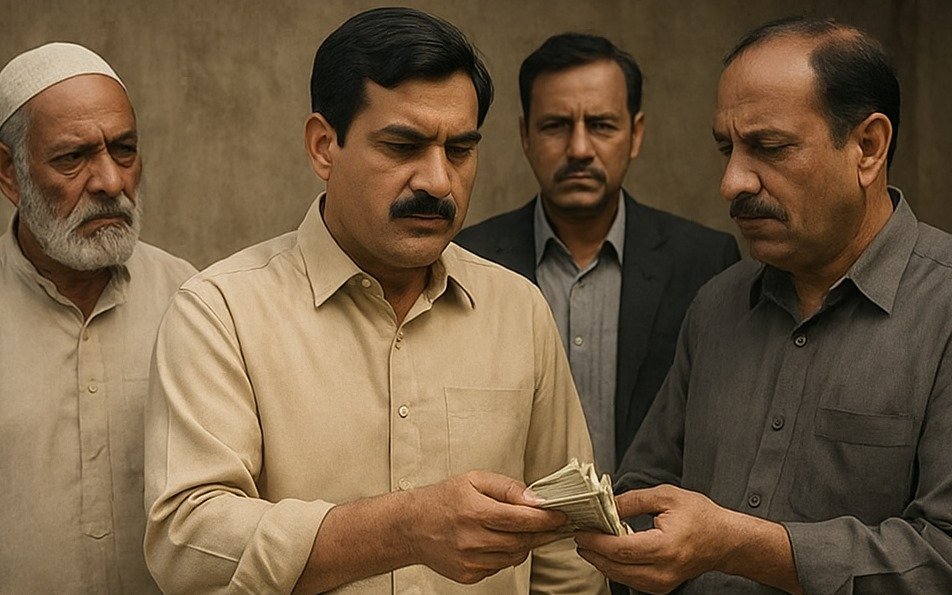
The National Corruption Perception Survey (NCPS) 2025 has once again highlighted how deeply corruption impacts daily life in Pakistan. Conducted by Transparency International (TI) Pakistan, the survey shows how citizens view public institutions, service delivery, and accountability across the country.
A Bigger, More Inclusive National Survey
The 2025 survey was carried out between September 22 and 29 and included 4,000 respondents from 20 districts across all four provinces. This is more comprehensive than the 2023 survey, which had 1,600 participants from 16 districts.
Why the NCPS Matters
The report doesn’t measure corruption directly. Instead, it captures how people experience and perceive corruption in day-to-day life. These perceptions are important because they reveal where reform is most urgently needed and which institutions the public trusts—or distrusts.
What Citizens Said About Corruption in Pakistan
One of the most surprising findings is that 66% of Pakistanis reported not paying any bribe in the past year. This suggests that while corruption exists, it is not a uniform experience for all citizens.
Public Trust and Governance
The survey shows that many Pakistanis acknowledge recent government actions. Around six in ten respondents agreed—fully or partially—that the government helped stabilize the economy by:
-
Implementing the IMF programme
-
Achieving Pakistan’s exit from the FATF Grey List
This reflects a recognition of difficult economic decisions made at the national level.
Institutions Showing Improvement
The NCPS 2025 notes that some institutions have shown progress. Public perception of the police improved by 6%, a result TI Pakistan attributes to better behaviour and improved service delivery.
Other sectors that received more positive ratings include:
-
Local government
-
Education
-
Land and property services
-
Taxation departments
Citizens Want Stronger Reforms
While some improvements were noted, the public still wants major reforms. People demand:
-
Stronger accountability across all institutions
-
Limited discretionary powers for officials
-
Better Right to Information (RTI) laws
-
Transparent governance
Anti-Corruption Institutions Under Public Pressure
A significant 78% of citizens want stronger oversight of anti-corruption bodies like the National Accountability Bureau (NAB) and the Federal Investigation Agency (FIA). Instead of weakening these institutions, citizens want them to become more transparent, answerable, and internally reformed.
Public Concerns About Politics and Spending
More than 80% of respondents want political party financing to be banned or tightly regulated. Meanwhile, 55% want government ads to remove political leaders’ names and photos, highlighting concerns about political influence and misuse of public funds.
Health Sector Reforms Urgently Needed
The survey also identifies specific problems in the health sector. Citizens want:
-
Tighter control on pharma commissions
-
Clear rules for doctors’ private practice
-
Stronger, more active regulatory bodies
-
Better complaint-handling mechanisms
Citizens Are Willing to Report Corruption—If Protected
One key finding is that 42% of people would report corruption if strong whistleblower protections existed. This shows that citizens want to participate in anti-corruption efforts but need anonymity, security, and reward systems to feel safe doing so.
A Roadmap for Reform
The NCPS 2025 offers much more than statistics. It provides a nationwide roadmap for improving trust, strengthening institutions, and making governance more transparent.
Pakistanis are asking not just for accountability—but for a system where fairness, integrity, and transparency become the norm.
Read More: Justice for Sale? IHC Judge’s Son Freed After Fatal Accident Compromise


2 Comments
References:
Warrior cats medicine cat herbs
References:
https://heywhatsgoodnow.com/@adriannekirkli
References:
Rich piana on steroids
References:
https://117.159.26.136:5300/annbastyan5611