


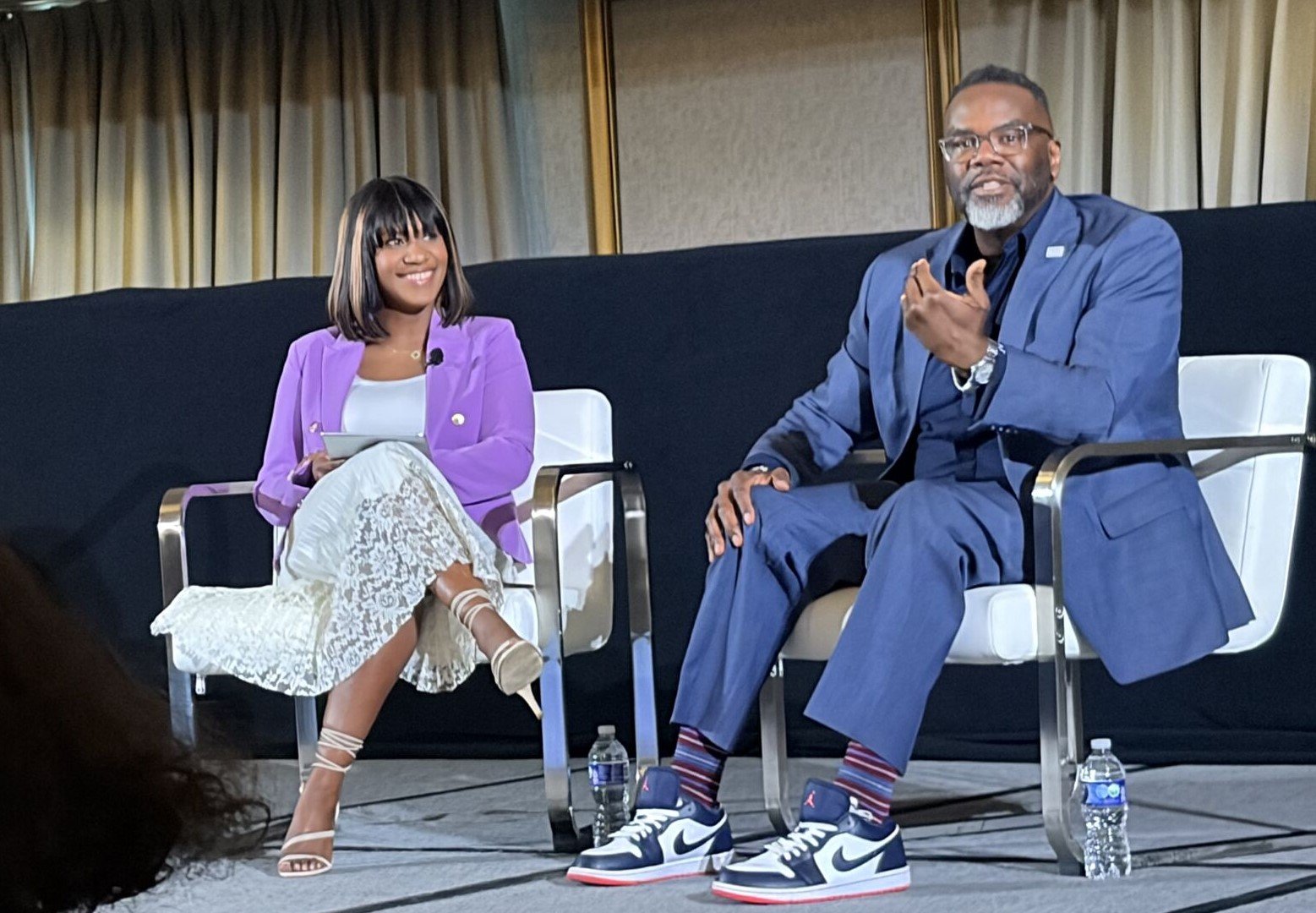
Chicago Mayor Brandon Johnson called for stronger protections for press freedom and an end to wage discrimination against women of color, as he addressed journalists at the ONA26 conference in Chicago.
Imran Malik – MediaBites – Chicago
CHICAGO — A powerful mix of journalism, advocacy, AI, and accountability defined this year’s ONA26 conference, where media leaders and policymakers gathered to confront growing challenges to press freedom and equality.
In a widely attended session, Mayor Brandon Johnson delivered a message that resonated strongly with journalists: a free press is essential to democracy, and governments must remain answerable to those who ask questions.
“To ask questions is the basic right of every journalist, and governments must answer,” Johnson said, underscoring the critical role of accountability in democratic societies.
Press freedom at the center
The mayor’s remarks came during a featured discussion with award-winning journalist and news anchor Sasha-Ann Simons, who later also moderated a panel alongside prominent journalists Karen Attiah, Nick Valencia, Versha Sharma, and media attorney Gunita Singh.
The panel explored mounting pressures on journalists — from political rhetoric to legal threats — and emphasized that a strong, independent media remains the backbone of any functioning democracy.
“Only strong media is the sign of a strong democracy,” Johnson said, drawing applause from the audience of reporters, editors, and media professionals.
Panelists echoed that sentiment, stressing that press freedom is not just a principle but a necessity in times of global uncertainty, misinformation, and conflict.
Call to end wage discrimination
Beyond press freedom, Johnson also highlighted social justice issues, calling for an end to wage discrimination against Black and brown women.
He emphasized that economic inequality remains a persistent challenge and urged institutions — including media organizations — to lead by example in ensuring fair pay and equal opportunities.
The issue struck a chord with many attendees, particularly as newsrooms globally continue to grapple with diversity, equity, and inclusion challenges.
‘A space for courage and renewal’
Attendees described the 90-minute session as both candid and energizing, with panelists offering unfiltered insights into the realities of modern journalism.
Discussions touched on the need for courage in reporting, legal protections for journalists, and the importance of standing firm in the face of pressure.
Many participants said they left the session feeling “rejuvenated and courageous,” inspired to continue their work despite growing challenges.
Chicago as a hub for media dialogue
Hosting ONA26 further cemented Chicago’s position as a key center for media dialogue and innovation. The conference brought together journalists from across the United States and the World, fostering collaboration and exchange of ideas at a time when the industry is undergoing rapid transformation.
As the event concluded, a clear message emerged: defending the right to ask questions, protecting press freedom, the impact of AI, and ensuring equality are not separate battles — but interconnected pillars of a healthy, democratic society.
With voices from across the media spectrum aligning on these issues, ONA26 served as both a wake-up call and a rallying point for the future of journalism.

