


By Imran Malik | Chicago
CHICAGO, April 3 (MediaBites & Act Global Media Orlando) —
Journalists gather in Chicago for ONA26 amid global tensions, as sessions on safety and AI highlight resilience, collaboration, and the evolving challenges facing modern newsrooms worldwide.
The annual conference of the Online News Association — ONA26 — unfolded this year in Chicago, famously known as the Windy City, drawing journalists from across the globe despite travel disruptions linked to the ongoing Iran conflict.
For this writer, the journey itself was a challenge. Traveling from Lahore via Abu Dhabi, the trip stretched over 15 hours, reflecting broader uncertainty affecting global travel schedules. Compared to previous conferences — particularly Atlanta — the turnout this year appeared relatively subdued, possibly due to geopolitical tensions and the proximity to the October 2025 gathering.
One noticeable difference was the reduced international presence. In earlier editions, journalists from Norway, Nepal, Denmark, and India brought vibrant diversity to discussions. This time, that global mix seemed thinner. In fact, I may have been among the very few attendees traveling from Pakistan under such challenging circumstances — underscoring the importance of global collaboration in journalism.
Arrival in Chicago came with its own hurdles. At immigration, unfamiliarity with ONA led to a brief but telling exchange, eventually resolved after clarifying the significance of the event and its venue near Michigan Avenue. After some rest, the city’s iconic windy charm was best experienced alongside fellow attendee Asim Iftikhar, who had traveled from Orlando.
The conference formally began early Monday morning, with registration at 8 a.m. Despite jet lag, the anticipation of meaningful engagement kept energy levels high. Familiar faces from previous ONA events brought a sense of continuity, including conversations with journalists working on community-focused platforms, such as an Uzbek website serving Afghan audiences.
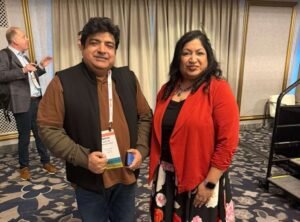
One of the most impactful sessions attended was “Safety Through Solidarity: Chicago’s Approach to High-Risk Reporting,” held in Salon A1. The discussion struck an emotional chord, particularly when April Alonso shared her field experiences, at times struggling to hold back tears. Maira Khwaja offered thoughtful insights into community-centered reporting, while Lolly Bowean moderated the session with depth and clarity. The session was supported by the International Women’s Media Foundation and the Ford Foundation.
Meanwhile, Asim Iftikhar attended a parallel session, “Making AI Real: What Leaders Need to Know Before Scaling,” led by experts from Reuters. The session focused on practical applications of artificial intelligence in newsrooms — a topic increasingly central to the future of journalism.
The momentum at ONA26 continued with a series of insightful sessions focused on one of journalism’s biggest modern challenges — reconnecting with audiences amid information overload.
A key session titled “Bringing Readers Back: Real-World Tactics for Combatting News Fatigue” featured Jennifer Kho and Angela Pacienza from The Globe and Mail. The discussion highlighted how audiences are drifting away due to the overwhelming volume of news, and how curated, meaningful journalism can rebuild trust and engagement. The Q&A session added further depth, offering practical takeaways.
Another highly anticipated session was hosted by Reddit, where Gabriel Z. Sands explained the platform’s relevance, purpose, and growing importance for journalists seeking community engagement and distribution.
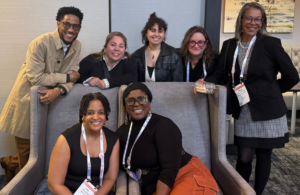
A session on “How to Talk to Funders” drew attention but fell short of expectations, lacking the practical clarity many attendees had hoped for.
The lunch session, sponsored by WordPress, featured Aloan Smodic and Tyson Evans from ProPublica and focused on responsible AI adoption and its ethical implications for modern journalism.
One of the most electrifying sessions of the day took place at 2:30 p.m. in a packed hall. Titled “AI for Investigative Journalism,” it was moderated by Rubina Fillion of The New York Times. Panelists included Dylan Freedman (NYT), Garance Burke of Associated Press, and Sisi Wei from CalMatters and The Markup. The session stood out as a high-energy, interactive discussion on leveraging AI while preserving journalistic integrity.
The final session in the Grand Ballroom — “Defunded, Not Defeated: Reimagining the Public Media Model” — featured Thomas Evans from National Public Radio, Tim Isgitt of Public Media Company, and Kimbriell Kelly from Chicago Public Media. The discussion addressed layoffs, reporting challenges in the era of Donald Trump, and the urgent need for sustainable public media models.
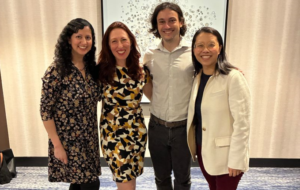
The day concluded with a welcome address by ONA CEO and Executive Director Niketa Patel, who greeted journalists from across the United States and around the world.
Alongside sessions, Salon D hosted various meetups, fostering networking and collaboration, while Midway featured stalls from various organizations and partners, adding to the vibrant conference atmosphere.
The evening wrapped up with a welcome reception sponsored by Press Forward, the Driehaus Foundation, and the Joyce Foundation — offering attendees an opportunity to connect and reflect after a packed first day.
To be continued…

