


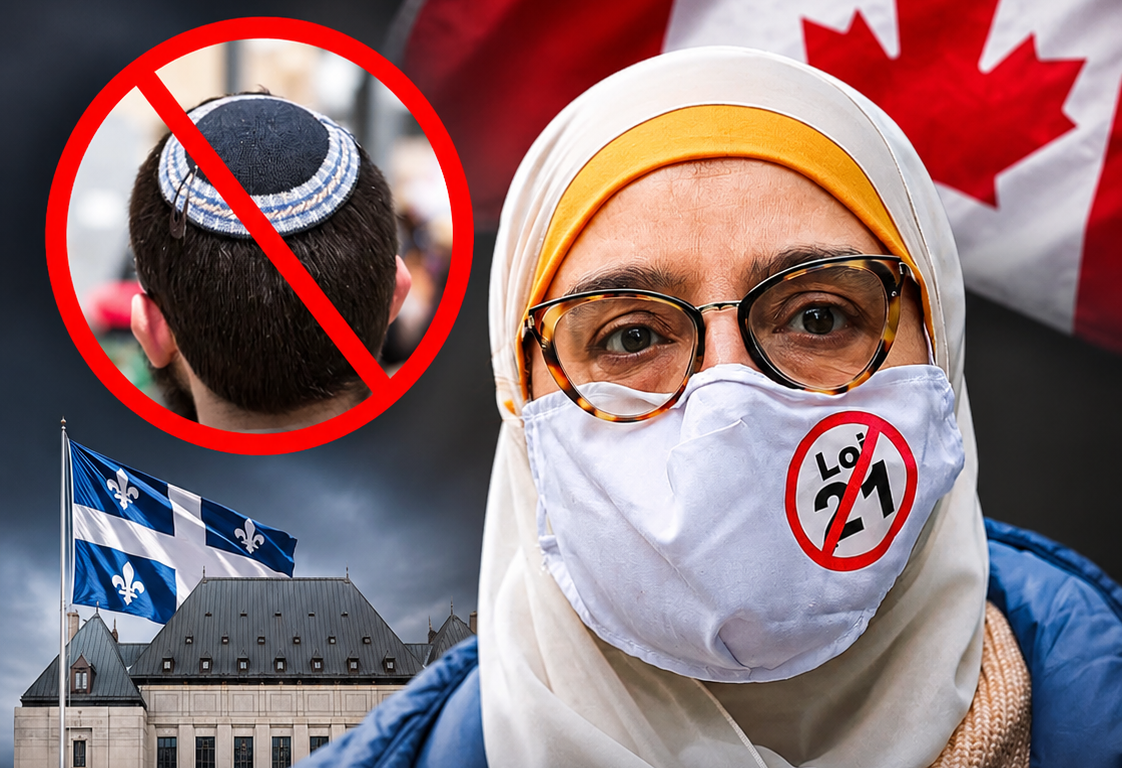

The Supreme Court of Canada has upheld Quebec’s Bill 21, which bars teachers, police officers and other public workers from wearing hijabs, turbans and kippahs while on duty.
WEBDESK – MEDIABITES

OTTAWA: The Supreme Court of Canada has upheld Quebec’s contested secularism law. The ruling is a major win for the provincial government and a blow to the teachers, rights groups and religious minorities who have fought the law in court for more than 6 years.
What the law does
Quebec adopted Bill 21 in June 2019 as the Act respecting the laicity of the State. It bars some public employees, including teachers, police officers and government lawyers, from wearing religious symbols such as hijabs, turbans and kippahs at work. It also requires some officials and service providers to keep their faces uncovered.
Quebec protected the law from most constitutional challenges by using the notwithstanding clause in Section 33 of the Canadian Charter of Rights and Freedoms. The clause lets provincial legislatures override certain fundamental rights for a limited time.
Who challenged it
Teachers, civil liberties organizations, religious groups, and the English Montreal School Board challenged the law. They argued it violated constitutional freedoms and exceeded provincial authority. Roya News reported that the court largely sided with Quebec’s power to pass the law. The ruling followed a 4-day hearing in March 2026 that involved a record 51 interveners.
“Deeply disappointing”
Amira Elghawaby condemned the ruling in a statement on X. She is Canada’s former Special Representative on Combating Islamophobia and founder of the Muslim Communities Research Observatory.
“The promise of Canada’s Charter of Rights and Freedoms has been broken, and could be broken again and again,” she said. She called the decision “deeply disappointing” and said it has “devastating implications for civil liberties across Canada.”
She warned that the ruling would immediately affect the lives and livelihoods of Quebecers, especially Muslim women who wear the hijab, as well as Sikhs, Jews and Christians. She urged Canadians to “reject cruel and dehumanizing laws.”
What comes next
The decision is expected to shape how courts and legislatures across Canada deal with the notwithstanding clause. The clause has drawn growing national attention as other provinces, including Saskatchewan, have also used Section 33.
With input from Roya News

