


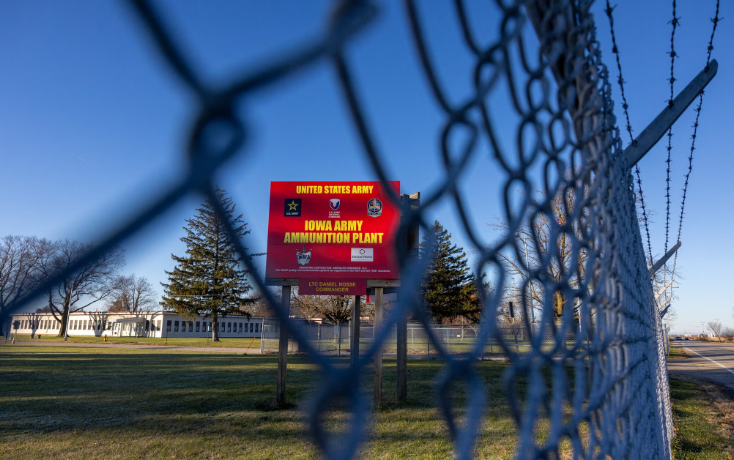

The US Army will detonate nearly 5 tons of unstable lead azide in Iowa, with a forecast map showing toxic lead dust drifting nearly 100 miles into Missouri.
WEBDESK – MEDIABITES

The US Army has released a map showing where toxic lead dust could drift after its planned detonation at the Iowa Army Ammunition Plant in Middletown on Wednesday. The blast will destroy the nation’s entire stockpile of lead azide.
The Army plans to destroy nearly 5 tons of the degraded explosive, a bomb-making chemical, at 10 a.m. ET. Officials say the chemical has partly crystallized and is too unstable to move. They also say colder weather raises the risk that it could explode on its own.
Court clears the way
The blast was first scheduled for Nov. 20 but was delayed by a legal challenge and public concern. On Monday, a federal appeals court allowed it to go ahead after environmental groups sued to stop it.
Acting Army Secretary Adam Telle said a controlled detonation was “the option that posed the lowest risk to the public.”
Plume heading into Missouri
The Army’s forecast shows the dust moving southwest into northern Missouri over about 8 hours, ending up north of Columbia. The Army says the forecast assumes the blast takes place inside a bunker with extra measures to contain the dust. The map doesn’t show how much lead will be in the air or how much will settle on the ground.
FEMA is supporting a recommended relocation of residents in a 5-mile zone southwest of the plant. Evacuations were not mandatory as of Tuesday. A cellphone alert urged people within 20 miles to stay indoors with their windows closed.
Scientists divided on risks
The CDC says no amount of lead exposure is safe. A federal health official said pregnant women, children and people with chronic illness should leave the area. University of Iowa researchers say major questions remain unanswered, including how much lead will be released and where it will land. Other experts say crops and groundwater are unlikely to be contaminated. They say people who rely on surface water face the greatest risk.
The Army says sand-filled barriers, a water wall, gel blocks and foam will limit how much lead escapes, but it gave no estimate of the reduction. Army, EPA and university monitors will measure where the lead lands. Lab results are expected within 3 to 5 weeks.
Based on reporting by Jasmine Andersson, Yahoo News.

