


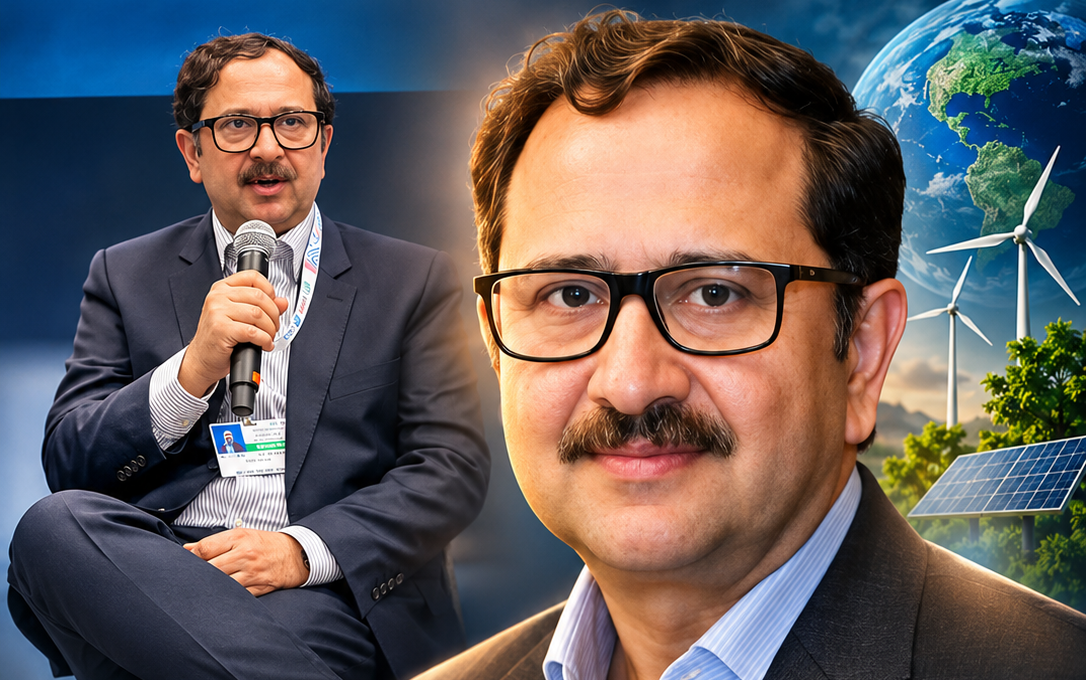
From designing the UN’s carbon market accreditation system to leading Pakistan’s disaster risk fund, Bilal Anwar has spent over 25 years shaping how climate finance reaches developing nations.
Imran Malik – MediaBites
Few Pakistanis have shaped the rules of global climate action as directly as Bilal Anwar. For more than 25 years, the climate policy and finance adviser has worked at the center of the UN climate regime, in international carbon verification, in Commonwealth climate finance, and as head of Pakistan’s disaster risk fund.
Building the carbon market’s foundations
At the UNFCCC Secretariat in Bonn from 2000 to 2010, Anwar led the Clean Development Mechanism (CDM) Accreditation Unit. He designed and implemented the CDM accreditation system, which determined which bodies could verify emission reduction projects under the Kyoto Protocol. He also advised the CDM Executive Board on substantive, legal and procedural issues and supported intergovernmental negotiations at COP and CMP sessions.
Mastering greenhouse gas standards
Anwar then took that knowledge to the private sector. At ERM Certification and Verification Services in London, he built the company’s CDM and greenhouse gas assurance business and designed a global quality management system for its GHG services. At Perry Johnson Registrars Carbon Emission Services in Michigan, he managed sustainability services across global greenhouse gas schemes. His specialties include ISO GHG standards, carbon footprinting and corporate carbon strategies.
Unlocking climate finance
From 2016 to 2022, he served as operational head of the Commonwealth Climate Finance Access Hub in Mauritius, which helps member states access international climate funding.
Financing resilience at home
As chief executive officer of Pakistan’s National Disaster Risk Management Fund from 2022 to 2026, he led a government-owned financial institution that builds resilience against climate-induced disasters. His time there included the 2022 floods.
A Global South perspective
Anwar holds a master’s degree in Development Economics and International Development from the University of Manchester. He now serves on the Advisory Board of the Climate Institute in Washington, where he gives strategic and technical advice to developing nations.
His career shows that the Global South doesn’t only receive climate finance. It can help write the rules.

