


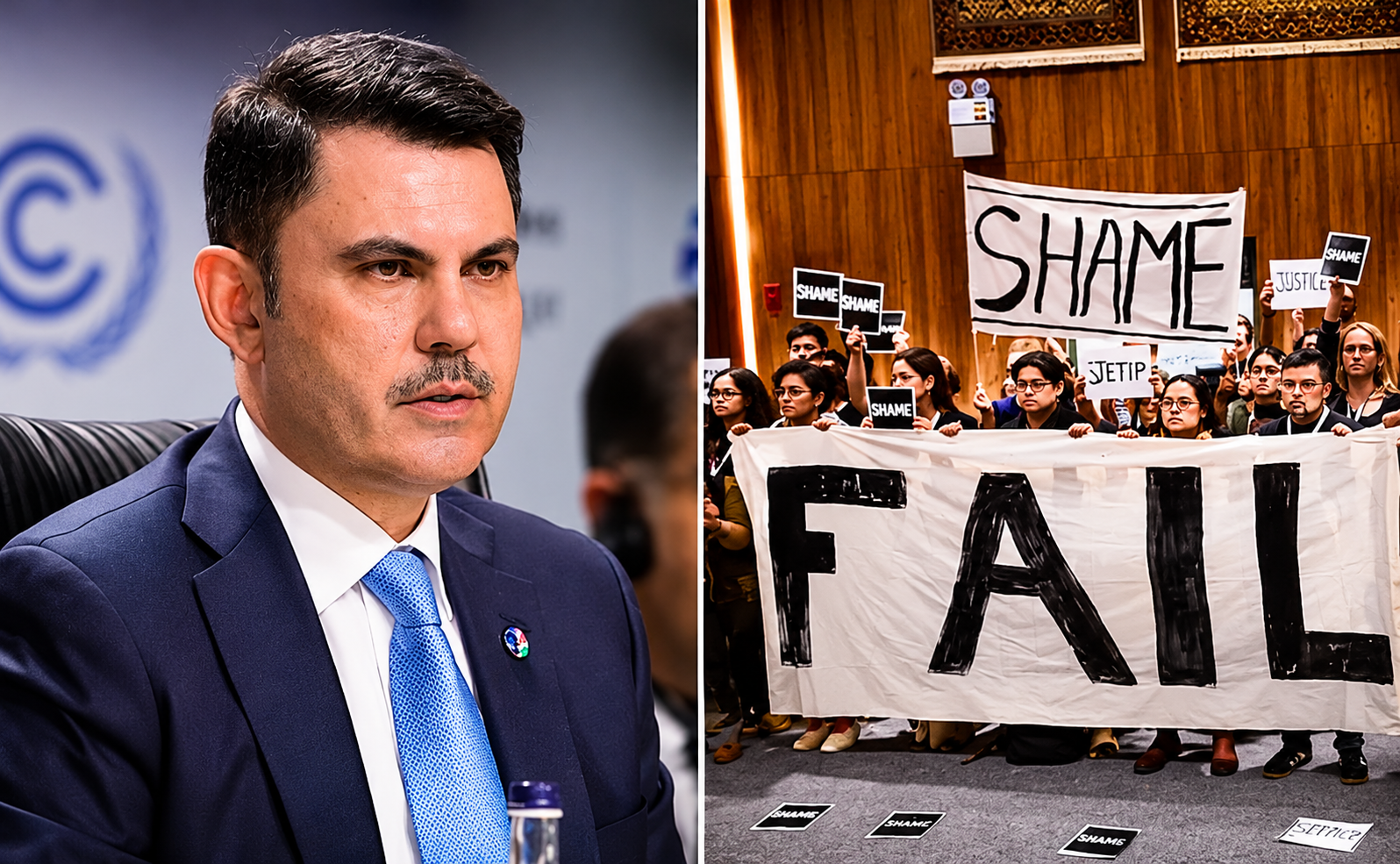
COP31 talks in Antalya collapsed after the EU and others rejected a deal omitting fossil fuels, with negotiators accusing Saudi Arabia of outsized influence over the final text.
WEBDESK – MEDIABITES
ANTALYA, Turkey: UN climate talks collapsed on Sunday after the European Union and other countries rejected a final deal proposed by COP31 hosts Turkey and Australia. They said it was too weak to advance the fight against global warming, Reuters reported.
Negotiations ran more than 2 weeks and spilled 2 days into overtime, making COP31 the longest climate summit on record. It is the first time since Copenhagen in 2009 that UN climate talks have failed to produce a deal adopted by all.
Saudi influence under fire
Negotiators from Europe, small island states, Latin America, Asia and Africa told Reuters that Saudi Arabia had regular access to the Turkish and Australian presidents, which gave it disproportionate influence. Some smaller delegations said their own meetings with the presidents were repeatedly canceled.
The same negotiators said Riyadh led the resistance to any language on reducing reliance on fossil fuels, and that this was the main reason no political agreement was reached. Ireland’s climate minister Darragh O’Brien, speaking for the EU, said the summit was “hijacked by some oil states.”
The Turkish presidency said no country or group received preferential treatment. Saudi Arabia did not immediately comment.
Saudi Arabia and other OPEC members argue that fossil fuels must stay in the global energy mix for the foreseeable future. Earlier COP texts, in Glasgow in 2021 and Dubai in 2023, explicitly mentioned fossil fuels.
Several negotiators said Riyadh’s hand was strengthened by limited US engagement and by the absence of the close US-China coordination that helped broker past compromises.
130 countries pushed back
Germany convened meetings with small island states and the High Ambition Coalition. Around 130 countries backed a letter insisting that any deal must mention transitioning away from fossil fuels.
As talks ran into Sunday, Saudi, Chinese and Russian officials frequently visited the presidency’s offices while other groups struggled to get meetings, delegates said. The final revised text largely ignored the coalition’s letter and kept strong language promoting carbon capture.
“It seems like we are negotiating with the Saudis,” Tuvalu’s climate minister Maina Talia said.
Finance gap angers poorer nations
Developing countries said the deal fell short on climate finance. It called for tripling funding to help them adapt but set no baseline. A Turkish goal to raise electricity’s share of global final energy use to 35% by 2035, from about 23% now, also drew criticism for potentially shifting costs onto poorer nations.
Hosts and UN voice frustration
Turkey’s conference president Murat Kurum told the closing session that nothing more could be done and declined to put forward new text. Australia’s Chris Bowen called the outcome “very disappointing.” UN Secretary-General Antonio Guterres said he shared the frustration of those who expected governments to rise to the challenge.
What happens next
The failure does not cancel commitments made at earlier UN conferences. The summit came weeks after the UN environment body confirmed that global temperatures are set to overshoot the 1.5 C limit.
With input from Reuters

