


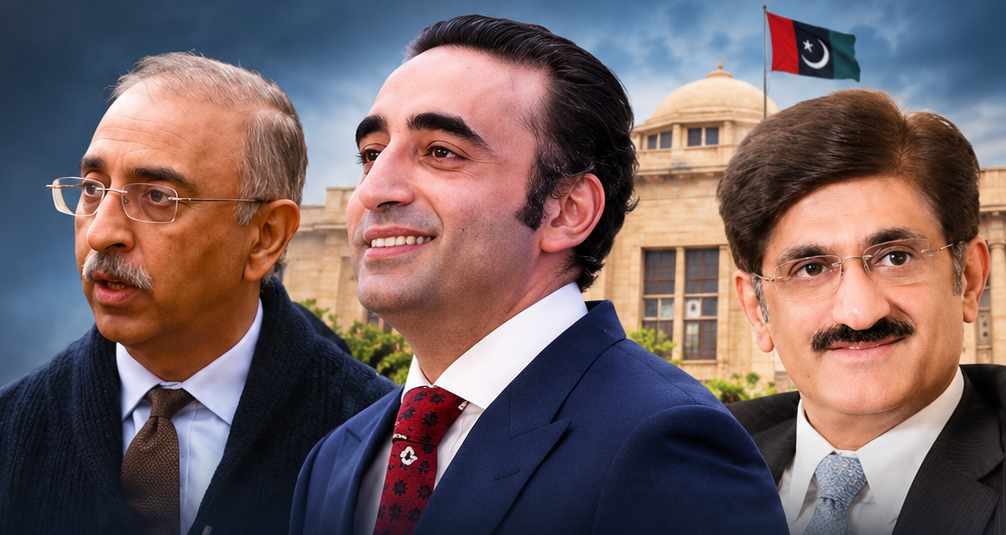
Analyst Farrukh Saleem says Sindh received Rs12.84 trillion in federal transfers during 18 years of PPP rule, yet literacy rose 2 points and government schools fell by 8,147.
WEBDESK – MEDIABITES
KARACHI: After 18 years, 4 election wins and Rs12.84 trillion in federal transfers, the Pakistan Peoples Party (PPP) faces a pointed question: where did Sindh’s money go?
In his latest column in The News, analyst Farrukh Saleem details the PPP’s record in the province it has governed continuously for 18 years and 7 months.
The money that arrived
According to Saleem, cumulative federal transfers to Sindh over this period reached Rs12.84 trillion. That total excludes the funds the province raised or borrowed on its own.
He estimates the amount comes to about Rs428 billion per district, or Rs1.3 million for every household in Sindh. He says it would have been enough to build 114,600 schools, 142,700 health clinics or 183,400 km of new roads.
What changed on the ground
The numbers Saleem presents tell a different story:
- Literacy rose from 56% in 2007-08 to 58% 17 years later, a gain of just 2 percentage points
- 39% of Sindh’s children are out of school, rising to 44% among girls
- Government schools fell from 49,125 in 2008 to 40,978 in 2024, a drop of 8,147, or 16.6%
- Hospitals grew from 88 to 101 between 2010 and 2023, while Basic Health Units stayed stuck at 772
- Only 22% of households rely on piped water as their main drinking source, and one-third have no drainage
Some progress noted
Saleem acknowledges some gains. Full immunization rose from 50% in 2018-19 to 66% in 2024-25, and households without toilets fell from 12% to 7%.
3 questions for the PPP
Saleem asks the party 3 questions. How many functioning schools, staffed clinics and usable roads did people actually receive? How much provincial money reached Sindh’s 30 districts? And beyond the treasury, what reached the household?
“The question is what changed for the people of Sindh,” he writes.
The PPP had not responded to the column at the time of publication.
Source: Farrukh Saleem, The News

