


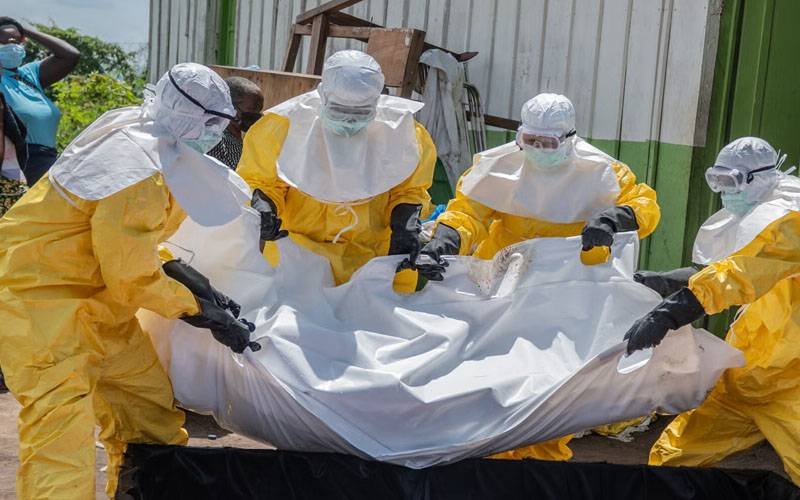
The Ebola outbreak in the Democratic Republic of the Congo has taken a serious turn, with the number of reported infections reaching 11,042 and the death toll rising to 5,387.
According to international news agency Reuters, the outbreak is being caused by the rare Bundibugyo strain of the Ebola virus, for which no approved vaccine or treatment is currently available.
The outbreak has spread to eight of the country’s 26 provinces, while cases have also been reported in other parts of Eastern, Central and Western Africa.
Efforts to contain the outbreak are facing significant challenges due to several factors, including armed conflicts, a shortage of medical facilities, difficult travel routes and a lack of trust among local communities.
These challenges are affecting the ability of health authorities and response teams to reach affected populations, monitor the spread of the virus and provide necessary medical assistance.
The situation has raised serious concerns as the outbreak continues to affect multiple regions. The absence of an approved vaccine or treatment for the Bundibugyo strain has further complicated efforts to control the disease and prevent additional infections and deaths.
The World Health Organization (WHO), along with other relevant organizations, is monitoring the situation and taking measures to contain the outbreak and prevent its further spread.

