


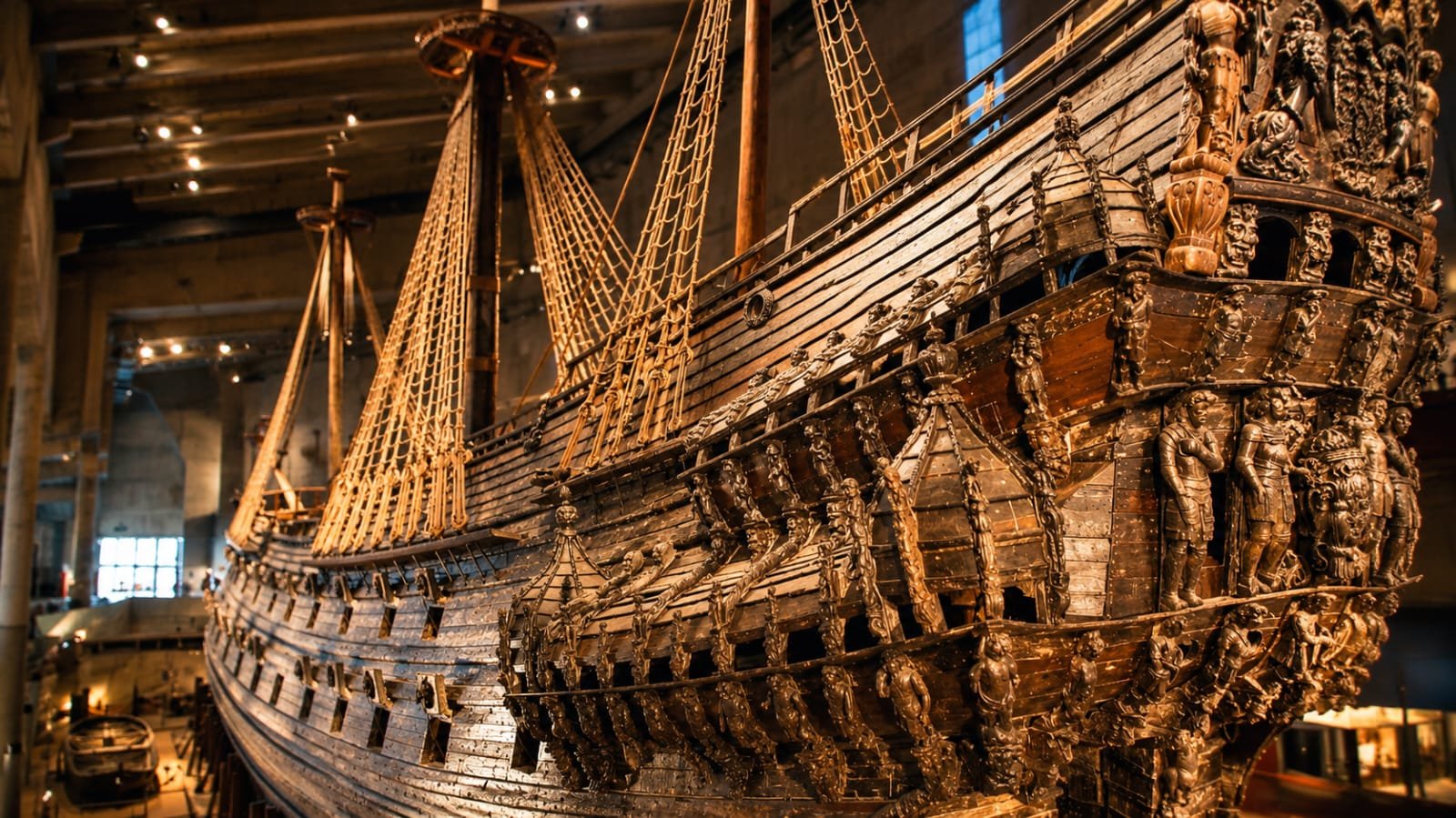
Scientists in Stockholm are using advanced technology and conservation methods to protect the Vasa, a Swedish warship that sank in 1628, preserving its remarkable history for future generations
Webdesk Zunaira Fatima
STOCKHOLM: Advanced technology is playing an important role in preserving the Vasa, a historic Swedish warship that sank on its maiden voyage in 1628. More than three centuries after the vessel disappeared beneath the water, scientists and conservation experts are working to protect it from further deterioration and ensure its survival for future generations.
According to a report by BBC Tech Now, journalist Adrienne Murray visited Stockholm’s Vasa Museum to meet the team responsible for preserving the remarkable ship. The report highlights how modern technology and scientific research are helping experts address the challenges involved in maintaining one of Sweden’s most significant historical vessels.
The Vasa sank during its first voyage in 1628, becoming a shipwreck that remained underwater for more than 300 years. Despite spending centuries beneath the water, the vessel survived in remarkably good condition and was eventually recovered in 1961. Its recovery provided an extraordinary opportunity to study a 17th-century warship and preserve an important part of Sweden’s maritime history.
However, recovering the ship was only the beginning of a much longer conservation process. Preserving a centuries-old wooden vessel presents significant challenges because its materials can gradually deteriorate after prolonged exposure to water and changing environmental conditions. Maintaining the ship’s structure and preventing further damage require continuous scientific attention.
The team at the Vasa Museum is using sophisticated monitoring systems and advanced conservation techniques to understand the ship’s condition and support its long-term preservation. These methods allow experts to observe changes affecting the vessel and develop appropriate measures to protect its historic structure.
The use of modern technology demonstrates how scientific innovation can contribute to cultural heritage preservation. Monitoring systems provide valuable information about the condition of historical objects, while conservation methods help specialists make informed decisions about their protection.
The Vasa’s preservation also highlights the importance of combining historical knowledge with modern scientific expertise. By applying new technologies to an ancient shipwreck, researchers are working to ensure that future generations can continue to learn from and appreciate this extraordinary piece of maritime history.
The BBC Tech Now report presents the project as an example of technology being used beyond everyday applications, showing how innovation can help safeguard valuable historical objects. The continuing efforts at the Vasa Museum underline the importance of long-term research, careful monitoring and conservation in protecting the world’s cultural heritage.

