


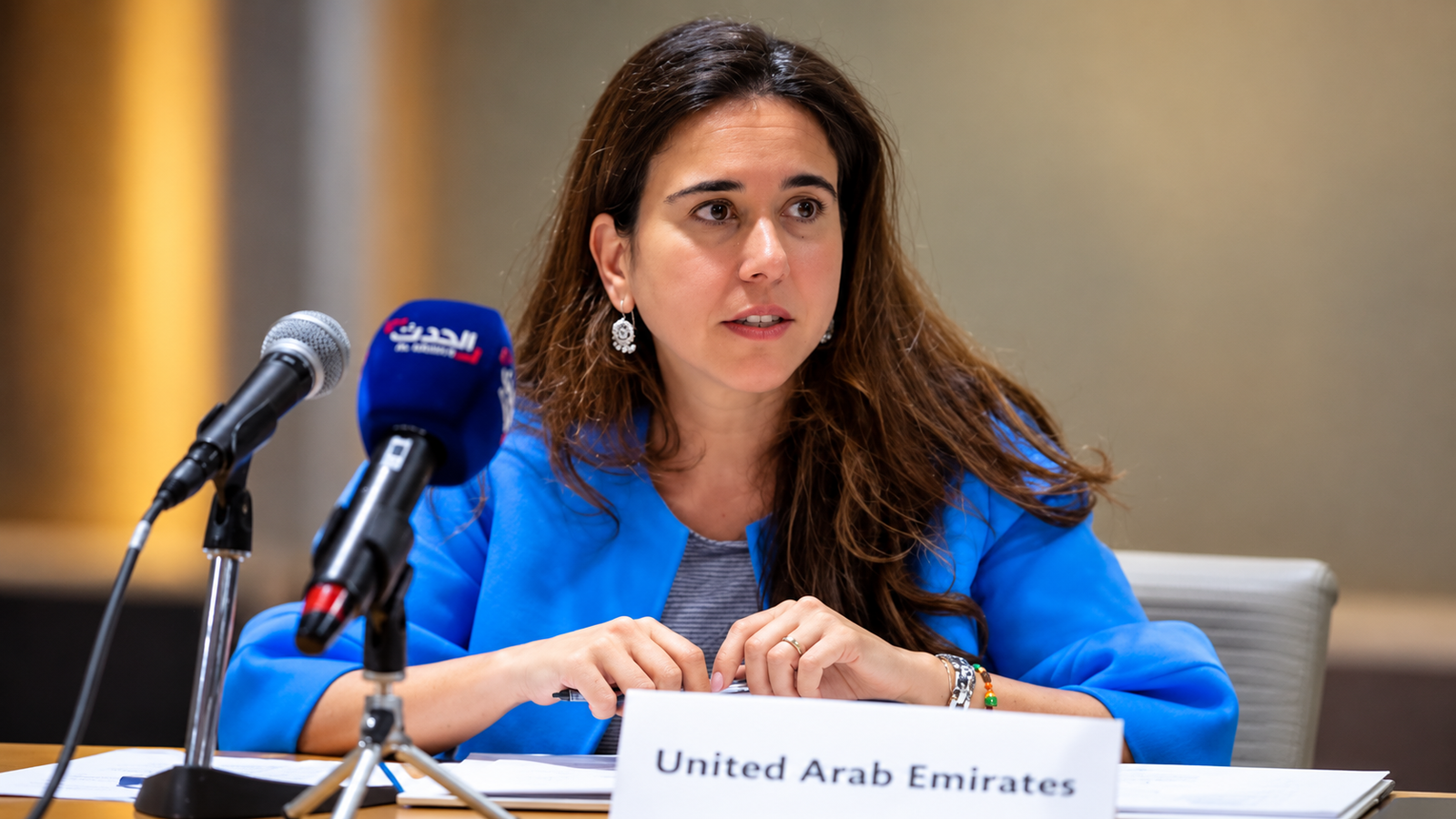
UAE Minister of State Lana Nusseibeh has formally entered the race to become the next UN Secretary General, joining a crowded field of candidates as the Security Council remains deadlocked over a successor to Antonio Guterres, whose second and final term ends this year.
WEBDESK – MEDIABITES
President Sheikh Mohamed submitted a letter to the UN Security Council nominating Ms Nusseibeh, citing her “deep experience of the United Nations, her judgment in addressing the ongoing international challenges, and her record of constructive work.” State news agency WAM confirmed the candidacy on Wednesday.
If selected, Ms Nusseibeh would become the first woman to hold the position, only the second Arab after Egypt’s Boutros Boutros-Ghali, and the first Gulf Arab to lead the world body.
Ms Nusseibeh served as the UAE’s ambassador to the UN from 2013 until mid-2024, leading the country’s delegation during its two-year membership on the Security Council. She stepped down to take up her current role as Minister of State. Before her ambassadorial appointment, she launched and directed the UAE Ministry of Foreign Affairs’ Policy Planning Department and led its International Renewable Energy Agency campaign task force.
In announcing her candidacy, she said she was standing “because I believe this is a moment to act with greater urgency: to act earlier, bring people together across difference, and drive the work forward until it produces concrete results.”
Eight candidates are already in the field, including Costa Rica’s Rebeca Grynspan, who leads in Security Council straw polls, and former Chilean President Michelle Bachelet. However, none has secured sufficient support among council members, including the five permanent veto-holding nations, leaving the race open.
Former US official Brett McGurk described Ms Nusseibeh as a diplomat “who knows everyone and works with them” to get things done, calling her “an inspired choice for this impossible job.”
Her stated priorities include stronger UN accountability, equal application of international law without double standards, and rebuilding trust in multilateral institutions at a time of deepening global uncertainty.
Source: The National, WAM

