


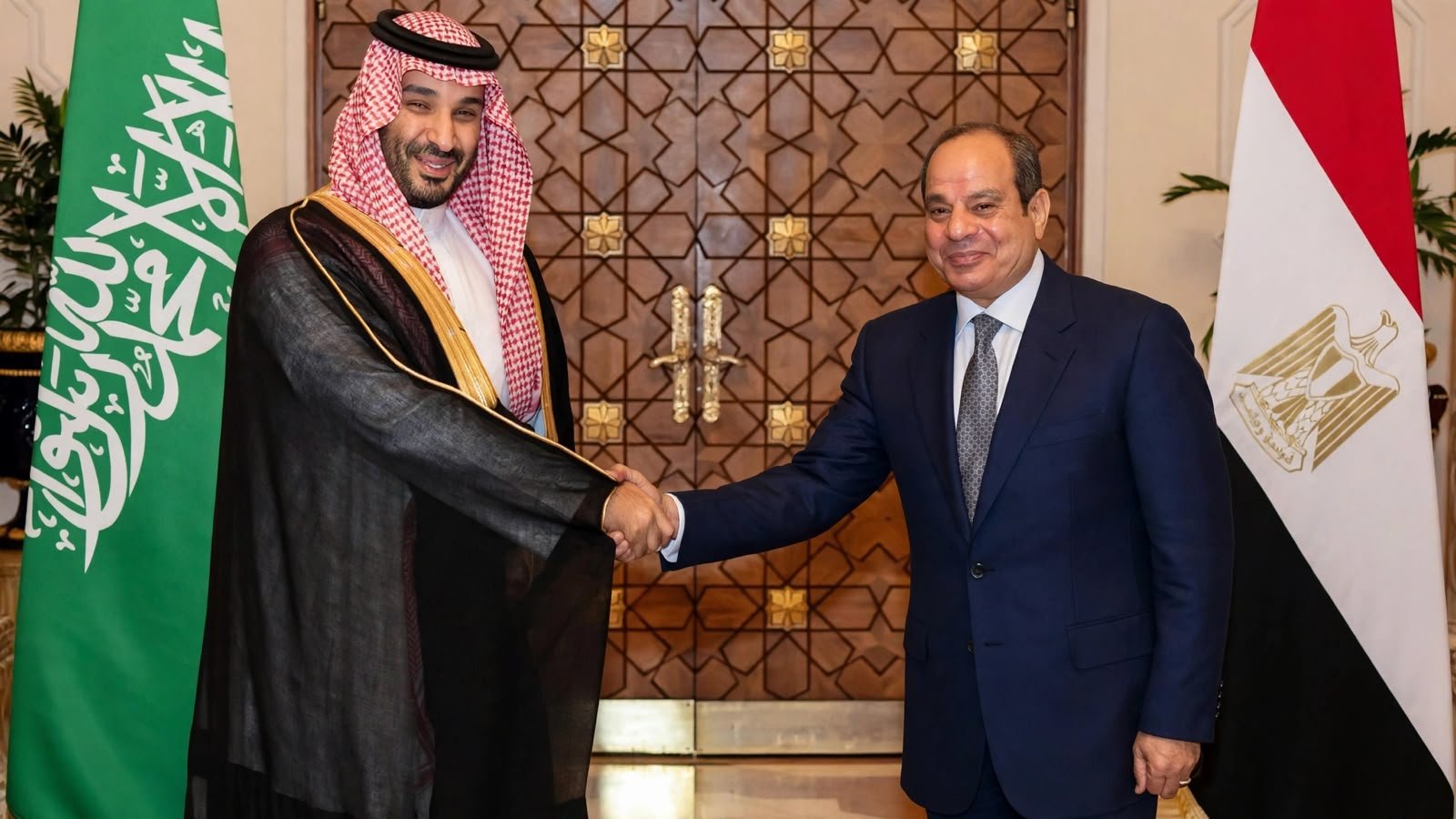
Egypt considers military support for Saudi Arabia amid escalating Houthi attacks as President el-Sisi seeks parliamentary approval for defensive action, raising concerns about regional security and economic stability.
Egyptian President Abdel Fattah el-Sisi has urged parliament to authorize necessary measures to defend Saudi Arabia if Riyadh requests assistance, raising questions about Cairo’s potential military role amid escalating Houthi attacks and growing regional security concerns.
Egypt’s National Defence Council has approved providing comprehensive support to Saudi Arabia in response to Houthi attacks. However, the Egyptian House of Representatives postponed its final decision until Monday following an emergency session.
Speaking on Saturday, el-Sisi said Egypt would not remain a passive observer if Saudi Arabia’s security were threatened. He emphasized that any potential military intervention would be defensive rather than an attempt to launch an offensive war.
The developments come amid increased Houthi attacks targeting Saudi Arabia, including reported strikes against King Khalid International Airport in Riyadh and Aramco facilities. Concerns have also intensified over maritime security in the Red Sea and its implications for regional trade and energy supplies.
Middle East researcher Ahmed Aboudouh of Chatham House said Egypt’s position did not represent a fundamental shift in foreign policy. Instead, it reflected Cairo’s effort to maintain strategic partnerships, particularly with Gulf countries, while avoiding deeper involvement in broad military alliances.
Analyst Samir Ragab linked el-Sisi’s announcement to understandings reached during Saudi Crown Prince Mohammed bin Salman’s visit to Cairo last month. Both countries subsequently emphasized the need for greater regional coordination and solidarity.
Experts believe Egypt is unlikely to deploy ground troops to Yemen, partly because of its costly military intervention there during the 1960s. Potential assistance could include intelligence sharing, logistical and technical support, military training, naval cooperation and air defence capabilities. Egypt could also help protect maritime routes in the Red Sea and the Bab al-Mandab Strait.
Former Egyptian parliamentarian and security expert Tamer al-Shahawi said Cairo’s message was intended to protect Saudi Arabia rather than involve Egypt in an offensive conflict.
However, former Saudi Major General Abdullah Ghanem al-Qahtani argued that Saudi Arabia already possesses the capabilities and partnerships necessary for its defence, suggesting Egypt’s immediate contribution could remain largely political.
Ahead of the anticipated parliamentary decision, a speaker affiliated with Yemen’s Houthi movement warned Egypt against entering a conflict that could threaten its national security and domestic stability.
Analysts say instability around the Bab al-Mandab Strait could also affect Egypt’s economic interests because maritime disruptions threaten trade passing through the Suez Canal, a significant source of foreign currency.
El-Sisi recalled the financial assistance Egypt received from Saudi Arabia and other Gulf states following the 2013 removal of former president Mohamed Morsi. That support included financial aid, central bank deposits and investments.
While supporters describe Egypt’s position as solidarity with a regional partner, critics warn against authorizing an undefined military intervention, arguing that Egyptian soldiers should not become mercenaries. The final parliamentary decision could clarify the limits of Egypt’s potential involvement.

