


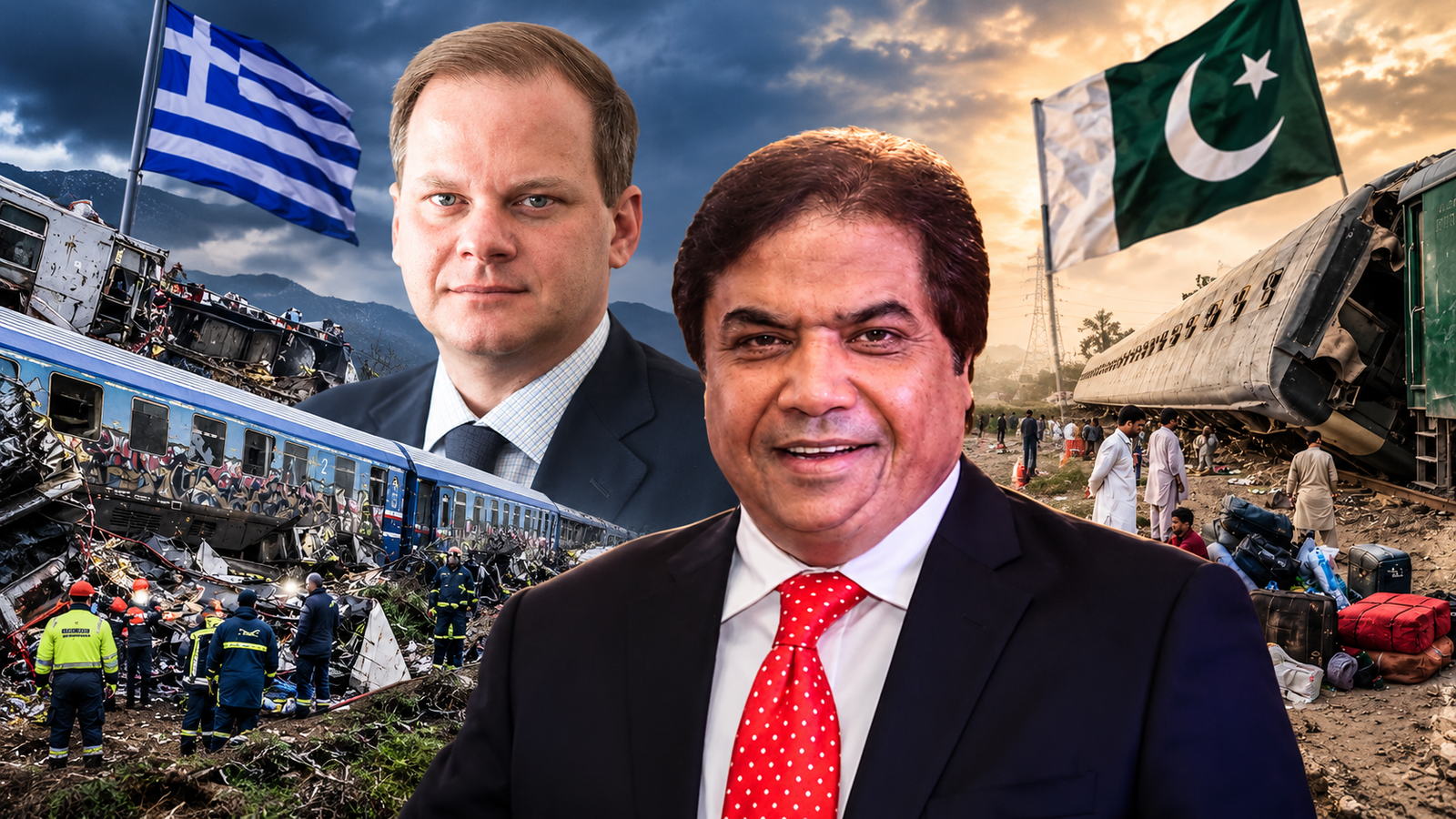
Seven killed, 40 injured in Multan. A brand-new train derails the day after its launch. And the minister responsible, Hanif Abbasi, has not even considered resigning.
WEBDESK – MEDIABITES
Pakistan suffered two railway accidents within a single week, reviving urgent questions about the safety of an aging rail network that has seen decades of neglect, chronic underinvestment, and a pattern of ministerial accountability that begins and ends with a press statement.
Rehman Baba Express: Seven Dead, 40 Injured
On October 13, the Rehman Baba Express derailed near Sher Shah Bridge on the outskirts of Multan, killing seven passengers and injuring 40 others. All 14 coaches came off the tracks at approximately 5:15am, as the train traveled from Karachi to Peshawar.
Rescue teams rushed the injured to Nishtar Hospital in Multan, where they continued operations through the morning. A passenger told reporters that workers had repaired the nuts and bolts of coach number nine near Rohri shortly before the accident, raising questions about maintenance standards and inspection protocols.
Prime Minister Shehbaz Sharif took notice of the incident and directed authorities to accelerate rescue operations and provide the best possible medical care to survivors. Railways Minister Hanif Abbasi expressed grief, went to the accident site, and confirmed compensation would be paid under the Railways insurance policy.
The cause of the derailment has not been officially established.
Millat Express Derails the Day After Its Launch
Three days later, on October 16, a coach of the Millat Express derailed near Daharki, close to Ghotki, disrupting train operations on the down track for three hours. No casualties were reported. Heavy machinery was called from Rohri to remove the affected coach and restore the line. Sukkur Divisional Superintendent of Railways Farman Ghani reached the site to inspect the damage.
What makes this incident particularly striking is its timing. The Millat Express had been inaugurated just one day before its derailment. The train resumed its journey after the affected coach was detached.
A Pattern That Refuses to Change
These two incidents did not occur in isolation. In August 2023, the Hazara Express derailed near Nawabshah in Sindh, killing at least 30 people and injuring more than 100. Pakistan’s railway accident record stretches back further still, through a long list of derailments, collisions, and fatalities on infrastructure largely built during the British colonial era.
The question, asked with increasing frustration, is not just why accidents keep happening, but why no one in authority ever pays a political price.
What Accountability Looks Like Elsewhere
The contrast with international practice is sharp. In March 2023, following a head-on collision of two trains near Larissa, Greece, that killed at least 36 people, Infrastructure and Transport Minister Kostas Karamanlis resigned within 24 hours. “It is what I feel my duty to do as a minimal sign of respect to the memory of the people who died so unjustly,” he said in his resignation statement, taking responsibility for what he called the “chronic shortcomings of the Greek state and political system.” The station master was arrested on charges of manslaughter through negligence.
In Pakistan, no railways minister has resigned over a train accident. Hanif Abbasi, a key figure in Prime Minister Shehbaz Sharif’s cabinet, visited the accident site in Multan and announced compensation. In the current political culture, that constitutes a full response.
The Infrastructure Question
Pakistan’s railway network runs largely on tracks, bridges, and signaling systems inherited from the colonial period. While countries across Asia and Europe have invested in high-speed rail, upgraded signaling, and modern rolling stock, Pakistan continues to operate aging infrastructure with inadequate maintenance budgets and inconsistent oversight.
The world has moved to bullet trains reaching aircraft speeds. Pakistan is still debating whether its 19th-century tracks can safely carry the trains inaugurated this week.
Until investment reaches the tracks, and until accountability reaches the ministers, the accidents will continue. And the statements of grief will follow, right on schedule.
— MediaBites.com.pk

