


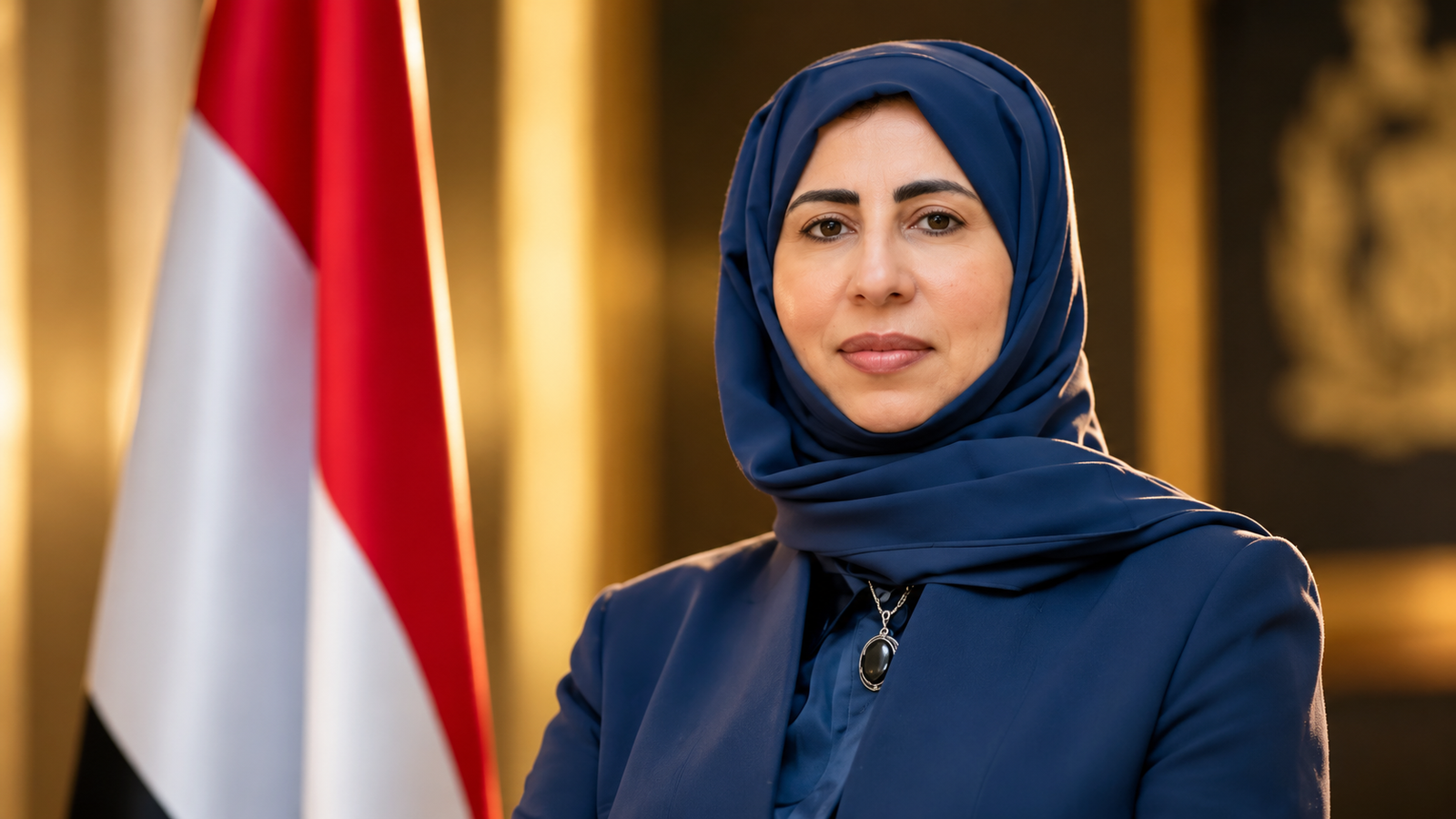
Yemen’s Foreign Minister: Give Houthis More Time, and They Become an Unstoppable Ghost
Yemen’s top diplomat issues a stark warning to the world, rejecting any ceasefire or negotiations with the Iran-backed militia and calling for unconditional disarmament as the only path to peace.
WEBDESK – MEDIABITES – IMRAN MALIK
Yemen’s Foreign Minister Afrah Al-Zouba has issued one of the most unambiguous warnings yet about the Houthi militia, telling journalists at a virtual press briefing on Wednesday that giving the group more time to consolidate would turn it into an invincible force impossible to dislodge.
“If the Houthis are given more time, they will become an unbeatable militia. They will become ghosts,” she said, adding that she could not imagine anyone living on this planet with such a threat looming over them.
No Ceasefire. No Talks.
Al-Zouba, Yemen’s first female Foreign Minister, was categorical: her government is seeking neither a ceasefire nor negotiations with the Houthi militia. She said Yemen had already abandoned what she called the “illusion of peace” that had previously allowed the Houthis to “regroup, rearm and re-attack the foundations of our state.”
“We are not calling for a ceasefire. We are not calling for any kind of dialogue with the Houthis,” she said, adding that any future political process must come with binding conditions. “We don’t want to sign the same agreement twice and expect different results.”
She opened her briefing by offering condolences to Saudi Arabia and the families of the 13 people killed in Saturday’s Houthi missile strike on King Khalid International Airport in Riyadh, victims from Saudi Arabia, Bangladesh, the United States, Egypt, Jordan, Syria, Palestine, Sudan and India. More than 300 others were wounded in that attack.
Iran’s Hand: Documented, Not Alleged
Al-Zouba placed Iran squarely at the center of the Houthi threat, describing Tehran’s role as a “conclusion reached through documented evidence” rather than political speculation. She cited the 2013 seizure of the Iranian arms vessel Jahan 1 and the 2025 interception of nearly 750 tonnes of weapons and supplies destined for the Houthis, both investigated by UN expert panels, as concrete proof of Iran’s supply chain to the militia.
She went further, saying the Houthis have evolved from consumers of Iranian expertise to exporters of it. According to UN panel findings she referenced, Houthi military engineers traveled to Somalia to train Al-Shabaab fighters in explosives, drone modification and weapons maintenance, a network she described as the “Aden-C Axis” now extending into the Horn of Africa.
Bab Al-Mandeb and the Global Trade Threat
Al-Zouba warned that the security of the Bab Al-Mandeb strait, through which 12 to 15 percent of global trade passed before Houthi attacks disrupted shipping this year, is now more critical than ever. She said Tehran decided to block the waterway after the Strait of Hormuz came under pressure and Saudi Arabia rerouted its oil exports through its East-West pipeline.
The Houthis had promised not to disrupt international shipping beyond Saudi vessels, a promise she described as a lie that no one in the international community believed.
Operation Dawn of Yemen
The Foreign Minister confirmed that “Operation Dawn of Yemen,” launched on 4 October under the authority of Presidential Leadership Council head Rashad Al-Alimi, is being conducted under Article 51 of the UN Charter, the self-defense provision. “The decision is Yemeni, the command is Yemeni, the soldiers are Yemeni,” she said, with coalition partners providing air support rather than leading operations.
Government forces have retaken key coastal positions facing the Bab Al-Mandeb strait, with active fighting continuing in Taiz, Marib, Hodeidah and along the western coast.
A Humanitarian Emergency in Taiz
Al-Zouba described the Houthi siege of Taiz, one of Yemen’s most densely populated districts, as a war crime. Hundreds of kidney patients face loss of dialysis within days as the militia has cut supplies of water, fuel and food to the city. The government is in talks with the International Committee of the Red Cross to deliver fuel to health and water facilities, and with private companies to restore food and water supplies.
More than 217,000 Yemenis have been displaced since the latest round of fighting began. She condemned the Houthis for diverting aid, obstructing humanitarian efforts and detaining 72 UN personnel.
Calls on Washington and Brussels
Al-Zouba urged the United States to expand sanctions on Houthi financiers, shipping networks, front companies and suppliers, and called on the European Union to work more closely with Washington to close enforcement gaps. She also requested intelligence sharing, training and equipment for Yemen’s armed forces and coast guard.
Any resolution to the conflict, she said, must include Houthi disarmament in accordance with UN Security Council Resolution 2216. Pointing to Lebanon’s experience with Hezbollah as a cautionary tale of a “state within a state,” she was direct: “This is not a conflict between two equal legal authorities. The Houthis are a terrorist militia that seized our institutions and territories by force and took the Yemeni people hostage.”
MediaBites.com.pk

